World supplier of antibodies, antigens and kits since 2007

Primary Antibodies
VASP Polyclonal Antibody
$255/ 100ul
QuantityTotal: $255
Ship worldwide. Contact order@enogene.com for ordering and bulk pricing or contact your local distributor.
BackgroundVasodilator-stimulated phosphoprotein (VASP) was originally characterized as a substrate of both cGMP- and cAMP-dependent kinases (PKG and PKA, or cGPK and cAPK, respectively) (1). It is now believed that VASP belongs to the Ena/VASP family of adaptor proteins linking the cytoskeletal system to the signal transduction pathways and that it functions in cytoskeletal organization, fibroblast migration, platelet activation and axon guidance (2,3). Three phosphorylation sites, Ser157, Ser239, and Thr278, have been identified. Ser239 is the major PKG phosphorylation site while Ser157 is the major PKA phosphorylation site (4). Evidence suggests that VASP phosphorylation reduces its association with actin and has a negative effect on actin polymerization (5). Phosphorylation at Ser239 of VASP is a useful marker for monitoring PKG activation and signaling (6,7).
Product Information
SpeciesRabbit
IsotypeIgG
Molecular Weight40kDa
Storage/StabilityStore at -20oC or -80oC. Avoid freeze / thaw cycles. Buffer: PBS with 0.02% sodium azide, 50% glycerol, pH7.3.
All Names
AlternameVasodilator-stimulated phosphoprotein;VASP;
ImmunogenFusion protein of human VASP
PurificationAffinity purification
Gene ID7408
References1. Butt, E. et al. (1994) J. Biol. Chem. 269, 14509-14517. 2. Ball, L.J. et al. (2000) EMBO J. 19, 4903-4914. 3. Machesky, L.M. et al. (2000) Cell 101, 685-688. 4. Smolenski, A. et al. (1998) J. Biol. Chem. 273, 20029-20035. 5. Harbeck, B. et al. (2000) J. Biol. Chem. 275, 30817-30825. 6. Oelze, M. et al. (2000) Circ. Res. 87, 999-1005. 7. Lawrence, D.W. et al. (2001) J. Immunol. 166, 5550-5556.
WB 1:500 - 1:1000
IHC 1:50 - 1:100
IF 1:20 - 1:50
WB 1:500 - 1:1000
IHC 1:50 - 1:100
IF 1:20 - 1:50

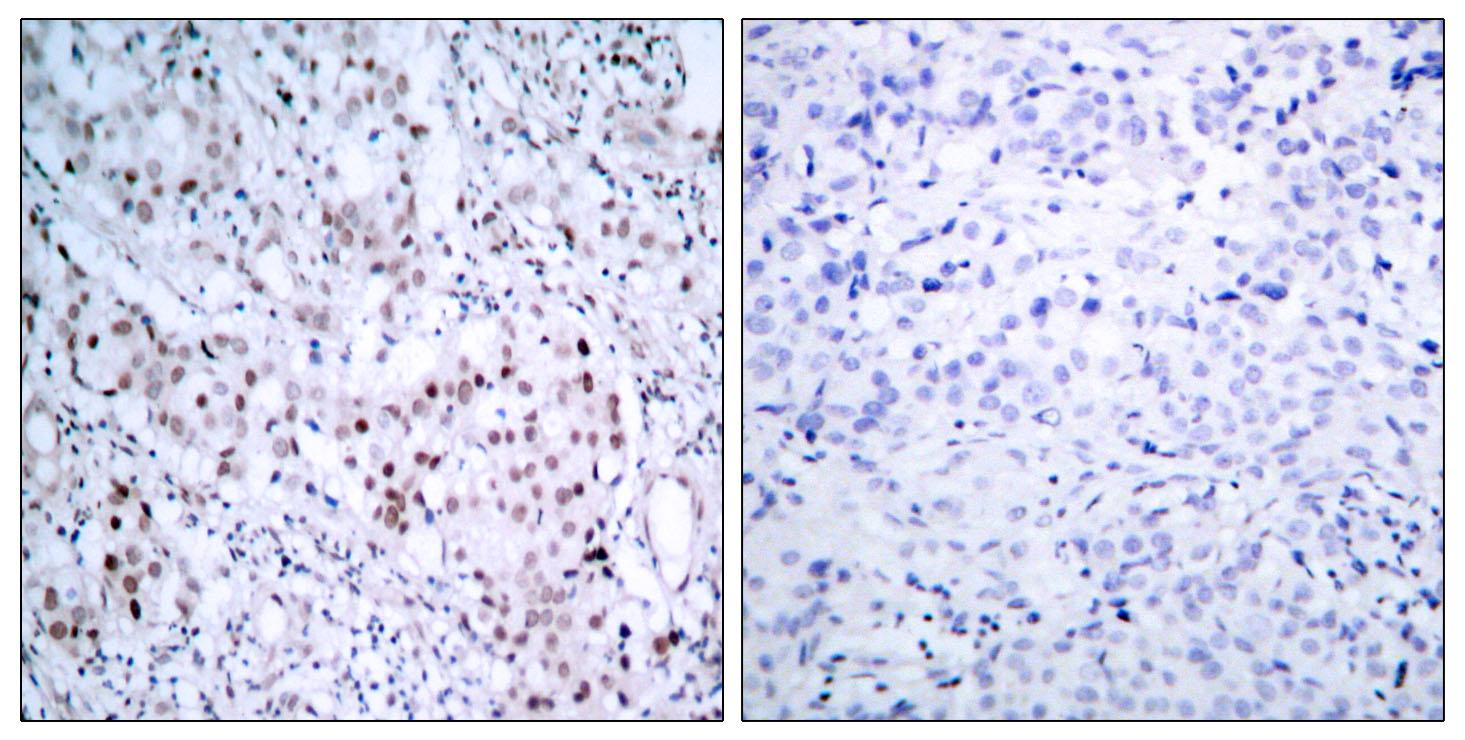
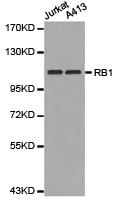
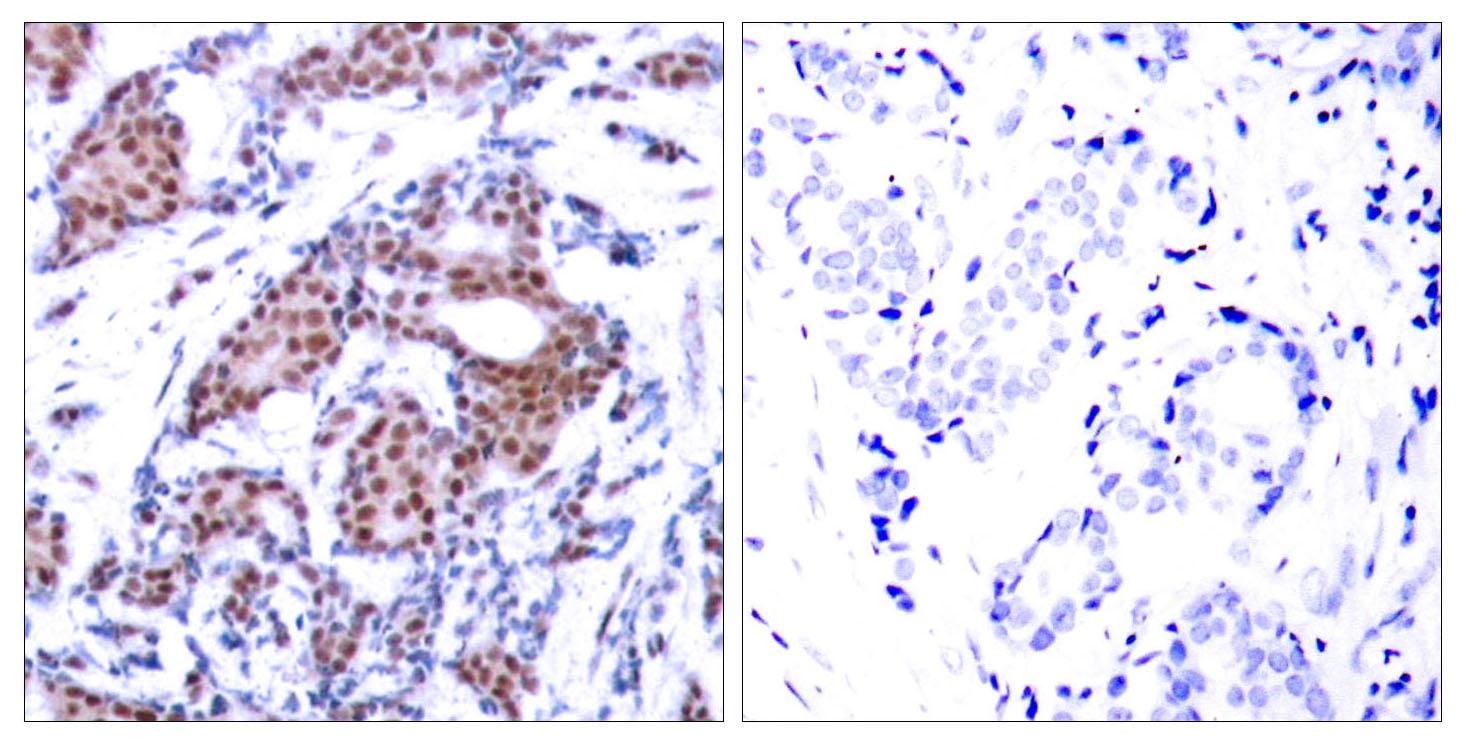
family Western blot analysis of extracts of various cell transduction lines, using VASP antibody. migration, Ser157, that effect on marker for
Conjugated Antibody
This product is also available conjugated. Format: E90166-Conjugate. Price: $485 / Size: 100μl.
E90166-FITC$485 / 100μlE90166-Biotin$485 / 100μlE90166-HRP$485 / 100μlE90166-AP$485 / 100μlE90166-AF350$485 / 100μlE90166-AF405M$485 / 100μlE90166-AF488$485 / 100μlE90166-AF514$485 / 100μlE90166-AF532$485 / 100μlE90166-AF555$485 / 100μlE90166-AF568$485 / 100μlE90166-AF405S$485 / 100μlE90166-AF405L$485 / 100μlE90166-AF546$485 / 100μlE90166-AF594$485 / 100μlE90166-AF610$485 / 100μlE90166-AF635$485 / 100μlE90166-AF647$485 / 100μlE90166-AF680$485 / 100μlE90166-AF700$485 / 100μlE90166-AF750$485 / 100μlE90166-AF790$485 / 100μlE90166-APC$485 / 100μlE90166-PE$485 / 100μlE90166-Cy3$485 / 100μlE90166-Cy5$485 / 100μlE90166-Cy5.5$485 / 100μlE90166-Cy7$485 / 100μlE90166-PE-Cy5$485 / 100μl
Contact order@enogene.com to order conjugated formats. Magnetic Beads (1-30μm) conjugation is also available.


Categories by research area
Categories by product type
- Antibodies
- Primary Antibodies
- Tag antibodies
- Internal control antibodies
- Pathological (Immunohistochemistry, IHC) antibodies
- Cell Signal Transduction Research Antibodies
- Secondary Antibody
- Antibody Sampler Kits
- ELISA Kits
- Recombinant Proteins
- Fluorescence Reagents
- Signal Inhibitors and Activators
- Transfection Reagent
- Cell biology kits
- Overexpression Cell Lines
- Cell Lysates
- Purification Resins
- 2019-nCoV & Monkeypox