World supplier of antibodies, antigens and kits since 2007

Primary Antibodies
STAT1 Polyclonal Antibody
$225/ 100ul
QuantityTotal: $225
Ship worldwide. Contact order@enogene.com for ordering and bulk pricing or contact your local distributor.
BackgroundThe Stat1 transcription factor is activated in response to a large number of ligands (1) and is essential for responsiveness to IFN-α and IFN-γ (2,3). Phosphorylation of Stat1 at Tyr701 induces Stat1 dimerization, nuclear translocation, and DNA binding (4). Stat1 protein exists as a pair of isoforms, Stat1α (91 kDa) and the splice variant Stat1β (84 kDa). In most cells, both isoforms are activated by IFN-α, but only Stat1α is activated by IFN-γ. The inappropriate activation of Stat1 occurs in many tumors (5). In addition to tyrosine phosphorylation, Stat1 is also phosphorylated at Ser727 through a p38 mitogen-activated protein kinase (MAPK)-dependent pathway in response to IFN-α and other cellular stresses (6). Serine phosphorylation may be required for the maximal induction of Stat1-mediated gene activation.
Product Information
SpeciesRabbit
IsotypeIgG
Molecular Weight83kDa
Storage/StabilityStore at -20oC or -80oC. Avoid freeze / thaw cycles. Buffer: PBS with 0.02% sodium azide, 50% glycerol, pH7.3.
All Names
AlternameSTAT1;DKFZp686B04100;ISGF-3;STAT91 ;
ImmunogenRecombinant protein of human STAT1
PurificationAffinity purification
Gene ID6772
References1. Heim, M.H. (1999) J. Recept. Signal. Transduct. Res. 19, 75-120. 2. Durbin, J.E. et al. (1996) Cell 84, 443-450. 3. Meraz, M.A. et al. (1996) Cell 84, 431-442. 4. Ihle, J.N. et al. (1994) Trends Biochem. Sci. 19, 222-227. 5. Frank, D.A. (1999) Mol. Med. 5, 432-456. 6. Wen, Z. et al. (1995) Cell 82, 241-250.
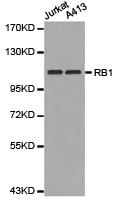
WB 1:500 - 1:2000
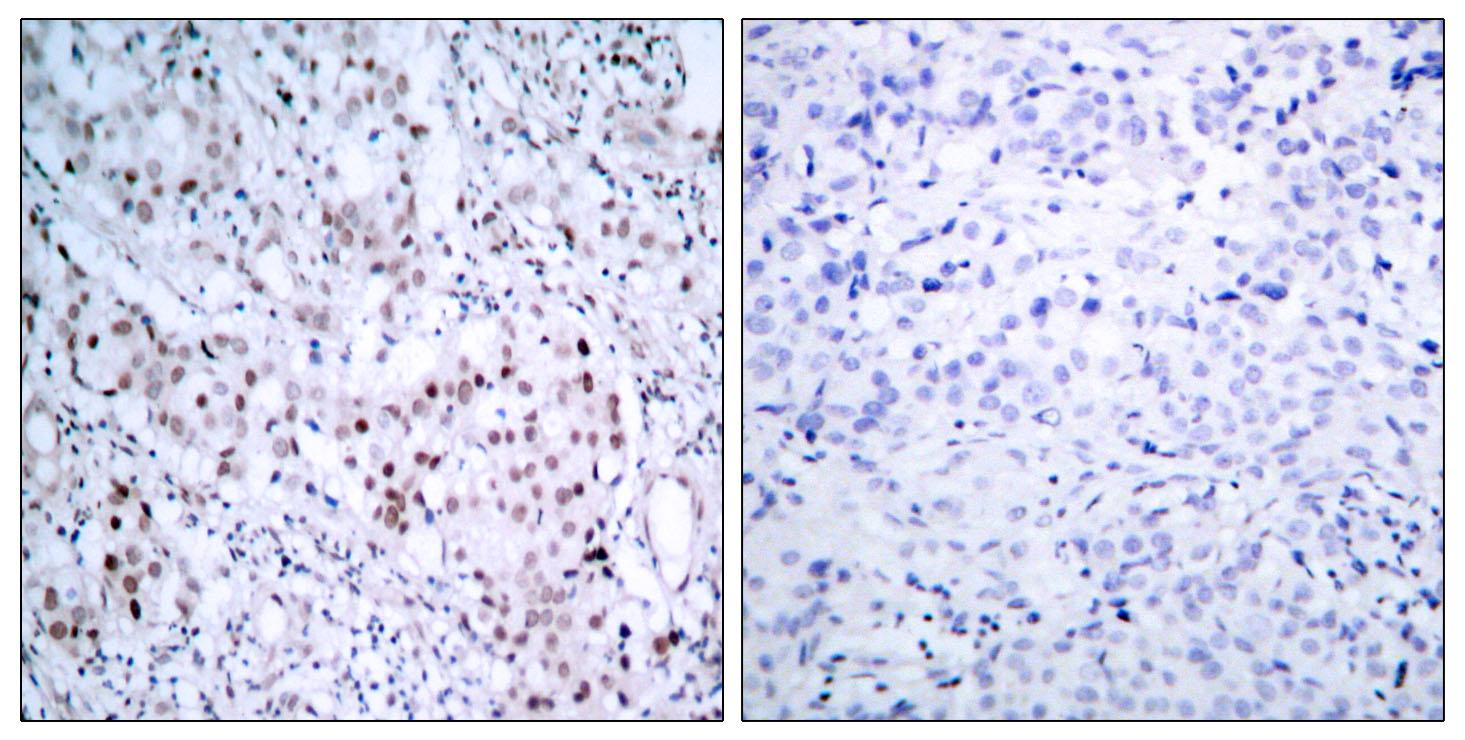
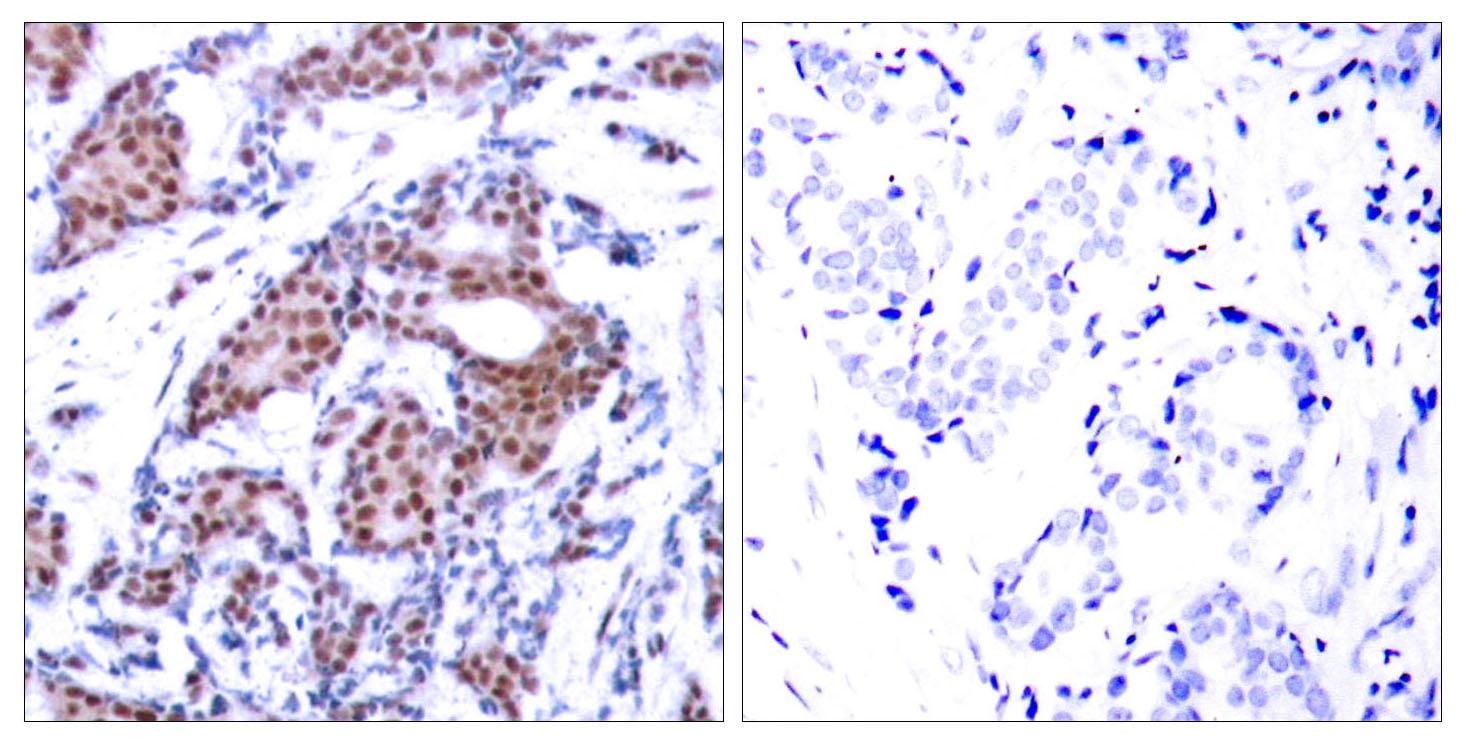
IHC 1:50- 1:200
WB 1:500 - 1:2000
IHC 1:50- 1:200

and DNA binding Western blot analysis of various cell the splice variant lines, but only Stat1α using STAT1 antibody. in many tumors at Ser727 pathway in phosphorylation may be
Conjugated Antibody
This product is also available conjugated. Format: E90027-Conjugate. Price: $485 / Size: 100μl.
E90027-FITC$485 / 100μlE90027-Biotin$485 / 100μlE90027-HRP$485 / 100μlE90027-AP$485 / 100μlE90027-AF350$485 / 100μlE90027-AF405M$485 / 100μlE90027-AF488$485 / 100μlE90027-AF514$485 / 100μlE90027-AF532$485 / 100μlE90027-AF555$485 / 100μlE90027-AF568$485 / 100μlE90027-AF405S$485 / 100μlE90027-AF405L$485 / 100μlE90027-AF546$485 / 100μlE90027-AF594$485 / 100μlE90027-AF610$485 / 100μlE90027-AF635$485 / 100μlE90027-AF647$485 / 100μlE90027-AF680$485 / 100μlE90027-AF700$485 / 100μlE90027-AF750$485 / 100μlE90027-AF790$485 / 100μlE90027-APC$485 / 100μlE90027-PE$485 / 100μlE90027-Cy3$485 / 100μlE90027-Cy5$485 / 100μlE90027-Cy5.5$485 / 100μlE90027-Cy7$485 / 100μlE90027-PE-Cy5$485 / 100μl
Contact order@enogene.com to order conjugated formats. Magnetic Beads (1-30μm) conjugation is also available.


Categories by research area
Categories by product type
- Antibodies
- Primary Antibodies
- Tag antibodies
- Internal control antibodies
- Pathological (Immunohistochemistry, IHC) antibodies
- Cell Signal Transduction Research Antibodies
- Secondary Antibody
- Antibody Sampler Kits
- ELISA Kits
- Recombinant Proteins
- Fluorescence Reagents
- Signal Inhibitors and Activators
- Transfection Reagent
- Cell biology kits
- Overexpression Cell Lines
- Cell Lysates
- Purification Resins
- 2019-nCoV & Monkeypox