World supplier of antibodies, antigens and kits since 2007

Primary Antibodies
AKR1B1 Antibody
H,
WB,ICC
Mouse
$255/ 100ul
QuantityTotal: $255
Ship worldwide. Contact order@enogene.com for ordering and bulk pricing or contact your local distributor.
Form Or Antibody
Form of AntibodyPurified mouse monoclonal in buffer containing 0.1M Tris-Glycine (pH 7.4, 150 mM NaCl) with 0.2% sodium azide, 50%,glycerol
Specificty Sensitivity
Specificity/SensitivityThis antibody detects endogenous levels of AKR1B1 and does not cross-react with related proteins.
Product Information
Entrez summaryThis gene encodes a member of the aldo/keto reductase superfamily, which consists of more than 40 known enzymes and proteins. This member catalyzes the reduction of a number of aldehydes, including the aldehyde form of glucose, and is thereby implicated in the development of diabetic complications by catalyzing the reduction of glucose to sorbitol. Multiple pseudogenes have been identified for this gene. The nomenclature system used by the HUGO Gene Nomenclature Committee to define human aldo-keto reductase family members is known to differ from that used by the Mouse Genome Informatics database
UniPort summary FunctionCatalyzes the NADPH-dependent reduction of a wide variety of carbonyl-containing compounds to their corresponding alcohols with a broad range of catalytic efficiencies.
IsotypeIgG1
Molecular Weight36kDa
UniProt NumberP15121
Gene symbolAR; ADR; ALR2; ALDR1
ImmunogenPurified recombinant human AKR1B1 protein fragments expressed in E.coli.
Antibody typeMonoclonal antibody
PurificationAffinity purified
Cellular localizationCytoplasm
Gene IDNM_001628.2
All Names
AlternameALDR1;AR;Aldo-keto reductase family 1 member B1;ADR;ALR2;Lii5-2 CTCL tumor antigen;Aldehyde reductase
Price255$
Research AreaAutophagy antibody Cancer Cardiovascular Cell Biology Epigenetics & Nuclear Signaling Developmental Biologys Immunology Drug Discovery Products Metabolism Neuroscience Signal Transduction Stem Cells
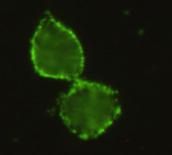
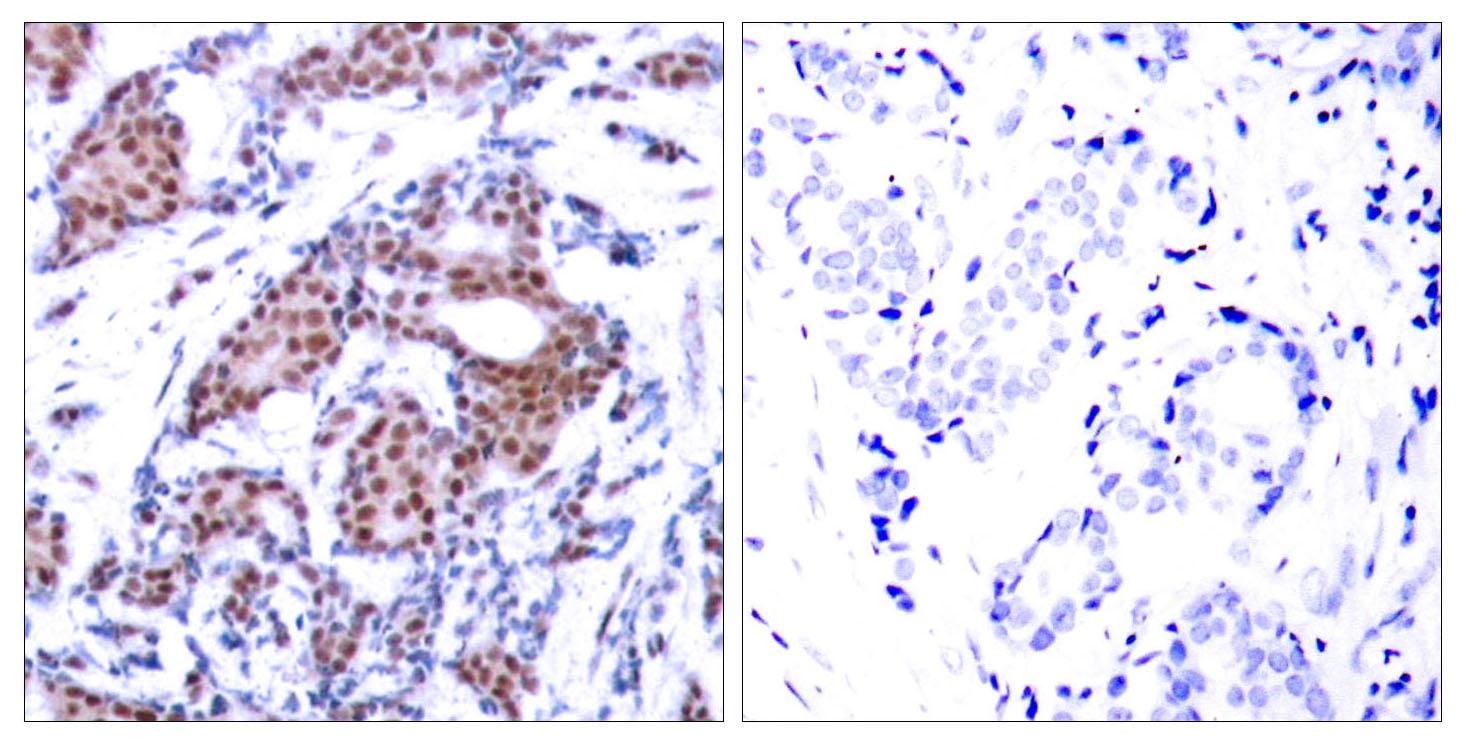
Immunocytochemistry stain of Hela using AKR1B1 antibody (1:300).
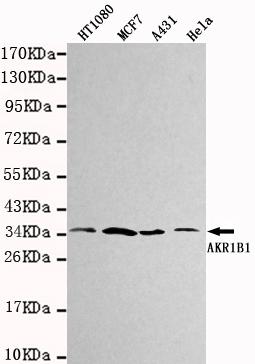
Western blot detection of AKR1B1 in HT1080, MCF7, A431&Hela cell lysates using AKR1B1 antibody (1:1000 diluted). Predicted band size:36KDa. Observed band size:36KDa.
Conjugated Antibody
This product is also available conjugated. Format: E2200725-Conjugate. Price: $485 / Size: 100μl.
E2200725-FITC$485 / 100μlE2200725-Biotin$485 / 100μlE2200725-HRP$485 / 100μlE2200725-AP$485 / 100μlE2200725-AF350$485 / 100μlE2200725-AF405M$485 / 100μlE2200725-AF488$485 / 100μlE2200725-AF514$485 / 100μlE2200725-AF532$485 / 100μlE2200725-AF555$485 / 100μlE2200725-AF568$485 / 100μlE2200725-AF405S$485 / 100μlE2200725-AF405L$485 / 100μlE2200725-AF546$485 / 100μlE2200725-AF594$485 / 100μlE2200725-AF610$485 / 100μlE2200725-AF635$485 / 100μlE2200725-AF647$485 / 100μlE2200725-AF680$485 / 100μlE2200725-AF700$485 / 100μlE2200725-AF750$485 / 100μlE2200725-AF790$485 / 100μlE2200725-APC$485 / 100μlE2200725-PE$485 / 100μlE2200725-Cy3$485 / 100μlE2200725-Cy5$485 / 100μlE2200725-Cy5.5$485 / 100μlE2200725-Cy7$485 / 100μlE2200725-PE-Cy5$485 / 100μl
Contact order@enogene.com to order conjugated formats. Magnetic Beads (1-30μm) conjugation is also available.


Categories by research area
Categories by product type
- Antibodies
- Primary Antibodies
- Tag antibodies
- Internal control antibodies
- Pathological (Immunohistochemistry, IHC) antibodies
- Cell Signal Transduction Research Antibodies
- Secondary Antibody
- Antibody Sampler Kits
- ELISA Kits
- Recombinant Proteins
- Fluorescence Reagents
- Signal Inhibitors and Activators
- Transfection Reagent
- Cell biology kits
- Overexpression Cell Lines
- Cell Lysates
- Purification Resins
- 2019-nCoV & Monkeypox