
You are here: EnoGene Home > Products > Pathological (Immunohistochemistry, IHC) antibodies > Lck (3E5) Mouse mAb
Lck (3E5) Mouse mAb
Datasheet
Catalog Number:
E2200677Amount:
100ulSource:
MouseForm of Antibody:
Liquid in PBS containing 50% glycerol, 0.5% BSA and 0.02% sodium azide, pH 7.3.Specificity/Sensitivity:
This antibody detects endogenous levels of LCK and does not cross-react with related proteins.Entrez summary:
This gene is a member of the Src family of protein tyrosine kinases (PTKs). The encoded protein is a key signaling molecule in the selection and maturation of developing T-cells. It contains N-terminal sites for myristylation and palmitylation, a PTK domain, and SH2 and SH3 domains which are involved in mediating protein-protein interactions with phosphotyrosine-containing and proline-rich motifs, respectively. The protein localizes to the plasma membrane and pericentrosomal vesicles, and binds to cell surface receptors, including CD4 and CD8, and other signaling molecules. Multiple alternatively spliced variants, encoding the same protein, have been described.UniPort summary Function:
Non-receptor tyrosine-protein kinase that plays an essential role in the selection and maturation of developing T-cells in the thymus and in the function of mature T-cells. Plays a key role in T-cell antigen receptor (TCR)-linked signal transduction pathways. Constitutively associated with the cytoplasmic portions of the CD4 and CD8 surface receptors. Association of the TCR with a peptide antigen-bound MHC complex facilitates the interaction of CD4 and CD8 with MHC class II and class I molecules, respectively, thereby recruiting the associated LCK protein to the vicinity of the TCR/CD3 complex. LCK then phosphorylates tyrosines residues within the immunoreceptor tyrosine-based activation motifs (ITAM) of the cytoplasmic tails of the TCR-gamma chains and CD3 subunits, initiating the TCR/CD3 signaling pathway. Once stimulated, the TCR recruits the tyrosine kinase ZAP70, that becomes phosphorylated and activated by LCK. Following this, a large number of signaling molecules are recruited, ultimately leading to lymphokine production. LCK also contributes to signaling by other receptor molecules. Associates directly with the cytoplasmic tail of CD2, which leads to hyperphosphorylation and activation of LCK. Also plays a role in the IL2 receptor-linked signaling pathway that controls the T-cell proliferative response. Binding of IL2 to its receptor results in increased activity of LCK. Is expressed at all stages of thymocyte development and is required for the regulation of maturation events that are governed by both pre-TCR and mature alpha beta TCR. Phosphorylates other substrates including RUNX3, PTK2B/PYK2, the microtubule-associated protein MAPT, RHOH or TYROBP.Immunogen:
Purified recombinant human LCK protein fragments expressed in E.coli.Antibody type:
Monoclonal AntibodyIsotype:
IgG1Purification:
Affinity PurifiedCellular localization:
Mitochondrion matrix.Reactivity:
HumanApplications:
WBMolecular Weight:
Calculated MW: 58 kDa; Observed MW: 58 kDaUniProt Number:
P06239Gene ID:
3932Gene symbol:
LSK; YT16; p56lck; pp58lckAltername:
LCK; Tyrosine-protein kinase Lck; Leukocyte C-terminal Src kinase; LSK; Lymphocyte cell-specific protein-tyrosine kinase; Protein YT16; Proto-oncogene Lck; T cell-specific protein-tyrosine kinase; p56-LCK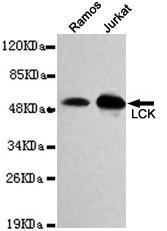
- Western blot analysis of LCK in Jurkat and Ramos lysates using LCK antibody.
Price:
255$Research Area:
Autophagy antibody Cancer Cardiovascular Cell Biology Epigenetics & Nuclear Signaling Developmental Biologys Immunology Drug Discovery Products Metabolism Neuroscience Signal Transduction Stem CellsProduct Type:
Primary AntibodyBackground:
The Src family of protein tyrosine kinases, which includes Src, Lyn, Fyn, Yes, Lck, Blk, and Hck, are important in the regulation of growth and differentiation of eukaryotic cells. Src activity is regulated by tyrosine phosphorylation at two sites, but with opposing effects.Clone Number:
3E5-C8-B9Gene Name:
LCKRecommended Dilutions:
WB: 1/500-1/1000Swiss-Prot No.:
P06239Storage/Stability:
Store at 4°C short term. Aliquot and store at -20°C long term. Avoid freeze/thaw cycles.

Related Products
- c-Jun (Phospho-Ser63) Antibody Datasheet COA
Catalog Number:
E011001-1Amount:
50μg/50μlReactivity:
Human, MouseApplications:
WB: 1:500~1:1000 IHC: 1:50~1:100Swiss-Prot No.:
P05412Price:
145$
- c-Jun (Phospho-Ser63) Antibody Datasheet
Catalog Number:
E011001-2Amount:
100μg/100μlReactivity:
Human, MouseApplications:
WB: 1:500~1:1000 IHC: 1:50~1:100Swiss-Prot No.:
P05412Price:
225$
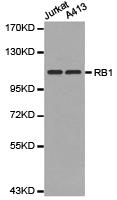
- Rb Polyclonal Antibody Datasheet
Catalog Number:
E90003Amount:
100ulReactivity:
H MApplications:
WB IHCSwiss-Prot No.:
P06400Price:
225$
- Elk-1 (Phospho-Ser383) Antibody Datasheet
Catalog Number:
E011004-1Amount:
50μg/50μlReactivity:
Human, Mouse, RatApplications:
WB: 1:500~1:1000 IHC: 1:50~1:100Swiss-Prot No.:
P19419Price:
145$
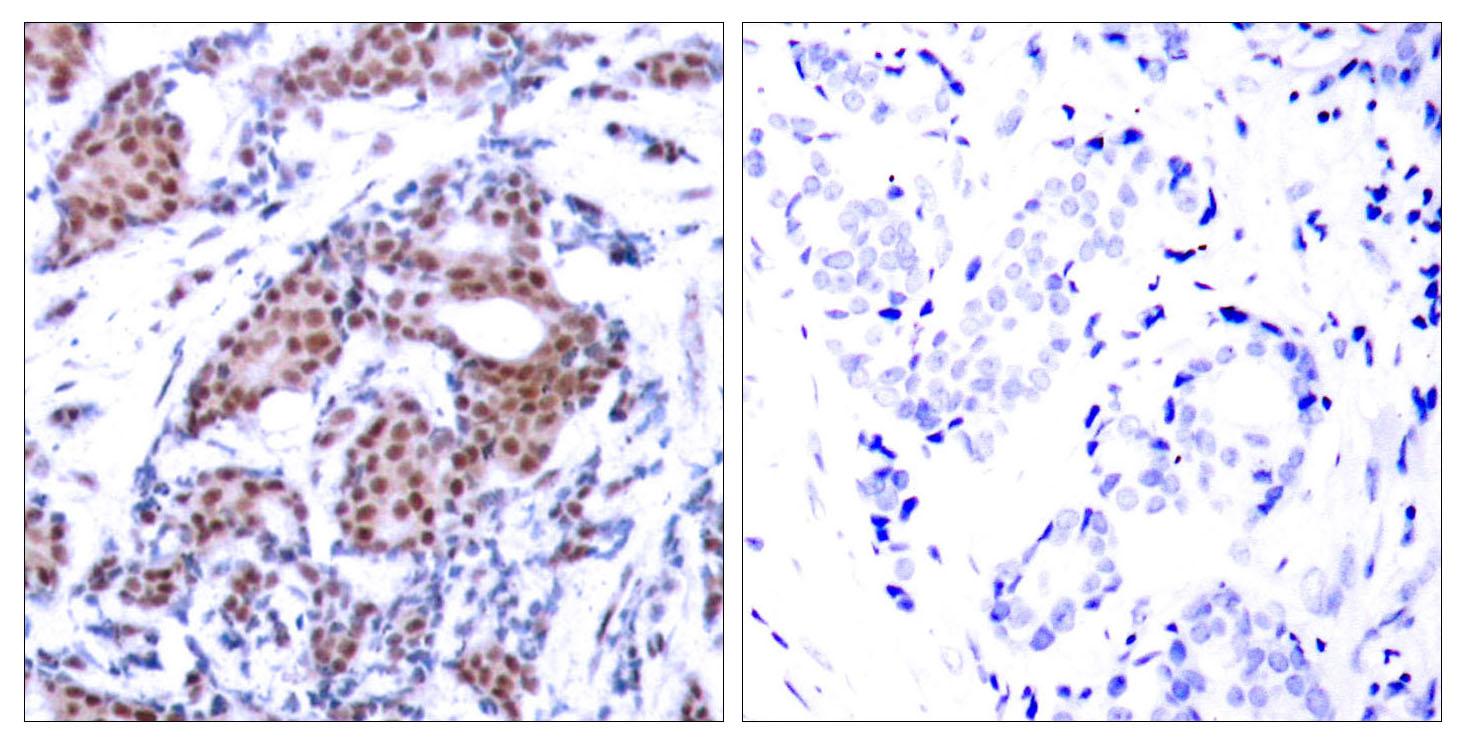
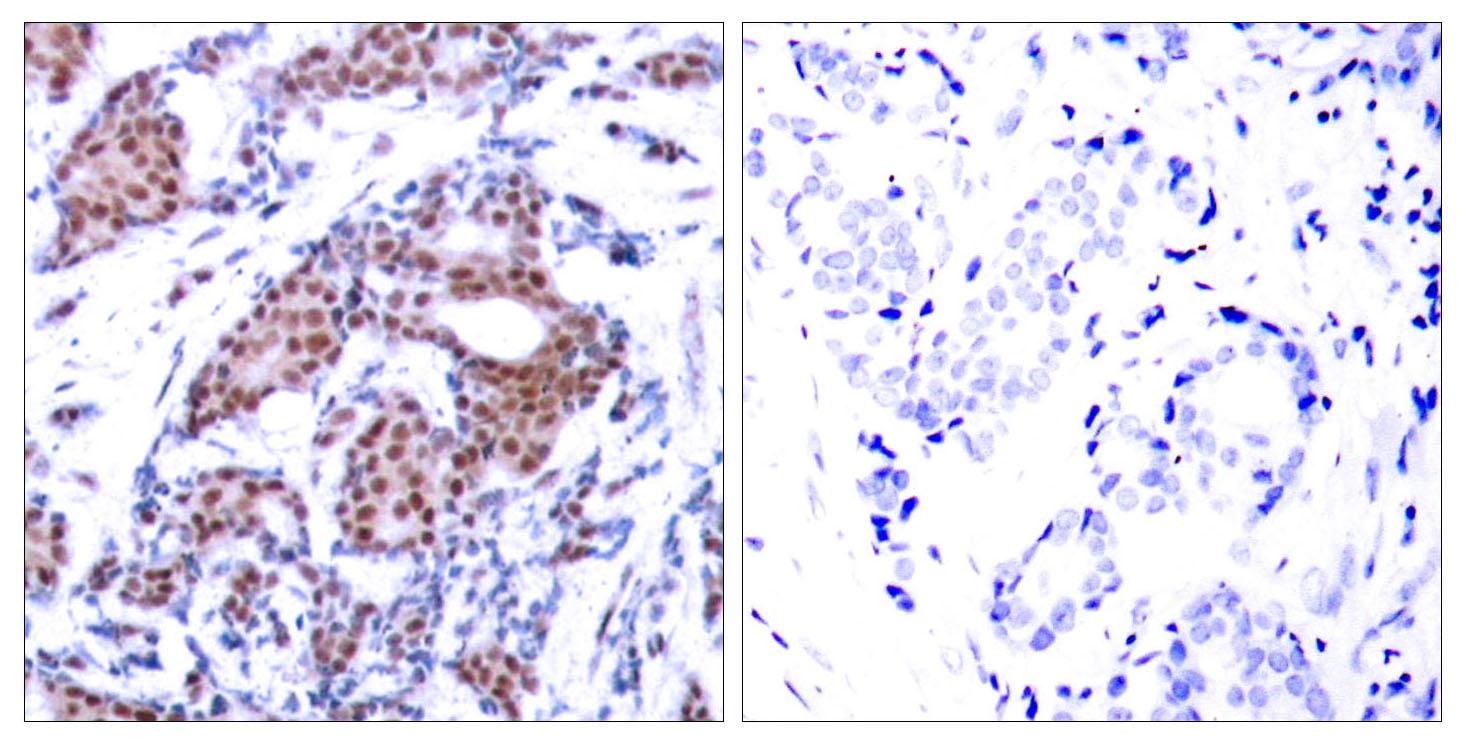
- Elk-1 (Phospho-Ser383) Antibody Datasheet
Catalog Number:
E011004-2Amount:
100μg/100μlReactivity:
Human, Mouse, RatApplications:
WB: 1:500~1:1000 IHC: 1:50~1:100Swiss-Prot No.:
P19419Price:
225$
Catalog Number
- Amount:100ul
- Price:255$

Contact us
Categories by research area
Categories by product type
- Antibodies
- Tag antibodies
- Internal control antibodies
- Pathological (Immunohistochemistry, IHC) antibodies
- Cell Signal Transduction Research Antibodies
- Secondary Antibody
- Antibody Sampler Kits
- Recombinant Proteins
- Fluorescence Reagents
- Signal Inhibitors and Activators
- Transfection Reagent
- Cell biology kits