World supplier of antibodies, antigens and kits since 2007

Primary Antibodies
protein phosphatase 2A Antibody
H
WB,ICC
Mouse
$255/ 100ul
QuantityTotal: $255
Ship worldwide. Contact order@enogene.com for ordering and bulk pricing or contact your local distributor.
Form Or Antibody
Form of AntibodyPurified mouse monoclonal in buffer containing 0.1M Tris-Glycine (pH 7.4, 150 mM NaCl) with 0.2% sodium azide, 50%,glycerol
Specificty Sensitivity
Specificity/SensitivityThis antibody detects endogenous levels PP2A-alpha (N-terminus) and does not cross-react with related proteins.
Product Information
Entrez summaryThis gene encodes the phosphatase 2A catalytic subunit. Protein phosphatase 2A is one of the four major Ser/Thr phosphatases, and it is implicated in the negative control of cell growth and division. It consists of a common heteromeric core enzyme, which is composed of a catalytic subunit and a constant regulatory subunit, that associates with a variety of regulatory subunits. This gene encodes an alpha isoform of the catalytic subunit.
UniPort summary FunctionPP2A can modulate the activity of phosphorylase B kinase casein kinase 2, mitogen-stimulated S6 kinase, and MAP-2 kinase. Cooperates with SGOL2 to protect centromeric cohesin from separase-mediated cleavage in oocytes specifically during meiosis I (By similarity). Can dephosphorylate SV40 large T antigen and p53/TP53. Dephosphorylates SV40 large T antigen, preferentially on serine residues 120, 123, 677, and perhaps 679. The C subunit was most active, followed by the AC form, which was more active than the ABC form, and activity of all three forms was strongly stimulated by manganese, and to a lesser extent by magnesium. Dephosphorylation by the AC form, but not C or ABC form is inhibited by small T antigen
IsotypeIgG2a
Molecular Weight35kDa
UniProt NumberP67775
Gene symbolRP-C; PP2Ac; PP2CA; PP2Calpha
ImmunogenPurified recombinant human PP2A-alpha (N-terminus) protein fragments expressed in E.coli.
Antibody typeMonoclonal antibody
PurificationAffinity purified
Cellular localizationCytoplasm. Nucleus
Gene IDNM_002715
All Names
AlternameRP-C; PP2Ac; PP2Calpha;Protein Phosphatase 2 alpha
Price255$
Research AreaAutophagy antibody Cancer Cardiovascular Cell Biology Epigenetics & Nuclear Signaling Developmental Biologys Immunology Drug Discovery Products Metabolism Neuroscience Signal Transduction Stem Cells
Storage/StabilityAliquot and store at -20°C. Avoid repeated freeze / thaw cycles.
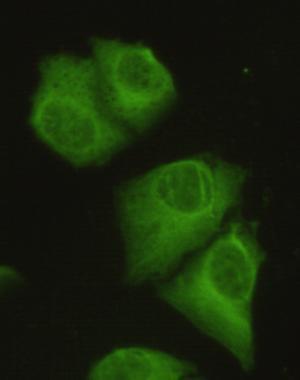
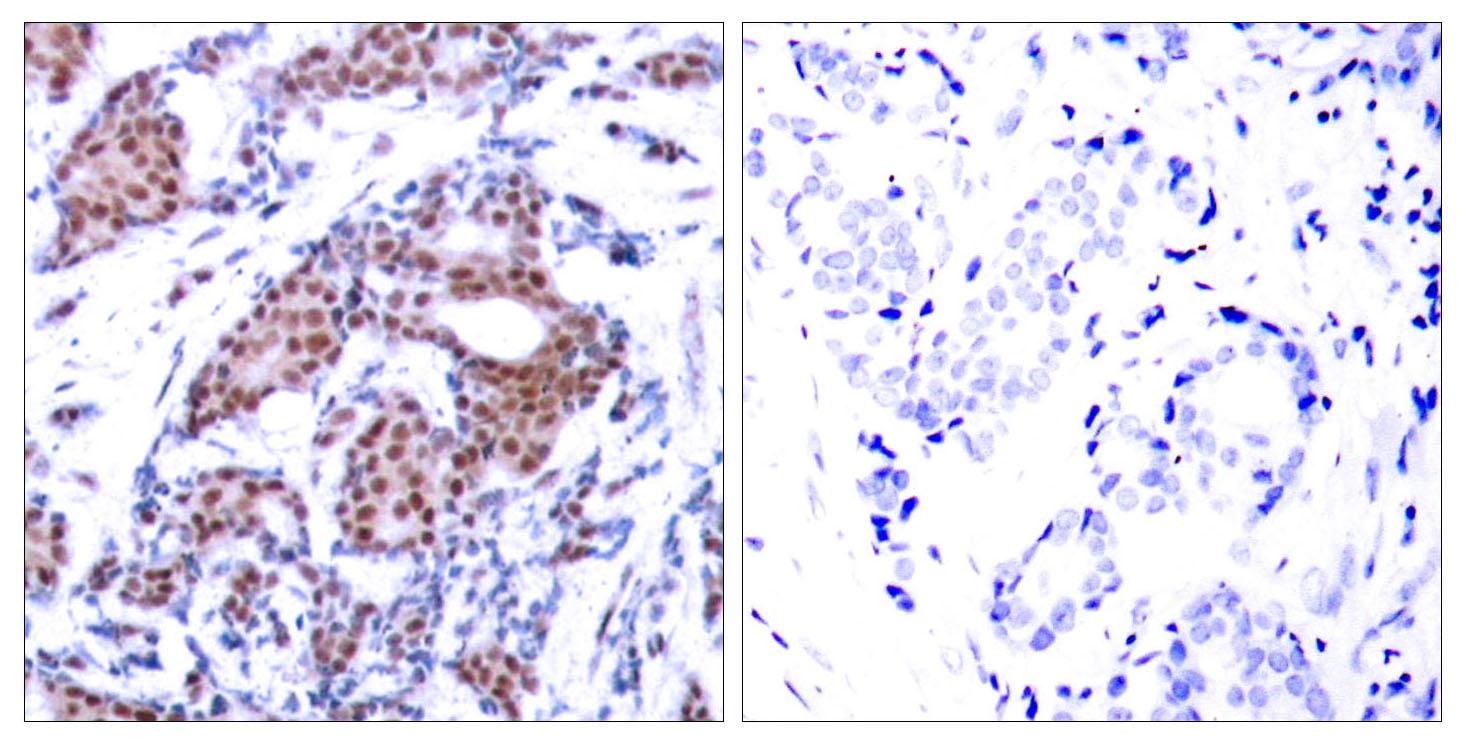
Immunocytochemistry of HeLa cells using anti- PP2A-alpha (N-terminus) antibody diluted 1:50.
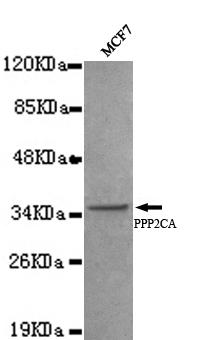
Western blot detection of PP2A-alpha(N-terminus) antibody in MCF7 cell lysates using PP2A-alpha(N-terminus) antibody (1:1000 diluted). Predicted band size:35KDa. Observed band size:35KDa.
Conjugated Antibody
This product is also available conjugated. Format: E2200450-Conjugate. Price: $485 / Size: 100μl.
E2200450-FITC$485 / 100μlE2200450-Biotin$485 / 100μlE2200450-HRP$485 / 100μlE2200450-AP$485 / 100μlE2200450-AF350$485 / 100μlE2200450-AF405M$485 / 100μlE2200450-AF488$485 / 100μlE2200450-AF514$485 / 100μlE2200450-AF532$485 / 100μlE2200450-AF555$485 / 100μlE2200450-AF568$485 / 100μlE2200450-AF405S$485 / 100μlE2200450-AF405L$485 / 100μlE2200450-AF546$485 / 100μlE2200450-AF594$485 / 100μlE2200450-AF610$485 / 100μlE2200450-AF635$485 / 100μlE2200450-AF647$485 / 100μlE2200450-AF680$485 / 100μlE2200450-AF700$485 / 100μlE2200450-AF750$485 / 100μlE2200450-AF790$485 / 100μlE2200450-APC$485 / 100μlE2200450-PE$485 / 100μlE2200450-Cy3$485 / 100μlE2200450-Cy5$485 / 100μlE2200450-Cy5.5$485 / 100μlE2200450-Cy7$485 / 100μlE2200450-PE-Cy5$485 / 100μl
Contact order@enogene.com to order conjugated formats. Magnetic Beads (1-30μm) conjugation is also available.


Categories by research area
Categories by product type
- Antibodies
- Primary Antibodies
- Tag antibodies
- Internal control antibodies
- Pathological (Immunohistochemistry, IHC) antibodies
- Cell Signal Transduction Research Antibodies
- Secondary Antibody
- Antibody Sampler Kits
- ELISA Kits
- Recombinant Proteins
- Fluorescence Reagents
- Signal Inhibitors and Activators
- Transfection Reagent
- Cell biology kits
- Overexpression Cell Lines
- Cell Lysates
- Purification Resins
- 2019-nCoV & Monkeypox