World supplier of antibodies, antigens and kits since 2007

Primary Antibodies
PPP4C (2F11) Mouse mAb
$255/ 100ul
QuantityTotal: $255
Ship worldwide. Contact order@enogene.com for ordering and bulk pricing or contact your local distributor.
Form Or Antibody
Form of AntibodyLiquid in PBS containing 50% glycerol, 0.5% BSA and 0.02% sodium azide, pH 7.3.
Specificty Sensitivity
Specificity/SensitivityThis antibody detects endogenous levels Protein Phosphatase 4C and does not cross-react with related proteins.
Product Information
Entrez summaryProtein phosphatase 4C may be involved in microtubule organization. It binds 1 iron ion and 1 manganese ion per subunit. PP4 consists of a catalytic subunit PPP4C and a regulatory subunit. PPP4R1 and belongs to the PPP phosphatase family, PP X subfamily.
UniPort summary FunctionProtein phosphatase that is involved in many processes such as microtubule organization at centrosomes, maturation of spliceosomal snRNPs, apoptosis, tumor necrosis factor (TNF)-alpha signaling, activation of c-Jun N-terminal kinase MAPK8, regulation of histone acetylation, DNA damage checkpoint signaling, NF-kappa-B activation and cell migration. The PPP4C-PPP4R1 PP4 complex may play a role in dephosphorylation and regulation of HDAC3. The PPP4C-PPP4R2-PPP4R3A PP4 complex specifically dephosphorylates H2AFX phosphorylated on Ser-140 (gamma-H2AFX) generated during DNA replication and required for DNA DSB repair. Dephosphorylates NDEL1 at CDK1 phosphorylation sites and negatively regulates CDK1 activity in interphase (By similarity)
IsotypeIgG2a
Molecular WeightCalculated MW: 35 kDa; Observed MW: 35 kDa
UniProt NumberP60510
Gene symbolPP4; PPX; PP4C; PPH3; PPP4
Product TypePrimary Antibody
Clone Number2F11-D10-G4
Recommended DilutionsWB: 1/500-1/1000 IHC: 1/50-1/100 IF: 1/50-1/200
ImmunogenPurified recombinant human Protein Phosphatase 4C protein fragments expressed in E.coli.
Antibody typeMonoclonal Antibody
PurificationAffinity Purified
Cellular localizationCytoplasm. Nucleus
Gene ID5531
All Names
AlternamePP4; PPX; PP4C; PPH3; PPP4
Price255$
Research AreaAutophagy antibody Cancer Cardiovascular Cell Biology Epigenetics & Nuclear Signaling Developmental Biologys Immunology Drug Discovery Products Metabolism Neuroscience Signal Transduction Stem Cells
BackgroundIn eukaryotes, the phosphorylation and dephosphorylation of proteins on serine and threonine residues is an essential means of regulating a broad range of cellular functions, including division, homeostasis and apoptosis. A group of proteins that are intimately involved in this process are the protein phosphatases. In general, the protein phosphatase (PP) holoenzyme is a trimeric complex composed of a regulatory subunit, a variable subunit and a catalytic subunit. Four major families of protein phosphatase catalytic subunits have been identified, designated PP1, PP2A, PP2B (calcineurin) and PP2C. An additional protein phosphatase catalytic subunit, PPX (also known as PP4) is a putative member of a novel PP family.
Gene NamePPP4C
Storage/StabilityStore at 4°C short term. Aliquot and store at -20°C long term. Avoid freeze/thaw cycles.
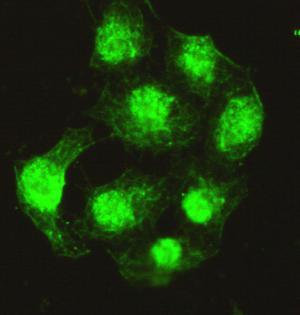
Immunocytochemistry of HeLa cells using anti- Protein Phosphatase 4C antibody diluted 1:200.
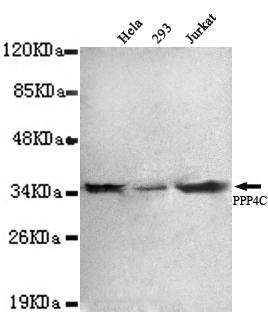
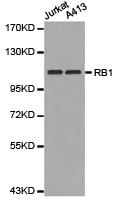
Western blot detection of Protein Phosphatase 4C antibody in Hela,293&Jurkat cell lysates using Protein Phosphatase 4C antibody (1:1000 diluted). Predicted band size: 34KDa Observed band size: 34KDa.
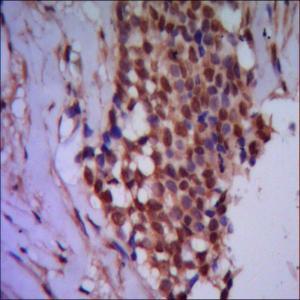
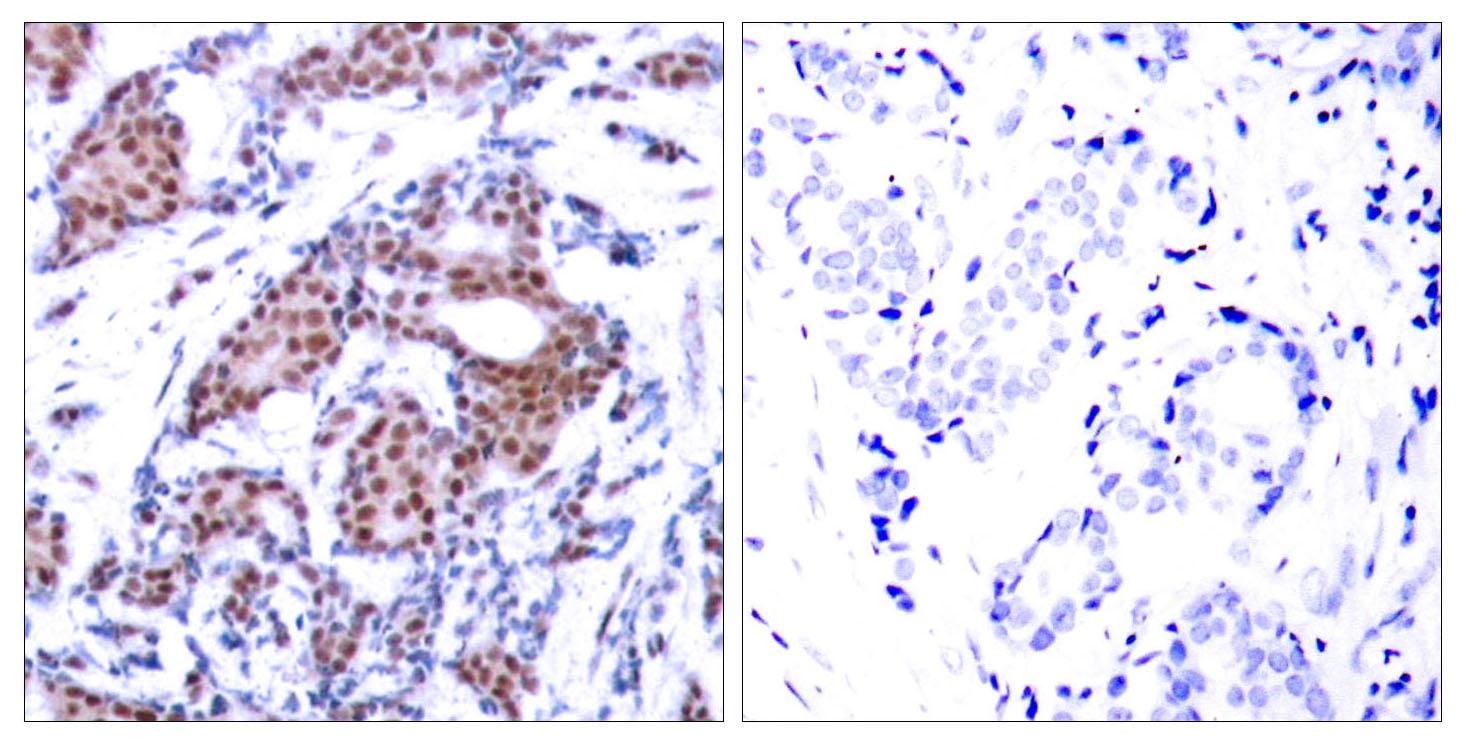
human breast cancer using anti-Protein Phosphatase 4C diluted
Conjugated Antibody
This product is also available conjugated. Format: E2200228-Conjugate. Price: $485 / Size: 100μl.
E2200228-FITC$485 / 100μlE2200228-Biotin$485 / 100μlE2200228-HRP$485 / 100μlE2200228-AP$485 / 100μlE2200228-AF350$485 / 100μlE2200228-AF405M$485 / 100μlE2200228-AF488$485 / 100μlE2200228-AF514$485 / 100μlE2200228-AF532$485 / 100μlE2200228-AF555$485 / 100μlE2200228-AF568$485 / 100μlE2200228-AF405S$485 / 100μlE2200228-AF405L$485 / 100μlE2200228-AF546$485 / 100μlE2200228-AF594$485 / 100μlE2200228-AF610$485 / 100μlE2200228-AF635$485 / 100μlE2200228-AF647$485 / 100μlE2200228-AF680$485 / 100μlE2200228-AF700$485 / 100μlE2200228-AF750$485 / 100μlE2200228-AF790$485 / 100μlE2200228-APC$485 / 100μlE2200228-PE$485 / 100μlE2200228-Cy3$485 / 100μlE2200228-Cy5$485 / 100μlE2200228-Cy5.5$485 / 100μlE2200228-Cy7$485 / 100μlE2200228-PE-Cy5$485 / 100μl
Contact order@enogene.com to order conjugated formats. Magnetic Beads (1-30μm) conjugation is also available.
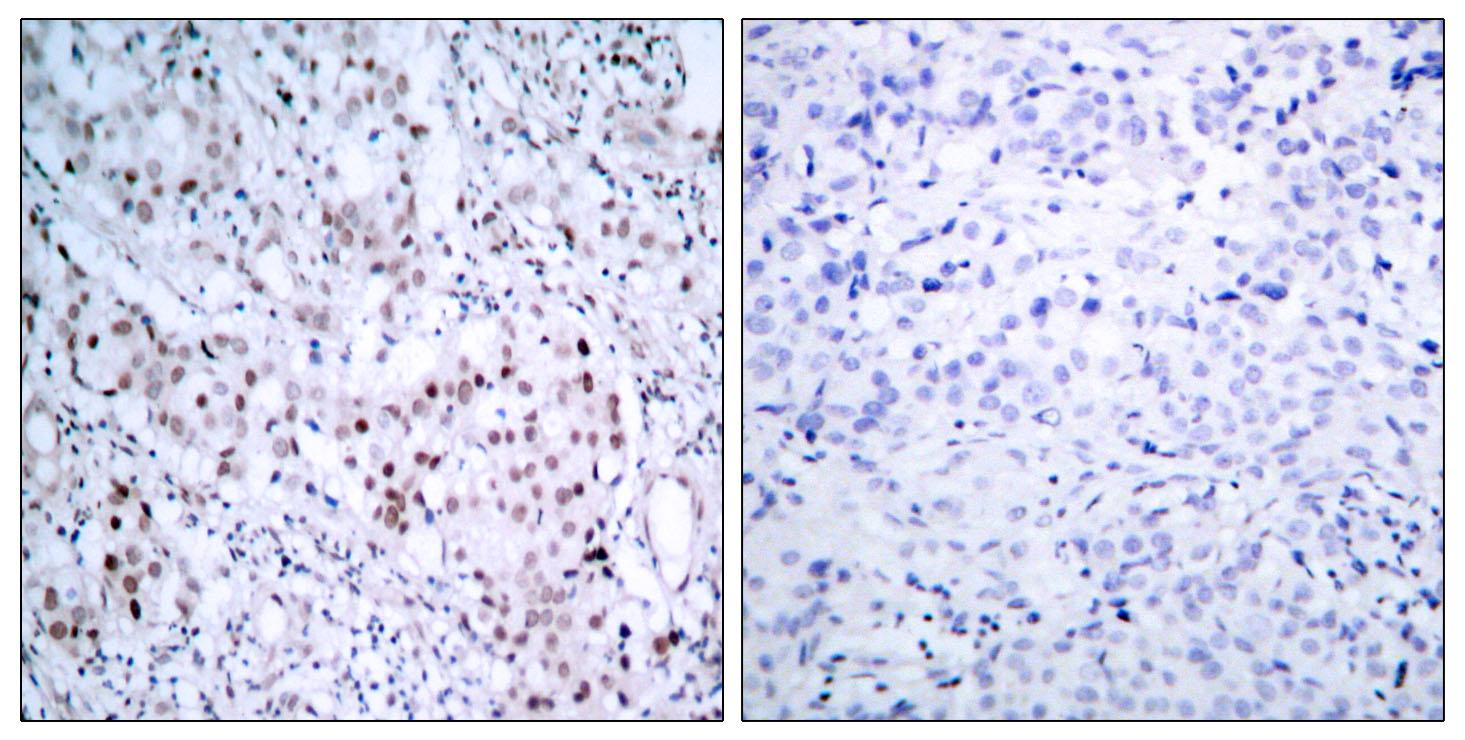


Categories by research area
Categories by product type
- Antibodies
- Primary Antibodies
- Tag antibodies
- Internal control antibodies
- Pathological (Immunohistochemistry, IHC) antibodies
- Cell Signal Transduction Research Antibodies
- Secondary Antibody
- Antibody Sampler Kits
- ELISA Kits
- Recombinant Proteins
- Fluorescence Reagents
- Signal Inhibitors and Activators
- Transfection Reagent
- Cell biology kits
- Overexpression Cell Lines
- Cell Lysates
- Purification Resins
- 2019-nCoV & Monkeypox