World supplier of antibodies, antigens and kits since 2007

Primary Antibodies
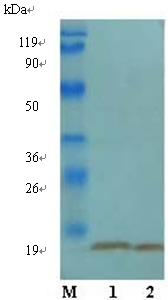
Cu/Zn-SOD Polyclonal Antibody
Human, mouse, rat, pig, chicken
ELISA, WB Other applications have not been tested.
$225/ 100μg/100μl
QuantityTotal: $225
Ship worldwide. Contact order@enogene.com for ordering and bulk pricing or contact your local distributor.
BackgroundSuperoxide dismutase (SOD) is a category of metalloenzyme, extensively existing in all living organisms (e.g. animals, plants, microorganisms, etc.). Based on its metallicity, SOD is categorized into copper, zinc-SOD (Cu, Zn-SOD), manganese-SOD (Mn-SOD) and iron-SOD (Fe-SOD). SOD has a physiological significance that can convert toxic superoxide free radicals into hydrogen peroxide and a vital enzyme in scavenging oxygen free radicals in living organisms. It has been demonstrated that there are up to 60 diseases directly related to oxygen free radicals and SOD level has been known as an illustrated indicator for aging and death. SOD can prohibit superoxide free radicals-induced damage at cellular level and locally repair damaged cells. It plays more and more important role in anti-oxidation in living organisms. SOD is one of components in cosmetic products, approved by Ministry of Health of the People’s Republic of China, because it can delay aging, regulate immune response and blood lipid level, and prevent radiation.
ImmunogenRecombinant human SOD1 (rh-SOD1)
PurificationPurified by protein A column
Storage/StabilityStore at -20 oC upon arrival for one year. Avoid repeated freeze-thaw cycles.
Form Or Antibody
Form of AntibodyEach vial at least contains 0.1 mg IgG in 0.1 ml (1 mg/ml) of 0.01 M PBS, PH7.4, 1 mg/ml BSA, 20 % glycerol, 0.01 % (w/v) NaN3
Product Information
LimitationFor research use only and are not intended for diagnostic or therapeutic use.
Isotope:
Rabbit IgG
Isotope:
Rabbit IgG
Recommended DilutionsWB: 1:500-5000
Price225$
Conjugated Antibody
This product is also available conjugated. Format: E14-01-Conjugate. Price: $485 / Size: 100μl.
E14-01-FITC$485 / 100μlE14-01-Biotin$485 / 100μlE14-01-HRP$485 / 100μlE14-01-AP$485 / 100μlE14-01-AF350$485 / 100μlE14-01-AF405M$485 / 100μlE14-01-AF488$485 / 100μlE14-01-AF514$485 / 100μlE14-01-AF532$485 / 100μlE14-01-AF555$485 / 100μlE14-01-AF568$485 / 100μlE14-01-AF405S$485 / 100μlE14-01-AF405L$485 / 100μlE14-01-AF546$485 / 100μlE14-01-AF594$485 / 100μlE14-01-AF610$485 / 100μlE14-01-AF635$485 / 100μlE14-01-AF647$485 / 100μlE14-01-AF680$485 / 100μlE14-01-AF700$485 / 100μlE14-01-AF750$485 / 100μlE14-01-AF790$485 / 100μlE14-01-APC$485 / 100μlE14-01-PE$485 / 100μlE14-01-Cy3$485 / 100μlE14-01-Cy5$485 / 100μlE14-01-Cy5.5$485 / 100μlE14-01-Cy7$485 / 100μlE14-01-PE-Cy5$485 / 100μl
Contact order@enogene.com to order conjugated formats. Magnetic Beads (1-30μm) conjugation is also available.


Categories by research area
Categories by product type
- Antibodies
- Primary Antibodies
- Tag antibodies
- Internal control antibodies
- Pathological (Immunohistochemistry, IHC) antibodies
- Cell Signal Transduction Research Antibodies
- Secondary Antibody
- Antibody Sampler Kits
- ELISA Kits
- Recombinant Proteins
- Fluorescence Reagents
- Signal Inhibitors and Activators
- Transfection Reagent
- Cell biology kits
- Overexpression Cell Lines
- Cell Lysates
- Purification Resins
- 2019-nCoV & Monkeypox