World supplier of antibodies, antigens and kits since 2007

Primary Antibodies
ATXN1 Antibody
Human
WB, IHC, IF, FC, ELISA. Not yet tested in other applications.
$225/ 100μg/100μl
QuantityTotal: $225
Ship worldwide. Contact order@enogene.com for ordering and bulk pricing or contact your local distributor.
BackgroundThe autosomal dominant cerebellar ataxias (ADCA) are a heterogeneous group of neurodegenerative disorders characterized by progressive degeneration of the cerebellum, brain stem and spinal cord. Clinically, ADCA has been divided into three groups: ADCA types I-III. ADCAI is genetically heterogeneous, with five genetic loci, designated spinocerebellar ataxia (SCA) 1, 2, 3, 4 and 6, being assigned to five different chromosomes. ADCAII, which always presents with retinal degeneration (SCA7), and ADCAIII often referred to as the `pure' cerebellar syndrome (SCA5), are most likely homogeneous disorders. Several SCA genes have been cloned and shown to contain CAG repeats in their coding regions. ADCA is caused by the expansion of the CAG repeats, producing an elongated polyglutamine tract in the corresponding protein. The expanded repeats are variable in size and unstable, usually increasing in size when transmitted to successive generations.
Product Information
Clone Number2F5
SpeciesMouse IgG1
Entrez Gene6310
Recommended DilutionsWB: 1/500 - 1/2000, IHC: 1/200 - 1/1000, IF: 1/200 - 1/1000, FC: 1/200-1/400
ELISA: Propose dilution 1/10000.
ELISA: Propose dilution 1/10000.
Molecular Weight87kDa
All Names
AlternameATX1; SCA1; D6S504E; ATXN1
ImmunogenPurified recombinant fragment of human ATXN1 expressed in E. Coli.
Storage/StabilityStore at 4℃, for long term storage, store at -20℃.
Form Or Antibody
Form of AntibodyAscitic fluid containing 0.03% sodium azide.
Price225$
Research AreaAutophagy antibody Cancer Cardiovascular Cell Biology Epigenetics & Nuclear Signaling Developmental Biologys Immunology Drug Discovery Products Metabolism Neuroscience Signal Transduction Stem Cells

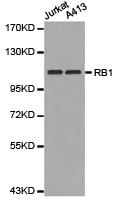
Figure 1: Western blot analysis dye. Red: Actin using ATXN1 mAb against been labeled HEK293 (1) and ATXN1-hIgGFc Fluor-555 phalloidin. transfected HEK293 (2) cell lysate.
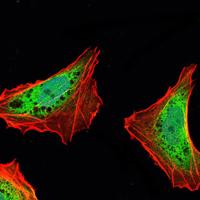
analysis of NTERA-2 ATXN1 mouse mAb Blue: DRAQ5 Figure 1: Western blot analysis dye. Red: Actin using ATXN1 mAb against been labeled HEK293 (1) and ATXN1-hIgGFc Fluor-555 phalloidin.
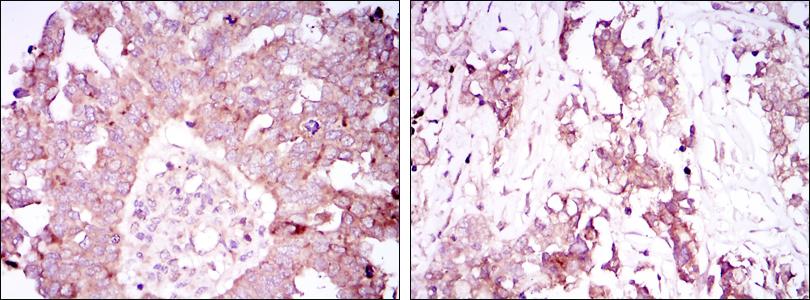
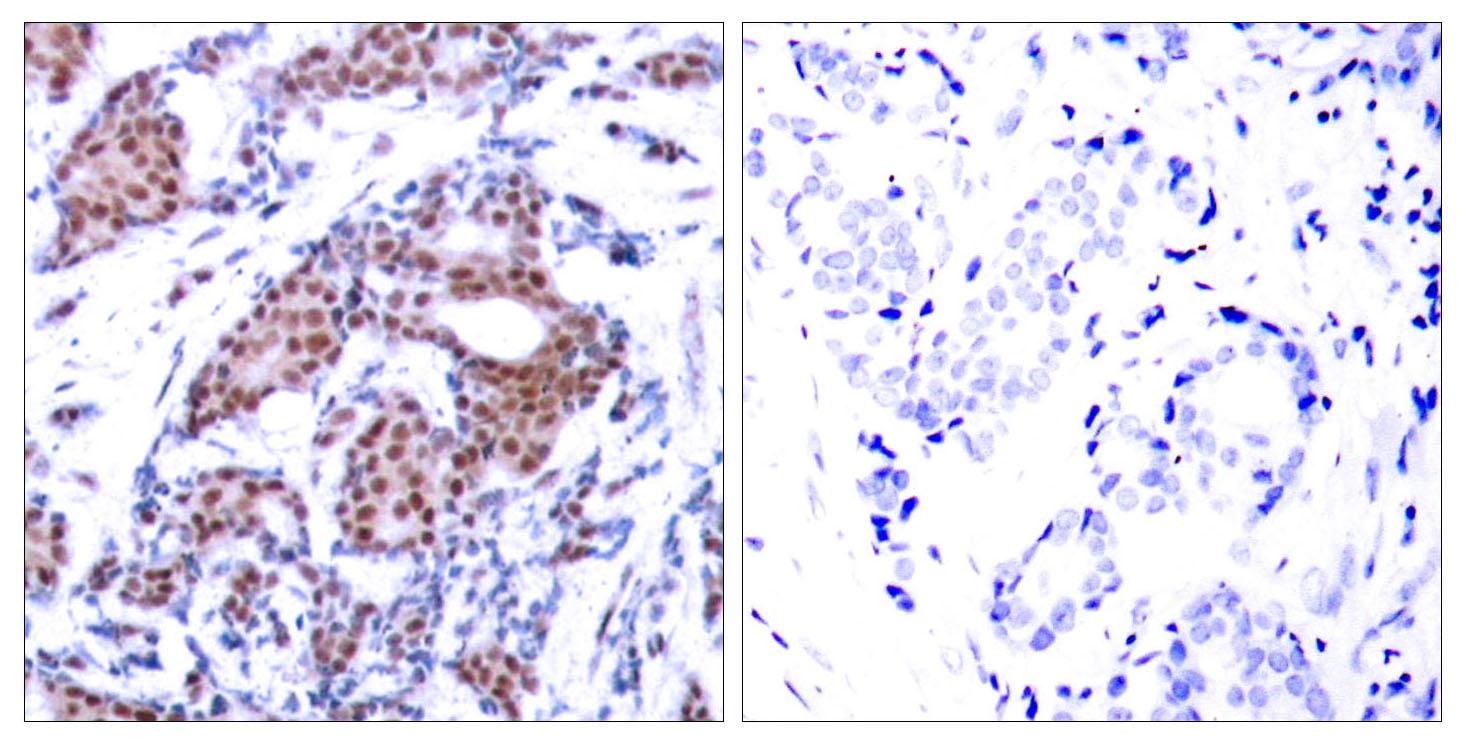
Immunofluorescence Figure 3: Immunohistochemical analysis of cells using paraffin-embedded ovarian cancer tissues (left) (green). and lung cancer tissues (right) using ATXN1 fluorescent DNA mouse mAb with DAB staining. filaments have with Alexa
Conjugated Antibody
This product is also available conjugated. Format: E10-30146-Conjugate. Price: $485 / Size: 100μl.
E10-30146-FITC$485 / 100μlE10-30146-Biotin$485 / 100μlE10-30146-HRP$485 / 100μlE10-30146-AP$485 / 100μlE10-30146-AF350$485 / 100μlE10-30146-AF405M$485 / 100μlE10-30146-AF488$485 / 100μlE10-30146-AF514$485 / 100μlE10-30146-AF532$485 / 100μlE10-30146-AF555$485 / 100μlE10-30146-AF568$485 / 100μlE10-30146-AF405S$485 / 100μlE10-30146-AF405L$485 / 100μlE10-30146-AF546$485 / 100μlE10-30146-AF594$485 / 100μlE10-30146-AF610$485 / 100μlE10-30146-AF635$485 / 100μlE10-30146-AF647$485 / 100μlE10-30146-AF680$485 / 100μlE10-30146-AF700$485 / 100μlE10-30146-AF750$485 / 100μlE10-30146-AF790$485 / 100μlE10-30146-APC$485 / 100μlE10-30146-PE$485 / 100μlE10-30146-Cy3$485 / 100μlE10-30146-Cy5$485 / 100μlE10-30146-Cy5.5$485 / 100μlE10-30146-Cy7$485 / 100μlE10-30146-PE-Cy5$485 / 100μl
Contact order@enogene.com to order conjugated formats. Magnetic Beads (1-30μm) conjugation is also available.
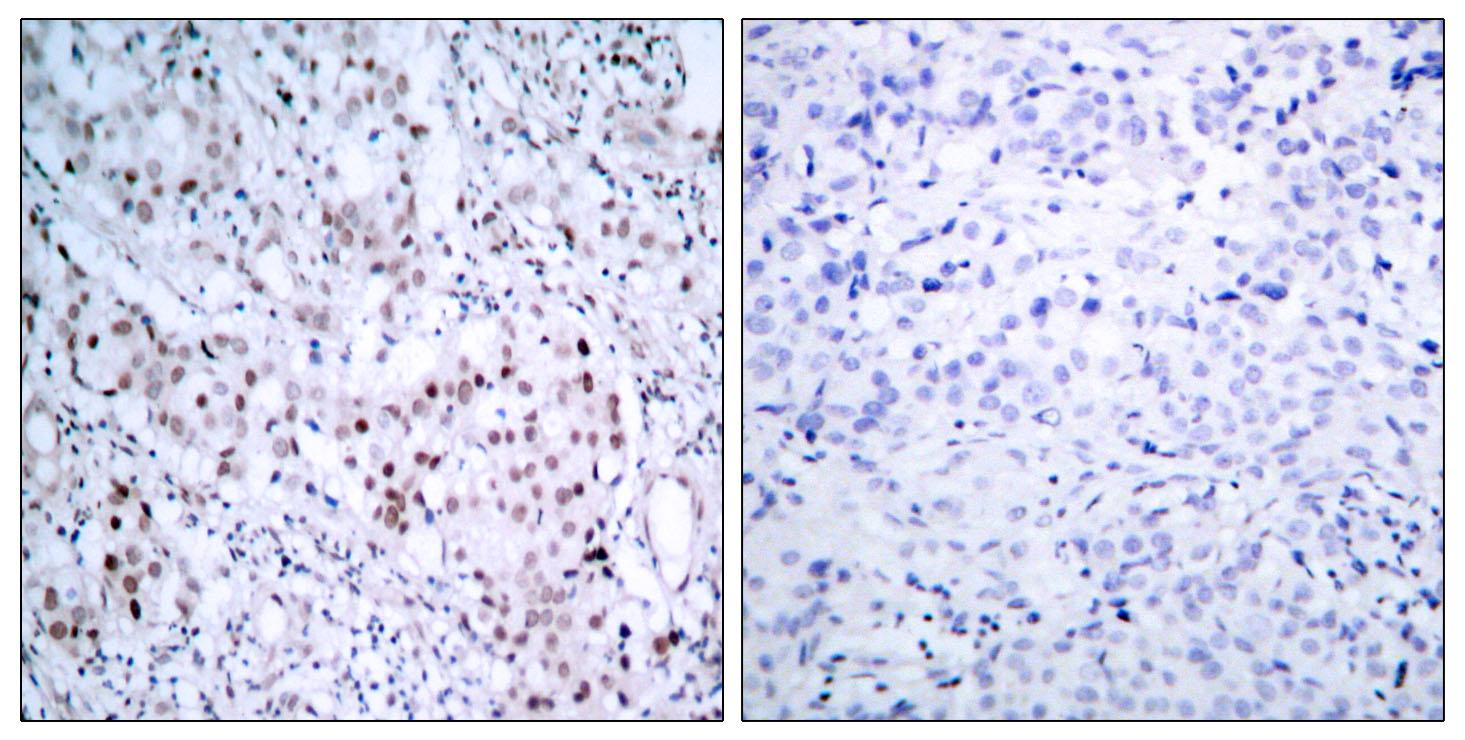


Categories by research area
Categories by product type
- Antibodies
- Primary Antibodies
- Tag antibodies
- Internal control antibodies
- Pathological (Immunohistochemistry, IHC) antibodies
- Cell Signal Transduction Research Antibodies
- Secondary Antibody
- Antibody Sampler Kits
- ELISA Kits
- Recombinant Proteins
- Fluorescence Reagents
- Signal Inhibitors and Activators
- Transfection Reagent
- Cell biology kits
- Overexpression Cell Lines
- Cell Lysates
- Purification Resins
- 2019-nCoV & Monkeypox