World supplier of antibodies, antigens and kits since 2007

Primary Antibodies
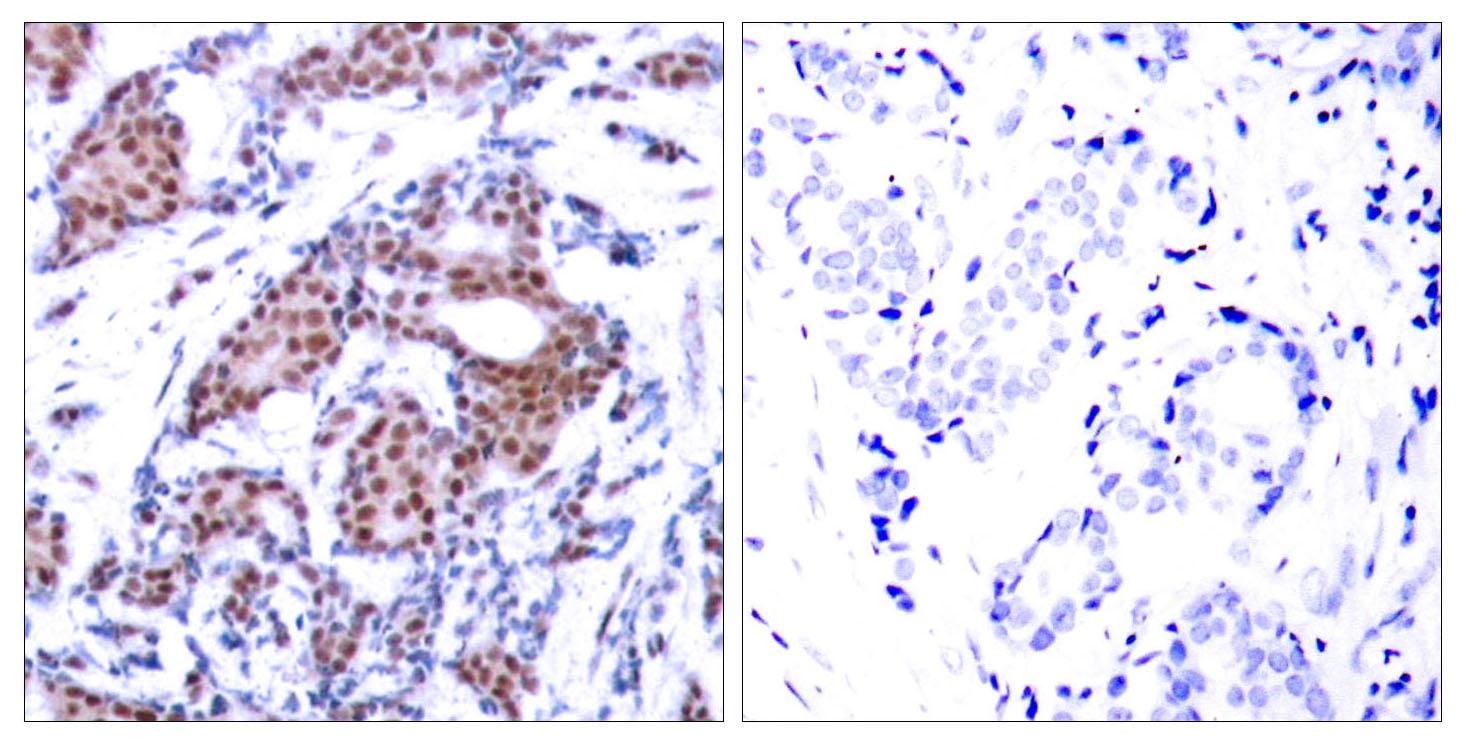
DDR2 Antibody
Human
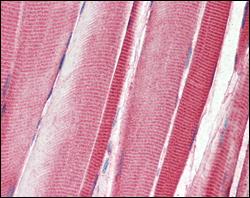
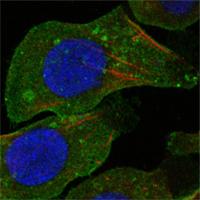
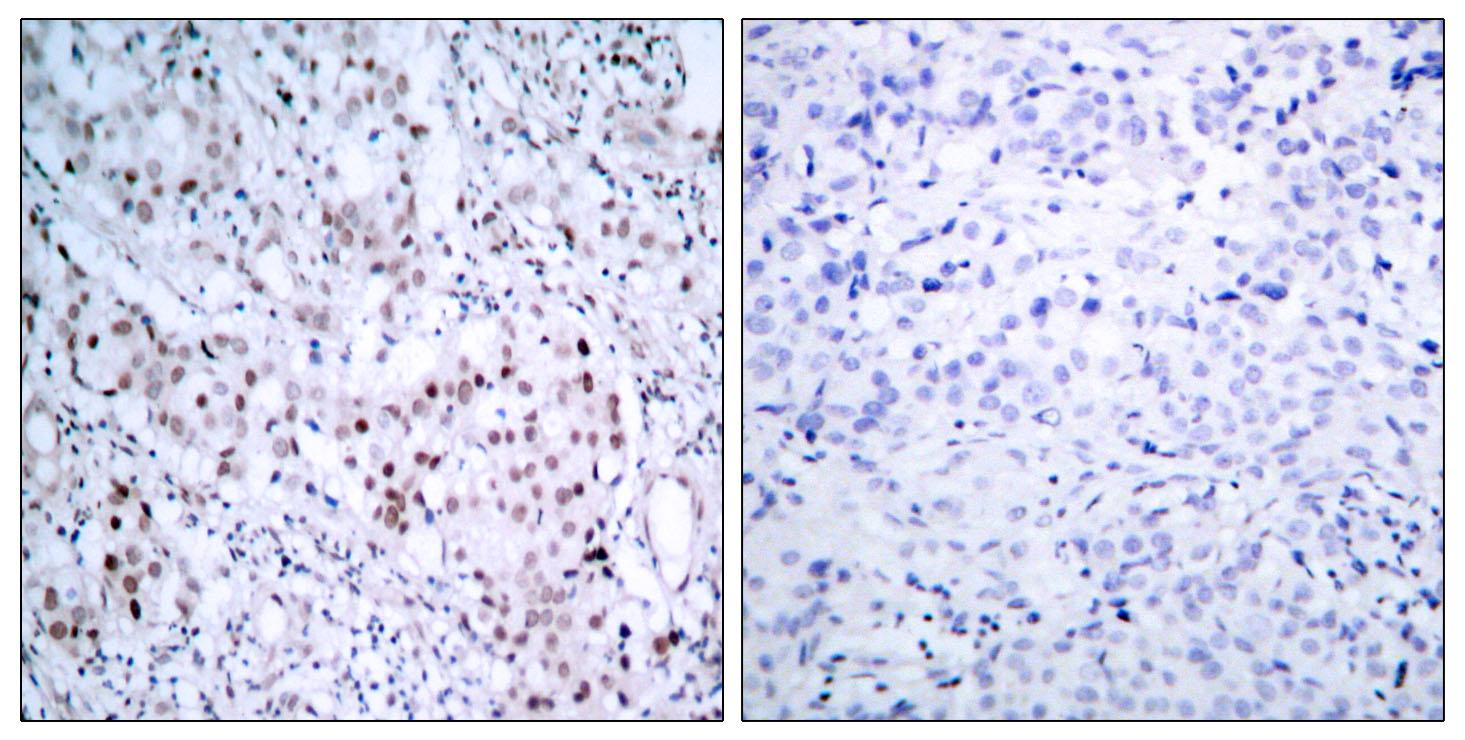
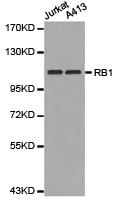
WB, IHC,IF,ELISA. Not yet tested in other applications. Determining optimal working dilutions by titration test.
$225/ 100μg/100μl
QuantityTotal: $225
Ship worldwide. Contact order@enogene.com for ordering and bulk pricing or contact your local distributor.
BackgroundDDR2 (discoidin domain receptor family, member 2) is one of the largest families of proteins in eukaryotes. The family has been classified in 8 major groups based on sequence comparison of their tyrosine (PTK) or serine/ threonine (STK) kinase catalytic domains. Receptor tyrosine kinases (RTKs) play a key role in the communication of cells with their microenvironment. These molecules are involved in the regulation of cell growth, differentiation, and metabolism. In several cases the biochemical mechanism by which RTKs transduce signals across the membrane has been shown to be ligand induced receptor oligomerization and subsequent intracellular phosphorylation. This autophosphorylation leads to phosphorylation of cytosolic targets as well as association with other molecules, which are involved in pleiotropic effects of signal transduction. RTKs have a tripartite structure with extracellular, transmembrane, and cytoplasmic regions. This gene encodes a member of a novel subclass of RTKs and contains a distinct extracellular region encompassing a factor VIII-like domain. Alternative splicing in the 5' UTR results in multiple transcript variants encoding the same protein.
Product Information
Clone Number3B11E4
SpeciesMouse IgG2a
Entrez Gene4921
Recommended DilutionsWB:1/500 - 1/2000,IHC:1/200 - 1/1000,IF:1/200 - 1/1000, ELISA: Propose dilution 1/10000.
All Names
AlternameTKT; MIG20a; NTRKR3; TYRO10
ImmunogenPurified recombinant fragment of human DDR2 expressed in E. Coli.
Storage/StabilityStore at 4℃, for long term storage, store at -20℃
Form Or Antibody
Form of AntibodyAscitic fluid containing 0.03% sodium azide.
Price225$
Research AreaAutophagy antibody Cancer Cardiovascular Cell Biology Epigenetics & Nuclear Signaling Developmental Biologys Immunology Drug Discovery Products Metabolism Neuroscience Signal Transduction Stem Cells

Conjugated Antibody
This product is also available conjugated. Format: E10-20151-Conjugate. Price: $485 / Size: 100μl.
E10-20151-FITC$485 / 100μlE10-20151-Biotin$485 / 100μlE10-20151-HRP$485 / 100μlE10-20151-AP$485 / 100μlE10-20151-AF350$485 / 100μlE10-20151-AF405M$485 / 100μlE10-20151-AF488$485 / 100μlE10-20151-AF514$485 / 100μlE10-20151-AF532$485 / 100μlE10-20151-AF555$485 / 100μlE10-20151-AF568$485 / 100μlE10-20151-AF405S$485 / 100μlE10-20151-AF405L$485 / 100μlE10-20151-AF546$485 / 100μlE10-20151-AF594$485 / 100μlE10-20151-AF610$485 / 100μlE10-20151-AF635$485 / 100μlE10-20151-AF647$485 / 100μlE10-20151-AF680$485 / 100μlE10-20151-AF700$485 / 100μlE10-20151-AF750$485 / 100μlE10-20151-AF790$485 / 100μlE10-20151-APC$485 / 100μlE10-20151-PE$485 / 100μlE10-20151-Cy3$485 / 100μlE10-20151-Cy5$485 / 100μlE10-20151-Cy5.5$485 / 100μlE10-20151-Cy7$485 / 100μlE10-20151-PE-Cy5$485 / 100μl
Contact order@enogene.com to order conjugated formats. Magnetic Beads (1-30μm) conjugation is also available.


Categories by research area
Categories by product type
- Antibodies
- Primary Antibodies
- Tag antibodies
- Internal control antibodies
- Pathological (Immunohistochemistry, IHC) antibodies
- Cell Signal Transduction Research Antibodies
- Secondary Antibody
- Antibody Sampler Kits
- ELISA Kits
- Recombinant Proteins
- Fluorescence Reagents
- Signal Inhibitors and Activators
- Transfection Reagent
- Cell biology kits
- Overexpression Cell Lines
- Cell Lysates
- Purification Resins
- 2019-nCoV & Monkeypox