World supplier of antibodies, antigens and kits since 2007

ELISA Kits
Human HMGB1/High mobility group protein B1 ELISA Kit
Human
$1009/ 96T
QuantityTotal: $1009
Ship worldwide. Contact order@enogene.com for ordering and bulk pricing or contact your local distributor.
Product Information
Cite ID#EN5521045
TypeHuman ELISA Kits
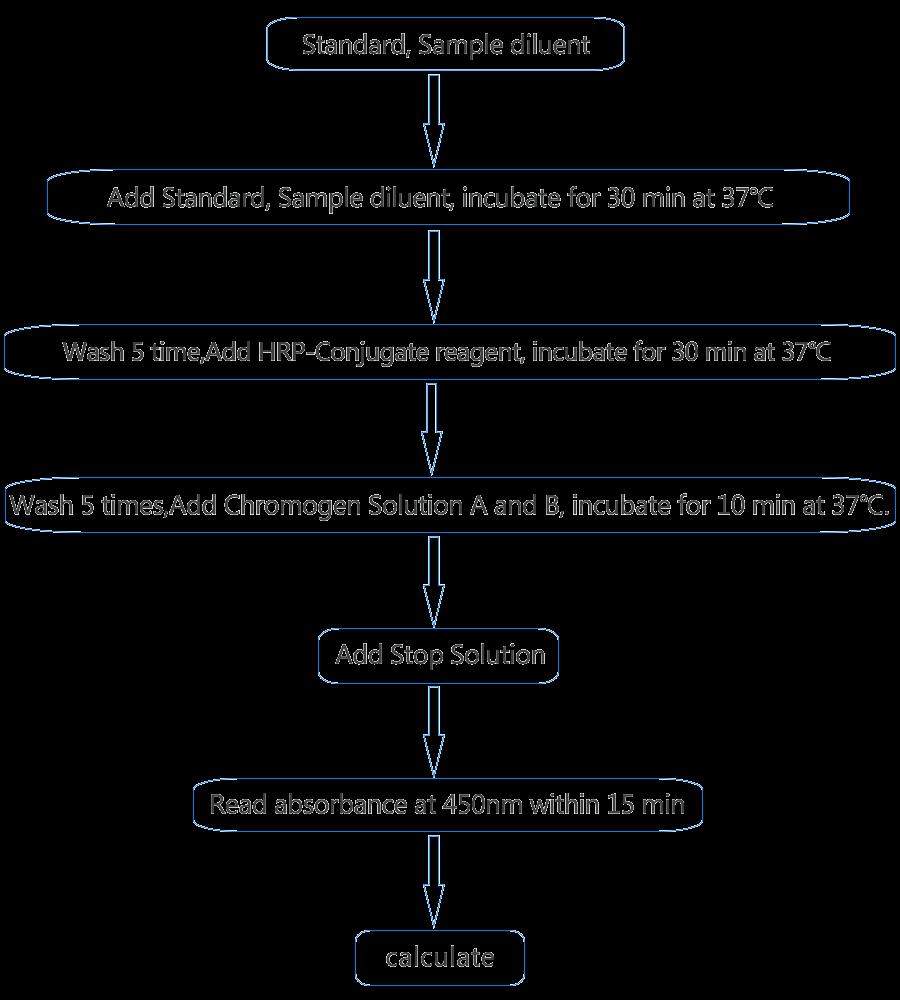
DescriptionHuman HMGB1/High mobility group protein B1 ELISA Kit is a ready-to-use microwell, strip plate ELISA (enzyme-linked immunosorbent assay) Kit designed for the quantitative measurement of HMGB1 in biological samples. Our rigorously validated, ready-to-go Human HMGB1/High mobility group protein B1 ELISA Kit use a simple protocol that easily integrates into your current processes, allowing you to rapidly and accurately detect HMGB1 in your samples. Appropriate sample types may include Cell Culture Supernates, Serum, Platelet-poor EDTA Plasma, Platelet-poor Heparin Plasma, Urine.
Precision
Intra-Assay Precision (Precision within an assay): Three samples of known concentration were tested several times on one plate to assess intra-assay precision.
Inter-Assay Precision (Precision between assays): Three samples of known concentration were tested in several separate assays to assess inter-assay precision. Assays were performed by at least two technicians using two lots of components.
Assay typeSandwich
Detection principleSpectrophotometrical
Sample typeThis immunoassay kit allows for the in vitro quantitative determination in Serum, plasma, tissue homogenates, cell culture supernates and other biological fluids.
Sensitivity0.1 ng/mL
Assay range0.156-10 ng/mL
Kit componentsAssay Plate, Standard, Sample Diluent, Assay Diluent A&B, Detection Reagent A&B, Wash Buffer, Substrate, Stop Solution.
Other reagents requiredDeionized or distilled water
FunctionIn the extracellular compartment (following either active secretion or passive release) involved in regulation of the inflammatory response. Fully reduced HGMB1 (which subsequently gets oxidized after release) in association with CXCL12 mediates the recruitment of inflammatory cells during the initial phase of tissue injury; the CXCL12:HMGB1 complex triggers CXCR4 homodimerization (PubMed:22370717). Induces the migration of monocyte-derived immature dendritic cells and seems to regulate adhesive and migratory functions of neutrophils implicating AGER/RAGE and ITGAM (By similarity). Can bind to various types of DNA and RNA including microbial unmethylated CpG-DNA to enhance the innate immune response to nucleic acids. Proposed to act in promiscuous DNA/RNA sensing which cooperates with subsequent discriminative sensing by specific pattern recognition receptors (By similarity). Promotes extracellular DNA-induced AIM2 inflammasome activation implicating AGER/RAGE (PubMed:24971542). Disulfide HMGB1 binds to transmembrane receptors, such as AGER/RAGE, TLR2, TLR4 and probably TREM1, thus activating their signal transduction pathways. Mediates the release of cytokines/chemokines such as TNF, IL-1, IL-6, IL-8, CCL2, CCL3, CCL4 and CXCL10 (PubMed:12765338, PubMed:18354232, PubMed:19264983, PubMed:20547845, PubMed:24474694). Promotes secretion of interferon-gamma by macrophage-stimulated natural killer (NK) cells in concert with other cytokines like IL-2 or IL-12 (PubMed:15607795). TLR4 is proposed to be the primary receptor promoting macrophage activation and signaling through TLR4 seems to implicate LY96/MD-2 (PubMed:20547845). In bacterial LPS- or LTA-mediated inflammatory responses binds to the endotoxins and transfers them to CD14 for signaling to the respective TLR4:LY96 and TLR2 complexes (PubMed:18354232, PubMed:21660935, PubMed:25660311). Contributes to tumor proliferation by association with ACER/RAGE (By similarity). Can bind to IL1-beta and signals through the IL1R1:IL1RAP receptor complex (PubMed:18250463). Binding to class A CpG activates cytokine production in plasmacytoid dendritic cells implicating TLR9,
FormELISA Kits
SynonymsHigh mobility group protein 1,HMG-1,HMG1
Price1009$
Gene NameHMGB1
Storage/StabilityStore at +4°C. Please refer to protocols.
Conjugated Antibody
This product is also available conjugated. Format: E45K00594-Conjugate. Price: $485 / Size: 100μl.
E45K00594-FITC$485 / 100μlE45K00594-Biotin$485 / 100μlE45K00594-HRP$485 / 100μlE45K00594-AP$485 / 100μlE45K00594-AF350$485 / 100μlE45K00594-AF405M$485 / 100μlE45K00594-AF488$485 / 100μlE45K00594-AF514$485 / 100μlE45K00594-AF532$485 / 100μlE45K00594-AF555$485 / 100μlE45K00594-AF568$485 / 100μlE45K00594-AF405S$485 / 100μlE45K00594-AF405L$485 / 100μlE45K00594-AF546$485 / 100μlE45K00594-AF594$485 / 100μlE45K00594-AF610$485 / 100μlE45K00594-AF635$485 / 100μlE45K00594-AF647$485 / 100μlE45K00594-AF680$485 / 100μlE45K00594-AF700$485 / 100μlE45K00594-AF750$485 / 100μlE45K00594-AF790$485 / 100μlE45K00594-APC$485 / 100μlE45K00594-PE$485 / 100μlE45K00594-Cy3$485 / 100μlE45K00594-Cy5$485 / 100μlE45K00594-Cy5.5$485 / 100μlE45K00594-Cy7$485 / 100μlE45K00594-PE-Cy5$485 / 100μl
Contact order@enogene.com to order conjugated formats. Magnetic Beads (1-30μm) conjugation is also available.

Categories by research area
Categories by product type
- Antibodies
- Primary Antibodies
- Tag antibodies
- Internal control antibodies
- Pathological (Immunohistochemistry, IHC) antibodies
- Cell Signal Transduction Research Antibodies
- Secondary Antibody
- Antibody Sampler Kits
- ELISA Kits
- Recombinant Proteins
- Fluorescence Reagents
- Signal Inhibitors and Activators
- Transfection Reagent
- Cell biology kits
- Overexpression Cell Lines
- Cell Lysates
- Purification Resins
- 2019-nCoV & Monkeypox