World supplier of antibodies, antigens and kits since 2007

ELISA Kits
Bovine TGFB1/Transforming growth factor beta-1 ELISA Kit
Bovine
$975/ 96T
QuantityTotal: $975
Ship worldwide. Contact order@enogene.com for ordering and bulk pricing or contact your local distributor.
Product Information
Cite ID#EN5520906
TypeBovine (Cow, Cattle) ELISA Kits
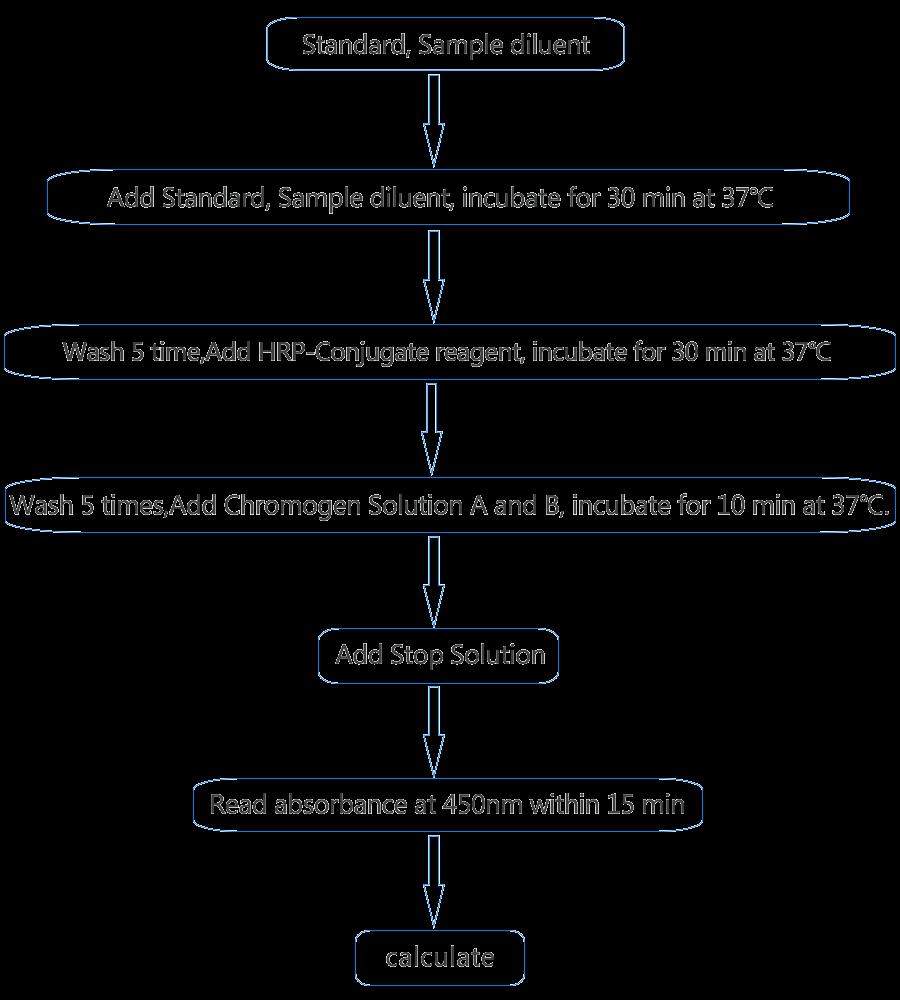
DescriptionBovine TGFB1/Transforming growth factor beta-1 ELISA Kit is a ready-to-use microwell, strip plate ELISA (enzyme-linked immunosorbent assay) Kit designed for the quantitative measurement of TGFB1 in biological samples. Our rigorously validated, ready-to-go Bovine TGFB1/Transforming growth factor beta-1 ELISA Kit use a simple protocol that easily integrates into your current processes, allowing you to rapidly and accurately detect TGFB1 in your samples. Appropriate sample types may include Cell Culture Supernates, Serum, Platelet-poor EDTA Plasma, Platelet-poor Heparin Plasma, Urine.
Precision
Intra-Assay Precision (Precision within an assay): Three samples of known concentration were tested several times on one plate to assess intra-assay precision.
Inter-Assay Precision (Precision between assays): Three samples of known concentration were tested in several separate assays to assess inter-assay precision. Assays were performed by at least two technicians using two lots of components.
Assay typeSandwich
Detection principleSpectrophotometrical
Sample typeThis immunoassay kit allows for the in vitro quantitative determination in Serum, plasma, tissue homogenates, cell culture supernates and other biological fluids.
Sensitivity29 pg/mL
Assay range78-5000 pg/mL
Kit componentsAssay Plate, Standard, Sample Diluent, Assay Diluent A&B, Detection Reagent A&B, Wash Buffer, Substrate, Stop Solution.
Other reagents requiredDeionized or distilled water
FunctionTransforming growth factor beta-1: Multifunctional protein that regulates the growth and differentiation of various cell types and is involved in various processes, such as normal development, immune function, microglia function and responses to neurodegeneration (By similarity). Activation into mature form follows different steps: following cleavage of the proprotein in the Golgi apparatus, Latency-associated peptide (LAP) and Transforming growth factor beta-1 (TGF-beta-1) chains remain non-covalently linked rendering TGF-beta-1 inactive during storage in extracellular matrix. At the same time, LAP chain interacts with 'milieu molecules', such as LTBP1, LRRC32/GARP and LRRC33/NRROS that control activation of TGF-beta-1 and maintain it in a latent state during storage in extracellular milieus. TGF-beta-1 is released from LAP by integrins (ITGAV:ITGB6 or ITGAV:ITGB8): integrin-binding to LAP stabilizes an alternative conformation of the LAP bowtie tail and results in distortion of the LAP chain and subsequent release of the active TGF-beta-1. Once activated following release of LAP, TGF-beta-1 acts by binding to TGF-beta receptors (TGFBR1 and TGFBR2), which transduce signal (By similarity). While expressed by many cells types, TGF-beta-1 only has a very localized range of action within cell environment thanks to fine regulation of its activation by Latency-associated peptide chain (LAP) and 'milieu molecules'. Plays an important role in bone remodeling: acts as a potent stimulator of osteoblastic bone formation, causing chemotaxis, proliferation and differentiation in committed osteoblasts. Can promote either T-helper 17 cells (Th17) or regulatory T-cells (Treg) lineage differentiation in a concentration-dependent manner. At high concentrations, leads to FOXP3-mediated suppression of RORC and down-regulation of IL-17 expression, favoring Treg cell development. At low concentrations in concert with IL-6 and IL-21, leads to expression of the IL-17 and IL-23 receptors, favoring differentiation to Th17 cells (By similarity). Stimulates sustained production of collagen through the activation of CREB3L1 by regulated intramembrane proteolysis (RIP). Mediates SMAD2/3 activation by inducing its phosphorylation and subsequent translocation to the nucleus. Can induce epithelial-to-mesenchymal transition (EMT) and cell migration in various cell types (By similarity).
FormELISA Kits
SynonymsTGF-beta-1
Price975$
Gene NameTGFB1
Storage/StabilityStore at +4°C. Please refer to protocols.

Categories by research area
Categories by product type
- Antibodies
- Primary Antibodies
- Tag antibodies
- Internal control antibodies
- Pathological (Immunohistochemistry, IHC) antibodies
- Cell Signal Transduction Research Antibodies
- Secondary Antibody
- Antibody Sampler Kits
- ELISA Kits
- Recombinant Proteins
- Fluorescence Reagents
- Signal Inhibitors and Activators
- Transfection Reagent
- Cell biology kits
- Overexpression Cell Lines
- Cell Lysates
- Purification Resins
- 2019-nCoV & Monkeypox