World supplier of antibodies, antigens and kits since 2007

ELISA Kits
Mouse Clu/Clusterin ELISA Kit
Mouse
$907/ 96T
QuantityTotal: $907
Ship worldwide. Contact order@enogene.com for ordering and bulk pricing or contact your local distributor.
Product Information
Cite ID#EN5520805
TypeMouse ELISA Kits (Murine)
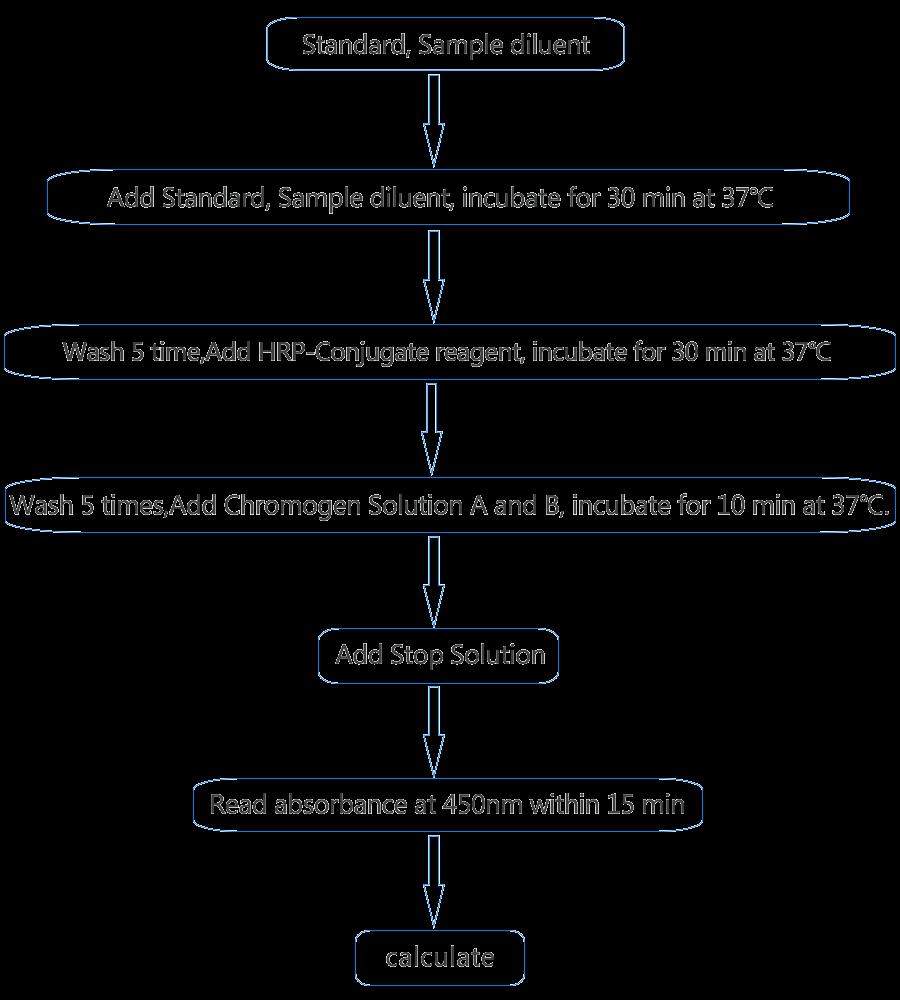
DescriptionMouse Clu/Clusterin ELISA Kit is a ready-to-use microwell, strip plate ELISA (enzyme-linked immunosorbent assay) Kit designed for the quantitative measurement of Clu in biological samples. Our rigorously validated, ready-to-go Mouse Clu/Clusterin ELISA Kit use a simple protocol that easily integrates into your current processes, allowing you to rapidly and accurately detect Clu in your samples. Appropriate sample types may include Cell Culture Supernates, Serum, Platelet-poor EDTA Plasma, Platelet-poor Heparin Plasma, Urine.
Precision
Intra-Assay Precision (Precision within an assay): Three samples of known concentration were tested several times on one plate to assess intra-assay precision.
Inter-Assay Precision (Precision between assays): Three samples of known concentration were tested in several separate assays to assess inter-assay precision. Assays were performed by at least two technicians using two lots of components.
Assay typeSandwich
Detection principleSpectrophotometrical
Sample typeThis immunoassay kit allows for the in vitro quantitative determination in Serum, plasma, tissue homogenates, cell culture supernates and other biological fluids.
Sensitivity0.782 ng/mL
Assay range1.56-100 ng/ml
Kit componentsAssay Plate, Standard, Sample Diluent, Assay Diluent A&B, Detection Reagent A&B, Wash Buffer, Substrate, Stop Solution.
Other reagents requiredDeionized or distilled water
FunctionFunctions as extracellular chaperone that prevents aggregation of nonnative proteins. Prevents stress-induced aggregation of blood plasma proteins. Inhibits formation of amyloid fibrils by APP, APOC2, B2M, CALCA, CSN3, SNCA and aggregation-prone LYZ variants (in vitro). Does not require ATP. Maintains partially unfolded proteins in a state appropriate for subsequent refolding by other chaperones, such as HSPA8/HSC70. Does not refold proteins by itself. Binding to cell surface receptors triggers internalization of the chaperone-client complex and subsequent lysosomal or proteasomal degradation. When secreted, protects cells against apoptosis and against cytolysis by complement. Intracellular forms interact with ubiquitin and SCF (SKP1-CUL1-F-box protein) E3 ubiquitin-protein ligase complexes and promote the ubiquitination and subsequent proteasomal degradation of target proteins. Promotes proteasomal degradation of COMMD1 and IKBKB. Modulates NF-kappa-B transcriptional activity. Promotes apoptosis when in the nucleus. Inhibits apoptosis when associated with the mitochondrial membrane by interference with BAX-dependent release of cytochrome c into the cytoplasm. Plays a role in the regulation of cell proliferation.
FormELISA Kits
SynonymsApolipoprotein J,Apo-J,Clustrin,Sulfated glycoprotein 2,SGP-2,Apoj,Msgp-2
Price907$
Gene NameClu
Storage/StabilityStore at +4°C. Please refer to protocols.

Categories by research area
Categories by product type
- Antibodies
- Primary Antibodies
- Tag antibodies
- Internal control antibodies
- Pathological (Immunohistochemistry, IHC) antibodies
- Cell Signal Transduction Research Antibodies
- Secondary Antibody
- Antibody Sampler Kits
- ELISA Kits
- Recombinant Proteins
- Fluorescence Reagents
- Signal Inhibitors and Activators
- Transfection Reagent
- Cell biology kits
- Overexpression Cell Lines
- Cell Lysates
- Purification Resins
- 2019-nCoV & Monkeypox