
You are here: EnoGene Home > Products > Cell Signal Transduction Research Antibodies > MOR-1 Polyclonal Antibody
MOR-1 Polyclonal Antibody
Datasheet
Catalog Number:
E20-72817Amount:
100ulPrice:
225$Purification:
The antibody was affinity-purified from rabbit antiserum by affinity-chromatography using epitope-specific immunogen.Immunogen:
The antiserum was produced against synthesized peptide derived from human OPRM1. AA range:21-70Source:
Polyclonal, RabbitGene Name:
OPRM1Dilution:
Western Blot: 1/500 - 1/2000. Immunohistochemistry: 1/100 - 1/300. ELISA: 1/40000. Not yet tested in other applications.
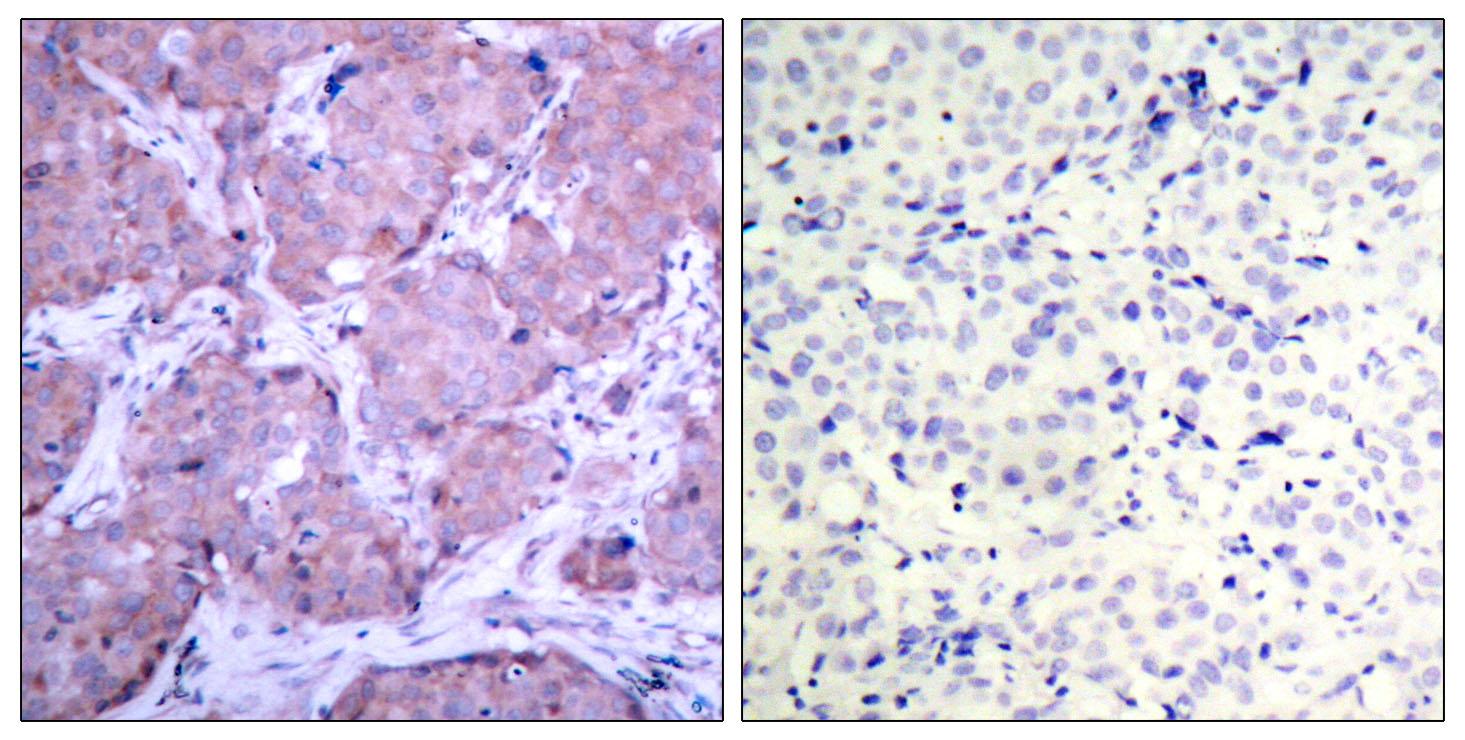
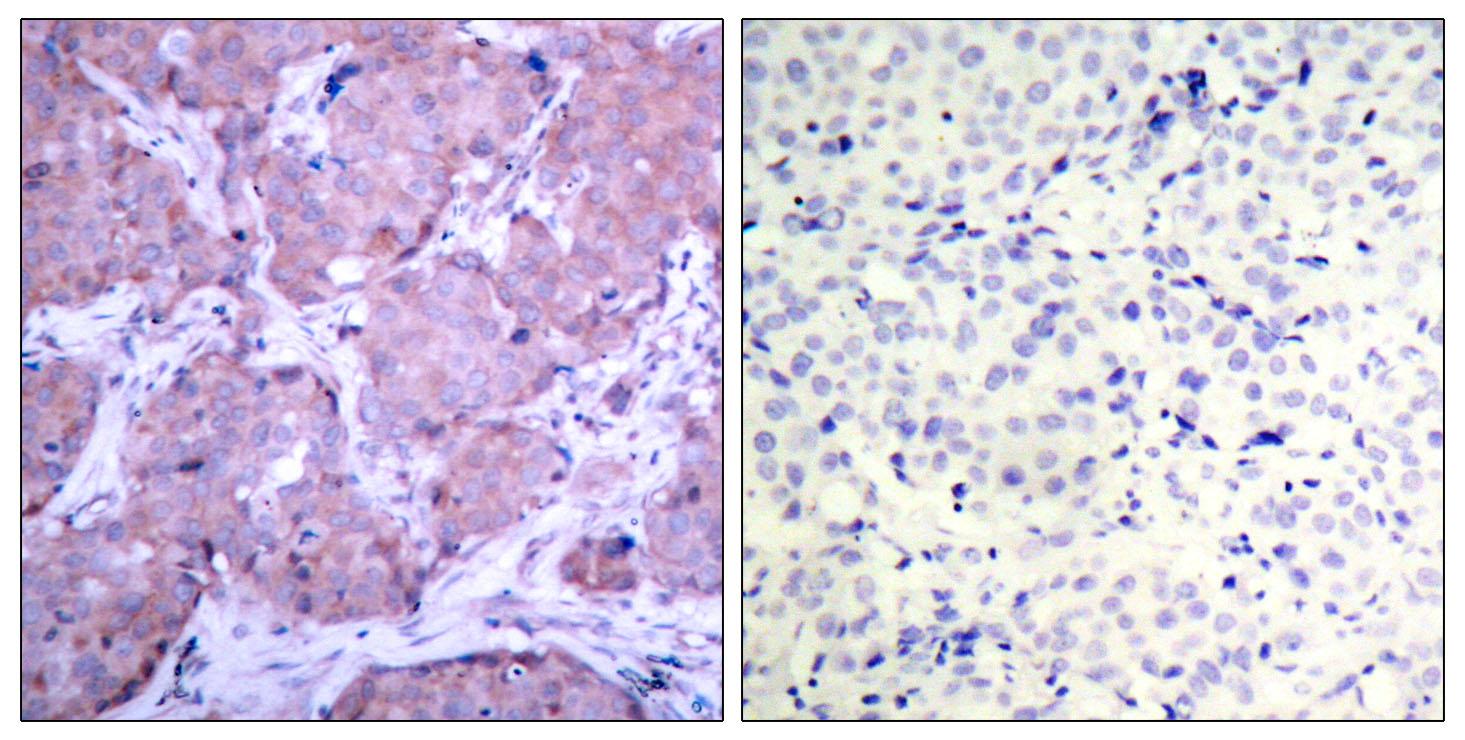
- Immunohistochemistry analysis of paraffin-embedded human brain tissue, using OPRM1 Antibody. The picture on the right is blocked with the synthesized peptide.
Background:
opioid receptor mu 1(OPRM1) Homo sapiens This gene encodes one of at least three opioid receptors in humans; the mu opioid receptor (MOR). The MOR is the principal target of endogenous opioid peptides and opioid analgesic agents such as beta-endorphin and enkephalins. The MOR also has an important role in dependence to other drugs of abuse, such as nicotine, cocaine, and alcohol via its modulation of the dopamine system. The NM_001008503.2:c.118A>G allele has been associated with opioid and alcohol addiction and variations in pain sensitivity but evidence for it having a causal role is conflicting. Multiple transcript variants encoding different isoforms have been found for this gene. Though the canonical MOR belongs to the superfamily of 7-transmembrane-spanning G-protein-coupled receptors some isoforms of this gene have only 6 transmembrane domains. [provided by RefSeq, Oct 2013],Protein Name:
Mu-type opioid receptorHuman Gene Id:
4988Human Swiss Prot No:
P35372Mouse Swiss Prot No:
P42866Specificity:
MOR-1 Polyclonal Antibody detects endogenous levels of MOR-1 protein.Formulation:
Liquid in PBS containing 50% glycerol, 0.5% BSA and 0.02% sodium azide.Concentration:
1 mg/mlStorage Stability:
-20°C/1 yearOther Name:
OPRM1; MOR1; Mu-type opioid receptor; M-OR-1; MOR-1; Mu opiate receptor; Mu opioid receptor; MOP; hMOPMolecularWeight(Da):
44779Observed Band(KD):
48Function:
function:Inhibits neurotransmitter release by reducing calcium ion currents and increasing potassium ion conductance. Receptor for beta-endorphin.,online information:Mu opioid receptor entry,polymorphism:Variant Asp-40 does not show altered binding affinities for most opioid peptides and alkaloids tested, but it binds beta-endorphin, an endogenous opioid that activates the mu opioid receptor, approximately 3 times more tightly than the most common allelic form.,similarity:Belongs to the G-protein coupled receptor 1 family.,subunit:Forms a complex with G(alpha)z/i2 subunits and the RGSZ proteins, RGSZ17 and RGSZ20. The formation of this complex results in mu-opioid receptor desensitization. Interacts with RGSZ17 and RGSZ20.,Subcellular Location:
cell,endoplasmic reticulum,Golgi apparatus,plasma membrane,integral component of plasma membrane,focal adhesion,integral component of membrane,dendrite membrane,dendrite cytoplasm,sarcolemma,neuron projection,perikaryon,Expression:
Blood,Brain,Thalamus,Whole brain,
- Western blot analysis of lysates from HepG2 cells, using OPRM1 Antibody. The lane on the right is blocked with the synthesized peptide.

Related Products
- PTEN (Phospho-Ser380) Antibody Datasheet
Catalog Number:
E011009-1Amount:
50μg/50μlReactivity:
Human, Mouse, RatApplications:
IHC: 1:50~1:100Swiss-Prot No.:
P60484Price:
145$
- PTEN (Phospho-Ser380) Antibody Datasheet
Catalog Number:
E011009-2Amount:
100μg/100μlReactivity:
Human, Mouse, RatApplications:
IHC: 1:50~1:100Swiss-Prot No.:
P60484Price:
225$
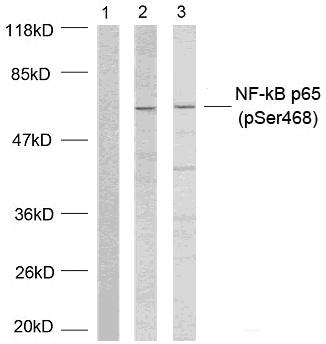
- NFκB-p65 (Phospho-Ser468) Antibody Datasheet
Catalog Number:
E011013-1Amount:
50μg/50μlReactivity:
Human, Mouse, RatApplications:
WB: 1:500~1:1000 IF:1:100~1:200Swiss-Prot No.:
Q04206Price:
145$
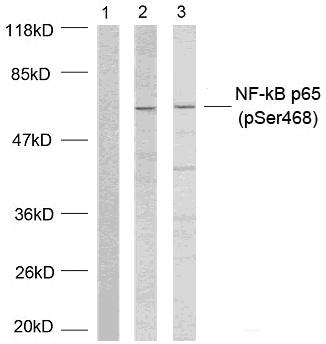
- NFκB-p65 (Phospho-Ser468) Antibody Datasheet
Catalog Number:
E011013-2Amount:
100μg/100μlReactivity:
Human, Mouse, RatApplications:
WB: 1:500~1:1000 IF:1:100~1:200Swiss-Prot No.:
Q04206Price:
225$

- Rel (Phospho-Ser503) Antibody Datasheet
Catalog Number:
E011020-1Amount:
50μg/50μlReactivity:
HumanApplications:
IF:1:100~1:200Swiss-Prot No.:
Q04864Price:
145$

Catalog Number
- Amount:100ul
- Price:225$

Contact us
Categories by research area
Categories by product type
- Antibodies
- Tag antibodies
- Internal control antibodies
- Pathological (Immunohistochemistry, IHC) antibodies
- Cell Signal Transduction Research Antibodies
- Secondary Antibody
- Antibody Sampler Kits
- Recombinant Proteins
- Fluorescence Reagents
- Signal Inhibitors and Activators
- Transfection Reagent
- Cell biology kits