
You are here: EnoGene Home > Products > Cell Signal Transduction Research Antibodies > GPRC5B Polyclonal Antibody
GPRC5B Polyclonal Antibody
Datasheet
Catalog Number:
E20-72037Amount:
100ulPrice:
225$Purification:
The antibody was affinity-purified from rabbit antiserum by affinity-chromatography using epitope-specific immunogen.Immunogen:
The antiserum was produced against synthesized peptide derived from human GPRC5B. AA range:61-110Source:
Polyclonal, RabbitGene Name:
GPRC5BDilution:
Western Blot: 1/500 - 1/2000. Immunofluorescence: 1/200 - 1/1000. ELISA: 1/5000. Not yet tested in other applications.
- Immunofluorescence analysis of MCF7 cells, using GPRC5B Antibody. The picture on the right is blocked with the synthesized peptide.
Background:
G protein-coupled receptor class C group 5 member B(GPRC5B) Homo sapiens This gene encodes a member of the type 3 G protein-coupled receptor family. Members of this superfamily are characterized by a signature 7-transmembrane domain motif. The encoded protein may modulate insulin secretion and increased protein expression is associated with type 2 diabetes. Alternative splicing results in multiple transcript variants. [provided by RefSeq, Feb 2015],Protein Name:
G-protein coupled receptor family C group 5 member BHuman Gene Id:
51704Human Swiss Prot No:
Q9NZH0Mouse Swiss Prot No:
Q923Z0Specificity:
GPRC5B Polyclonal Antibody detects endogenous levels of GPRC5B protein.Formulation:
Liquid in PBS containing 50% glycerol, 0.5% BSA and 0.02% sodium azide.Concentration:
1 mg/mlStorage Stability:
-20°C/1 yearOther Name:
GPRC5B; RAIG2; G-protein coupled receptor family C group 5 member B; A-69G12.1; Retinoic acid-induced gene 2 protein; RAIG-2MolecularWeight(Da):
44795Observed Band(KD):
48Function:
caution:It is uncertain whether Met-1 or Met-9 is the initiator.,function:Unknown. This retinoic acid-inducible G-protein coupled receptor provide evidence for a possible interaction between retinoid and G-protein signaling pathways.,induction:By all-trans retinoic acid (ATRA).,similarity:Belongs to the G-protein coupled receptor 3 family.,subcellular location:Localized in the plasma membrane and perinuclear vesicles.,tissue specificity:Expression is high in kidney, pancreas, and testis, medium in brain, heart, prostate, small intestine, and spleen, low in liver, placenta, skeletal muscle, colon, ovary, and thymus, and not detectable in lung and peripheral leukocyte. According to PubMed:10945465: highly expressed in most brain areas examined, with the highest levels observed in corpus callosum, caudate nucleus, putamen, substantia nigra, thalamus, hippocampus, and spinal chord as well asSubcellular Location:
extracellular space,nucleus,nucleolus,plasma membrane,cell surface,integral component of membrane,cytoplasmic vesicle membrane,intracellular membrane-bounded organelle,membrane raft,extracellular exosome,Expression:
Brain,Placenta,Testis,
- Western blot analysis of lysates from Jurkat, HUVEC, and 293 cells, using GPRC5B Antibody. The lane on the right is blocked with the synthesized peptide.

Related Products
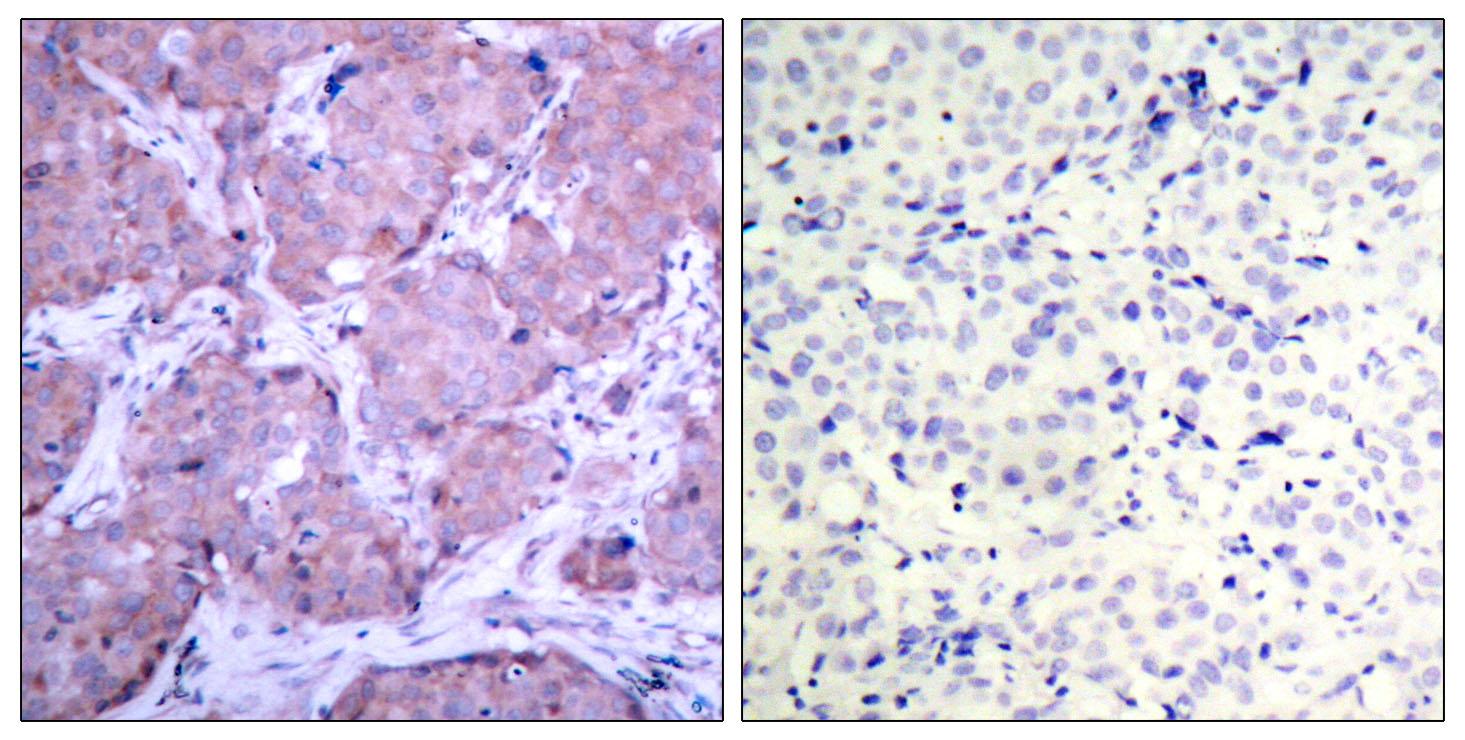
- PTEN (Phospho-Ser380) Antibody Datasheet
Catalog Number:
E011009-1Amount:
50μg/50μlReactivity:
Human, Mouse, RatApplications:
IHC: 1:50~1:100Swiss-Prot No.:
P60484Price:
145$
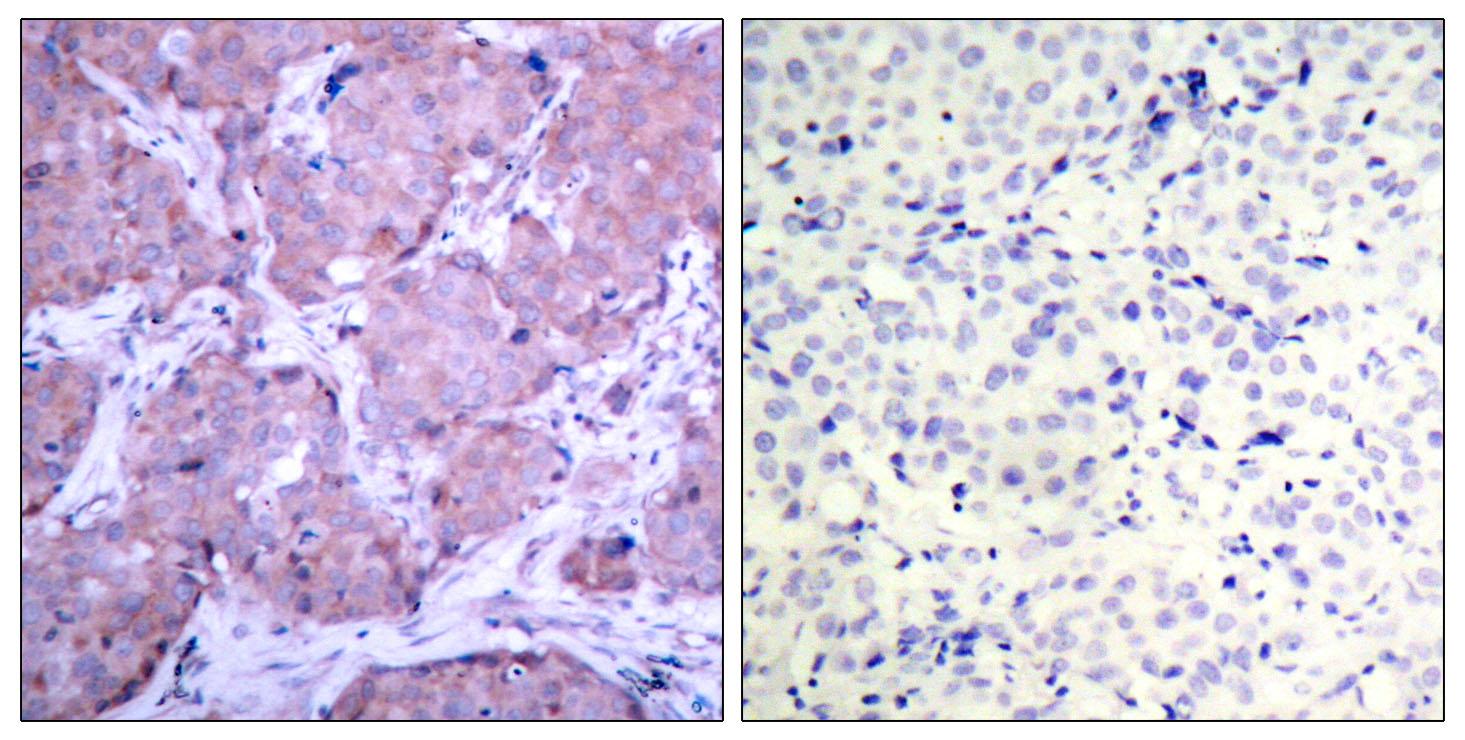
- PTEN (Phospho-Ser380) Antibody Datasheet
Catalog Number:
E011009-2Amount:
100μg/100μlReactivity:
Human, Mouse, RatApplications:
IHC: 1:50~1:100Swiss-Prot No.:
P60484Price:
225$
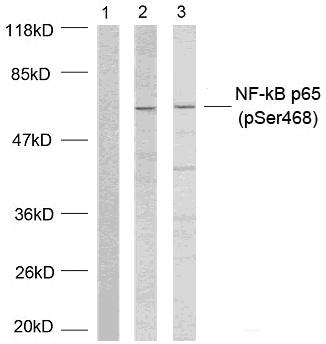
- NFκB-p65 (Phospho-Ser468) Antibody Datasheet
Catalog Number:
E011013-1Amount:
50μg/50μlReactivity:
Human, Mouse, RatApplications:
WB: 1:500~1:1000 IF:1:100~1:200Swiss-Prot No.:
Q04206Price:
145$
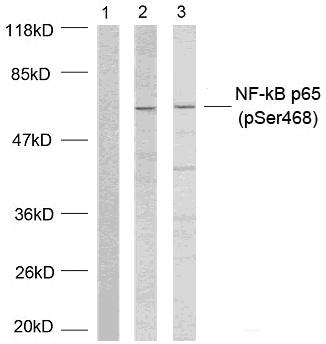
- NFκB-p65 (Phospho-Ser468) Antibody Datasheet
Catalog Number:
E011013-2Amount:
100μg/100μlReactivity:
Human, Mouse, RatApplications:
WB: 1:500~1:1000 IF:1:100~1:200Swiss-Prot No.:
Q04206Price:
225$

- Rel (Phospho-Ser503) Antibody Datasheet
Catalog Number:
E011020-1Amount:
50μg/50μlReactivity:
HumanApplications:
IF:1:100~1:200Swiss-Prot No.:
Q04864Price:
145$

Catalog Number
- Amount:100ul
- Price:225$

Contact us
Categories by research area
Categories by product type
- Antibodies
- Tag antibodies
- Internal control antibodies
- Pathological (Immunohistochemistry, IHC) antibodies
- Cell Signal Transduction Research Antibodies
- Secondary Antibody
- Antibody Sampler Kits
- Recombinant Proteins
- Fluorescence Reagents
- Signal Inhibitors and Activators
- Transfection Reagent
- Cell biology kits