World supplier of antibodies, antigens and kits since 2007

Other Products
DNA Ligase IV Polyclonal Antibody
Human;Rat;Mouse;
WB;IHC-p;IF/ICC;ELISA
Polyclonal, Rabbit,IgG
Price on request
Quantity
Ship worldwide. Contact order@enogene.com for ordering and bulk pricing or contact your local distributor.
Gene NameLIG4
Product Information
Protein NameDNA ligase 4
Human Gene Id3981
Human Swiss Prot NoP49917
Mouse Swiss Prot NoQ8BTF7
SpecificityDNA Ligase IV Polyclonal Antibody detects endogenous levels of DNA Ligase IV protein.
FormulationLiquid in PBS containing 50% glycerol, 0.5% BSA and 0.02% sodium azide.
Concentration1 mg/ml
Storage Stability-20°C/1 year
Other NameLIG4; DNA ligase 4; DNA ligase IV; Polydeoxyribonucleotide synthase [ATP] 4
Molecular Weight103971Da
Observed Band(KD)103
Functioncatalytic activity:ATP + (deoxyribonucleotide)(n) + (deoxyribonucleotide)(m) = AMP + diphosphate + (deoxyribonucleotide)(n+m).,cofactor:Magnesium.,disease:Defects in LIG4 are a cause of severe combined immunodeficiency autosomal recessive T-cell-negative/B-cell-negative/NK-cell-positive with sensitivity to ionizing radiation (RSSCID) [MIM:602450]. SCID refers to a genetically and clinically heterogeneous group of rare congenital disorders characterized by impairment of both humoral and cell-mediated immunity, leukopenia, and low or absent antibody levels. Patients with SCID present in infancy with recurrent, persistent infections by opportunistic organisms. The common characteristic of all types of SCID is absence of T-cell-mediated cellular immunity due to a defect in T-cell development. Individuals affected by RS-SCID show defects in the DNA repair machinery necessary for coding joint
Subcellular LocationNucleus .
ExpressionTestis, thymus, prostate and heart.
ImmunogenThe antiserum was produced against synthesized peptide derived from human DNL4. AA range:591-640
DilutionWestern Blot: 1/500 - 1/2000. Immunohistochemistry: 1/100 - 1/300. Immunofluorescence: 1/200 - 1/1000. ELISA: 1/20000. Not yet tested in other applications.
PurificationThe antibody was affinity-purified from rabbit antiserum by affinity-chromatography using epitope-specific immunogen.
BackgroundThe protein encoded by this gene is a DNA ligase that joins single-strand breaks in a double-stranded polydeoxynucleotide in an ATP-dependent reaction. This protein is essential for V(D)J recombination and DNA double-strand break (DSB) repair through nonhomologous end joining (NHEJ). This protein forms a complex with the X-ray repair cross complementing protein 4 (XRCC4), and further interacts with the DNA-dependent protein kinase (DNA-PK). Both XRCC4 and DNA-PK are known to be required for NHEJ. The crystal structure of the complex formed by this protein and XRCC4 has been resolved. Defects in this gene are the cause of LIG4 syndrome. Alternatively spliced transcript variants encoding the same protein have been observed. [provided by RefSeq, Jul 2008],
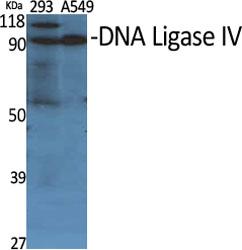
Western Blot analysis of various cells using DNA Ligase IV Polyclonal Antibody diluted at 1:500.
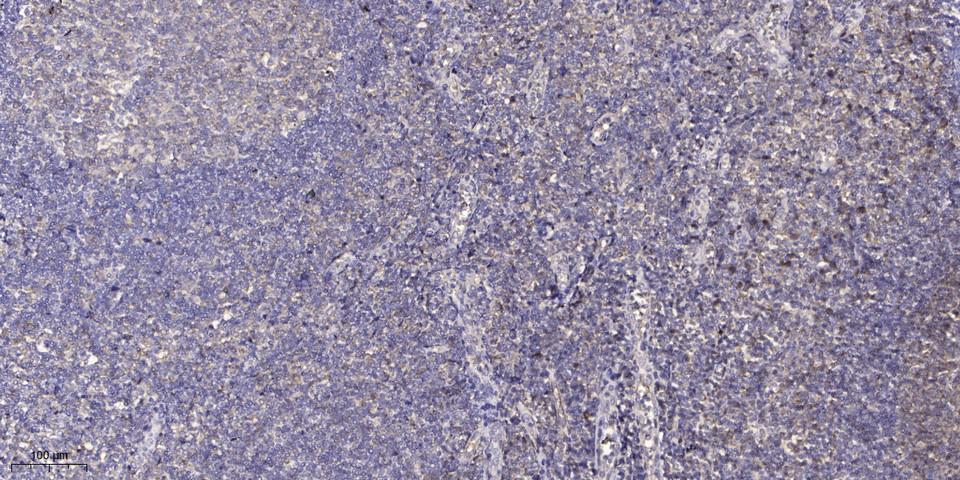
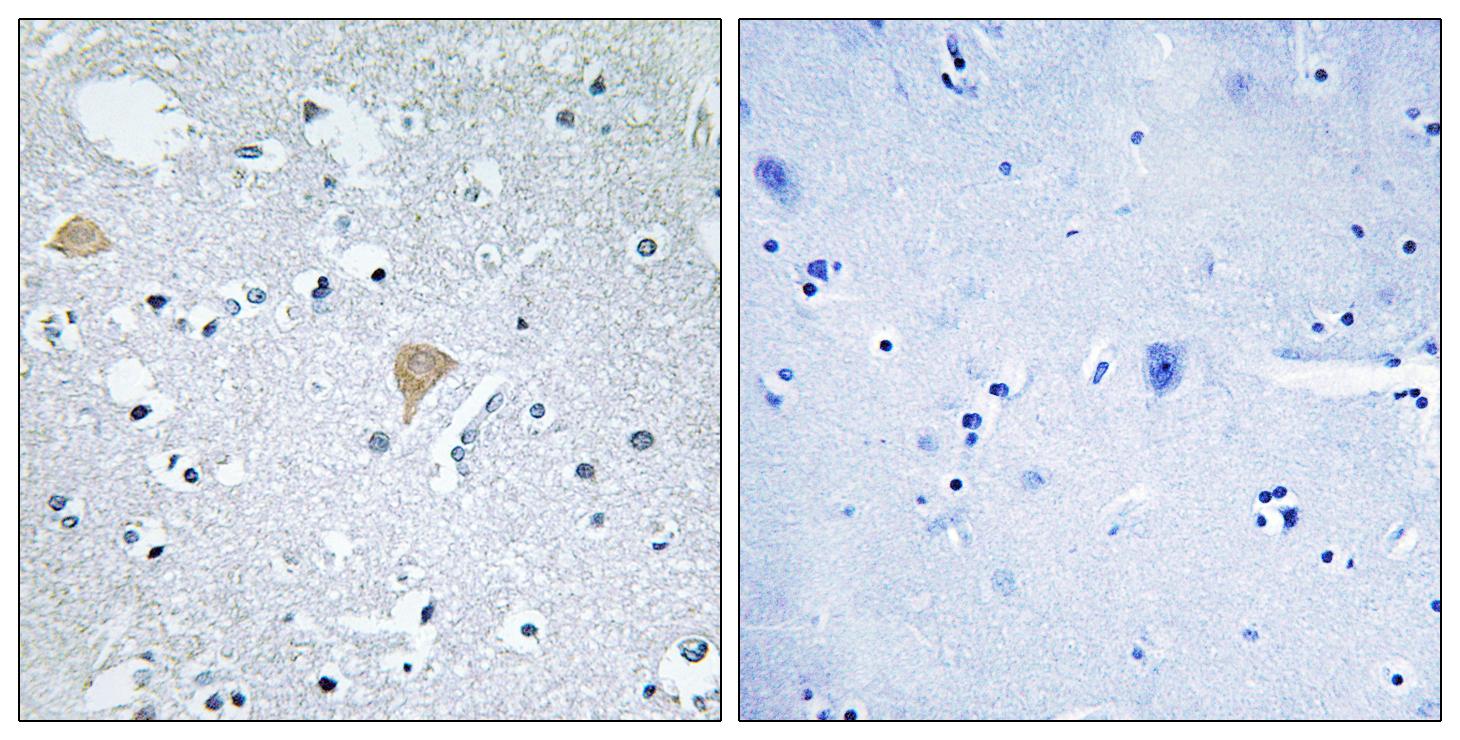
Immunohistochemical analysis of paraffin-embedded human tonsil. 1, Antibody was diluted at 1:200 (4 ℃ overnight). 2, Tris-EDTA, pH9.0 was used for antigen retrieval. 3,Secondary antibody was diluted at 1:200 (room temperature, 45min).
Conjugated Antibody
This product is also available conjugated. Format: E20-713867-Conjugate. Price: $485 / Size: 100μl.
E20-713867-FITC$485 / 100μlE20-713867-Biotin$485 / 100μlE20-713867-HRP$485 / 100μlE20-713867-AP$485 / 100μlE20-713867-AF350$485 / 100μlE20-713867-AF405M$485 / 100μlE20-713867-AF488$485 / 100μlE20-713867-AF514$485 / 100μlE20-713867-AF532$485 / 100μlE20-713867-AF555$485 / 100μlE20-713867-AF568$485 / 100μlE20-713867-AF405S$485 / 100μlE20-713867-AF405L$485 / 100μlE20-713867-AF546$485 / 100μlE20-713867-AF594$485 / 100μlE20-713867-AF610$485 / 100μlE20-713867-AF635$485 / 100μlE20-713867-AF647$485 / 100μlE20-713867-AF680$485 / 100μlE20-713867-AF700$485 / 100μlE20-713867-AF750$485 / 100μlE20-713867-AF790$485 / 100μlE20-713867-APC$485 / 100μlE20-713867-PE$485 / 100μlE20-713867-Cy3$485 / 100μlE20-713867-Cy5$485 / 100μlE20-713867-Cy5.5$485 / 100μlE20-713867-Cy7$485 / 100μlE20-713867-PE-Cy5$485 / 100μl
Contact order@enogene.com to order conjugated formats. Magnetic Beads (1-30μm) conjugation is also available.


Categories by research area
Categories by product type
- Antibodies
- Primary Antibodies
- Tag antibodies
- Internal control antibodies
- Pathological (Immunohistochemistry, IHC) antibodies
- Cell Signal Transduction Research Antibodies
- Secondary Antibody
- Antibody Sampler Kits
- ELISA Kits
- Recombinant Proteins
- Fluorescence Reagents
- Signal Inhibitors and Activators
- Transfection Reagent
- Cell biology kits
- Overexpression Cell Lines
- Cell Lysates
- Purification Resins
- 2019-nCoV & Monkeypox