World supplier of antibodies, antigens and kits since 2007

Other Products
Dlx-3 Polyclonal Antibody
Human;Mouse;
WB;IHC-p;IF(paraffin section);ELISA
Polyclonal, Rabbit,IgG
Price on request
Quantity
Ship worldwide. Contact order@enogene.com for ordering and bulk pricing or contact your local distributor.
Gene NameDLX3
Product Information
Protein NameHomeobox protein DLX-3
Human Gene Id1747
Human Swiss Prot NoO60479
Mouse Gene Id13393
Mouse Swiss Prot NoQ64205
SpecificityDlx-3 Polyclonal Antibody detects endogenous levels of Dlx-3 protein.
FormulationLiquid in PBS containing 50% glycerol, 0.5% BSA and 0.02% sodium azide.
Concentration1 mg/ml
Storage Stability-20°C/1 year
Other NameDLX3; Homeobox protein DLX-3
Molecular Weight31738Da
Observed Band(KD)45
Functiondisease:Defects in DLX3 are a cause of trichodentoosseous syndrome (TDO) [MIM:190320]. TDO is an autosomal dominant syndrome characterized by enamel hypoplasia and hypocalcification with associated strikingly curly hair.,disease:Defects in DLX3 are the cause of amelogenesis imperfecta type 4 (AI4) [MIM:104510]; also known as amelogenesis imperfecta hypomaturation-hypoplastic type with taurodontism. AI4 is an autosomal dominant defect of enamel formation associated with enlarged pulp chambers.,function:Likely to play a regulatory role in the development of the ventral forebrain. May play a role in craniofacial patterning and morphogenesis.,similarity:Belongs to the distal-less homeobox family.,similarity:Contains 1 homeobox DNA-binding domain.,
Subcellular LocationNucleus .
ExpressionEye,Foreskin,Placenta,
ImmunogenThe antiserum was produced against synthesized peptide derived from human DLX3. AA range:71-120
DilutionWestern Blot: 1/500 - 1/2000. Immunohistochemistry: 1/100 - 1/300. ELISA: 1/40000. Not yet tested in other applications.
PurificationThe antibody was affinity-purified from rabbit antiserum by affinity-chromatography using epitope-specific immunogen.
BackgroundMany vertebrate homeo box-containing genes have been identified on the basis of their sequence similarity with Drosophila developmental genes. Members of the Dlx gene family contain a homeobox that is related to that of Distal-less (Dll), a gene expressed in the head and limbs of the developing fruit fly. The Distal-less (Dlx) family of genes comprises at least 6 different members, DLX1-DLX6. Trichodentoosseous syndrome (TDO), an autosomal dominant condition, has been correlated with DLX3 gene mutation. This gene is located in a tail-to-tail configuration with another member of the gene family on the long arm of chromosome 17. Mutations in this gene have been associated with the autosomal dominant conditions trichodentoosseous syndrome and amelogenesis imperfecta with taurodontism. [provided by RefSeq, Jul 2008],
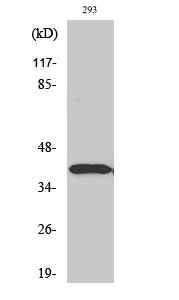
Western Blot analysis of various cells using Dlx-3 Polyclonal human Antibody cells nucleus extracted by the right Minute Cytoplasmic and Nuclear Fractionation kit.
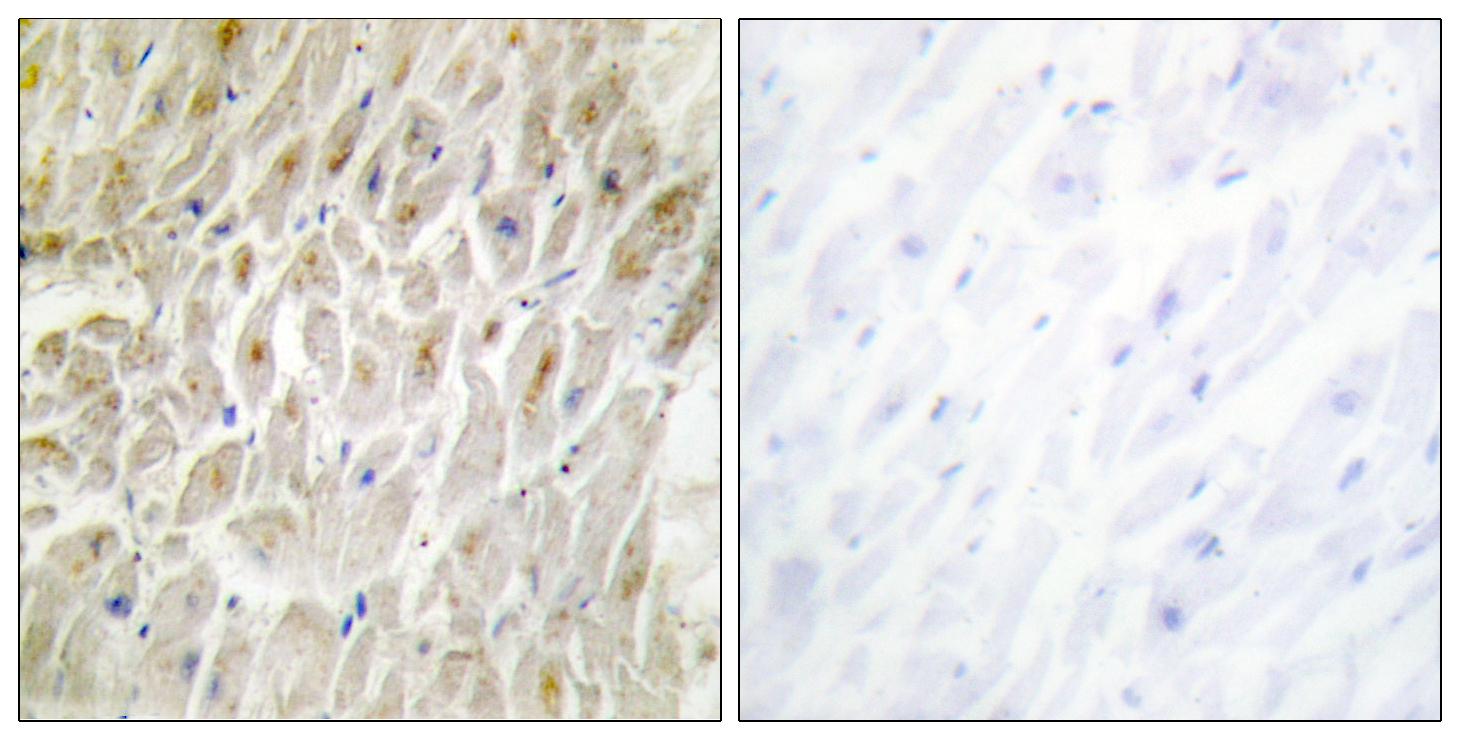
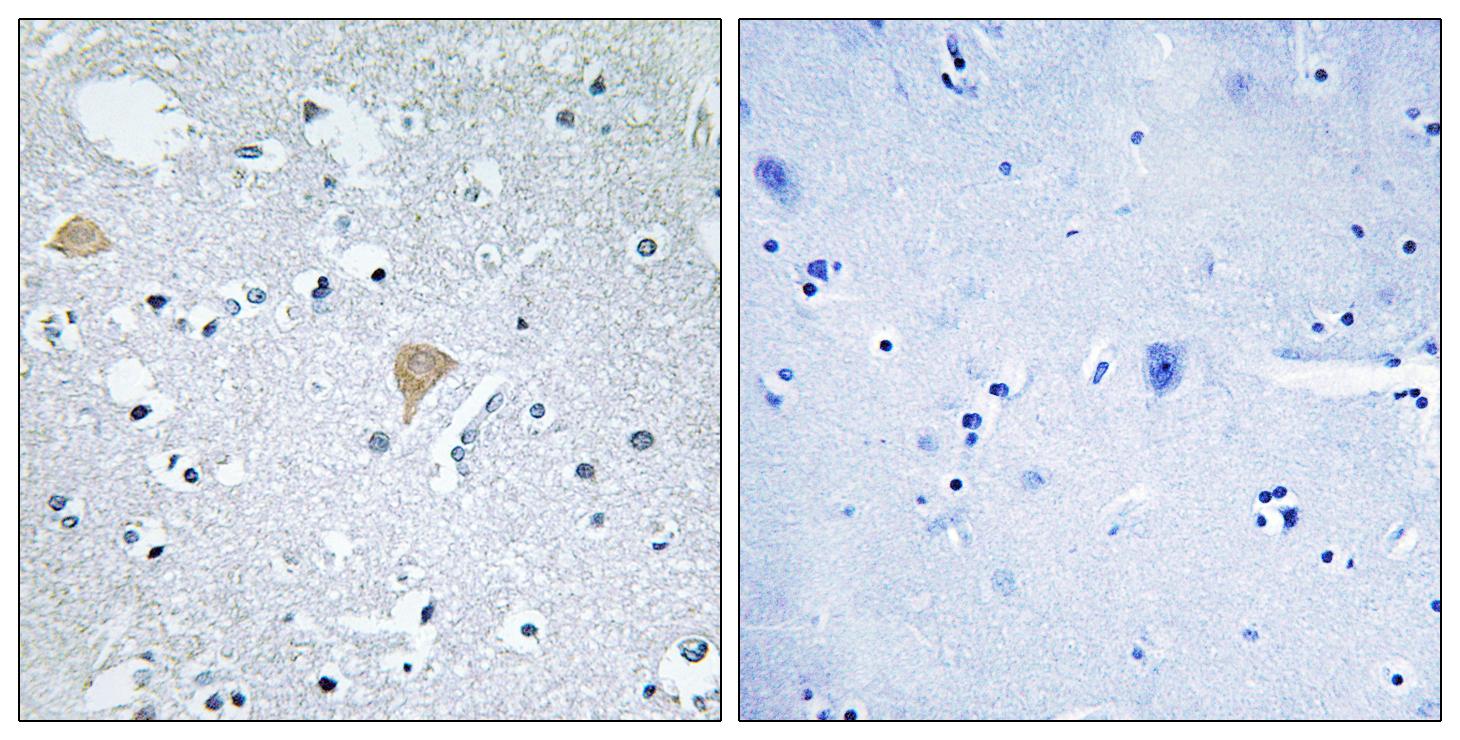
Immunohistochemistry analysis of paraffin-embedded heart tissue, using DLX3 Antibody. The picture on is blocked with the synthesized peptide.
Conjugated Antibody
This product is also available conjugated. Format: E20-713858-Conjugate. Price: $485 / Size: 100μl.
E20-713858-FITC$485 / 100μlE20-713858-Biotin$485 / 100μlE20-713858-HRP$485 / 100μlE20-713858-AP$485 / 100μlE20-713858-AF350$485 / 100μlE20-713858-AF405M$485 / 100μlE20-713858-AF488$485 / 100μlE20-713858-AF514$485 / 100μlE20-713858-AF532$485 / 100μlE20-713858-AF555$485 / 100μlE20-713858-AF568$485 / 100μlE20-713858-AF405S$485 / 100μlE20-713858-AF405L$485 / 100μlE20-713858-AF546$485 / 100μlE20-713858-AF594$485 / 100μlE20-713858-AF610$485 / 100μlE20-713858-AF635$485 / 100μlE20-713858-AF647$485 / 100μlE20-713858-AF680$485 / 100μlE20-713858-AF700$485 / 100μlE20-713858-AF750$485 / 100μlE20-713858-AF790$485 / 100μlE20-713858-APC$485 / 100μlE20-713858-PE$485 / 100μlE20-713858-Cy3$485 / 100μlE20-713858-Cy5$485 / 100μlE20-713858-Cy5.5$485 / 100μlE20-713858-Cy7$485 / 100μlE20-713858-PE-Cy5$485 / 100μl
Contact order@enogene.com to order conjugated formats. Magnetic Beads (1-30μm) conjugation is also available.


Categories by research area
Categories by product type
- Antibodies
- Primary Antibodies
- Tag antibodies
- Internal control antibodies
- Pathological (Immunohistochemistry, IHC) antibodies
- Cell Signal Transduction Research Antibodies
- Secondary Antibody
- Antibody Sampler Kits
- ELISA Kits
- Recombinant Proteins
- Fluorescence Reagents
- Signal Inhibitors and Activators
- Transfection Reagent
- Cell biology kits
- Overexpression Cell Lines
- Cell Lysates
- Purification Resins
- 2019-nCoV & Monkeypox