World supplier of antibodies, antigens and kits since 2007

Other Products
Dio-1 Polyclonal Antibody
Human;Mouse;
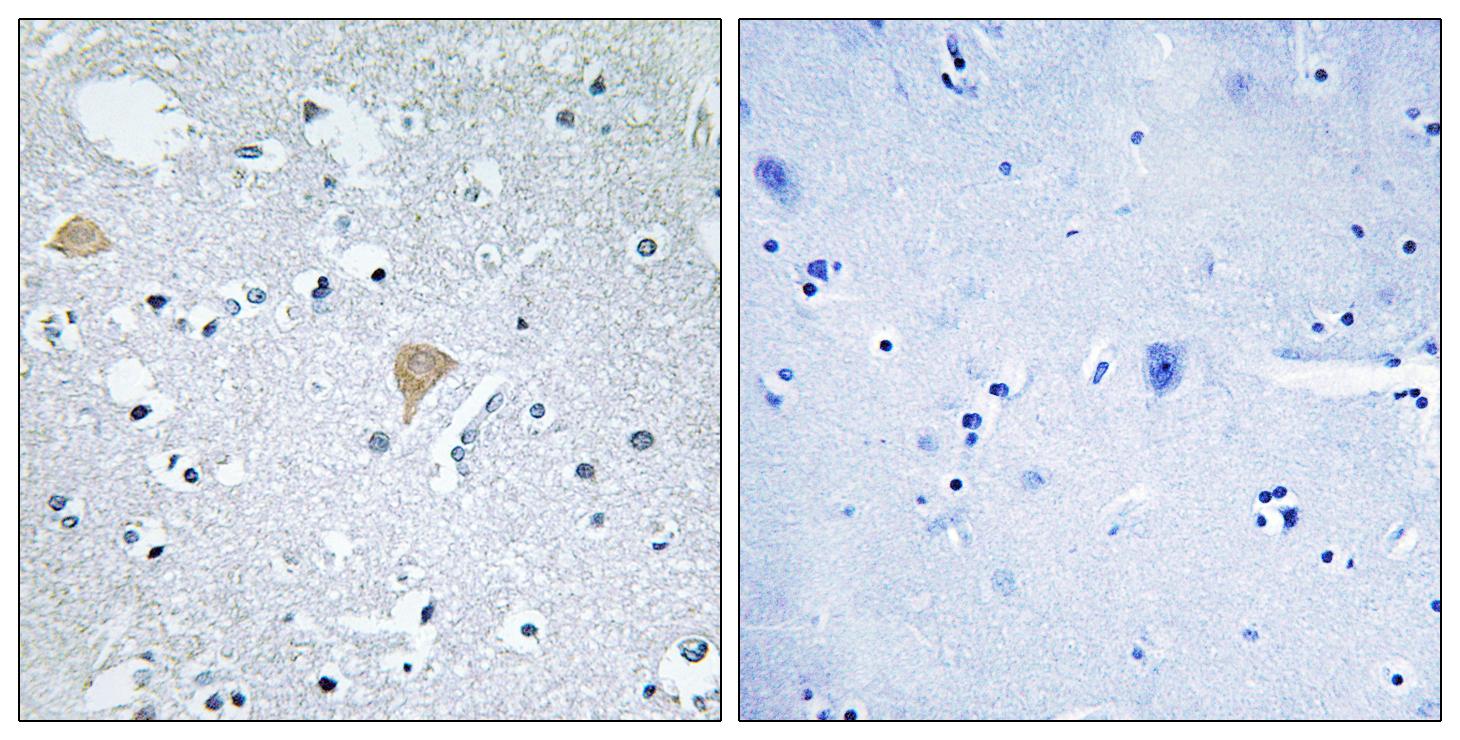
WB;IHC-p;IF(paraffin section);ELISA
Polyclonal, Rabbit,IgG
Price on request
Quantity
Ship worldwide. Contact order@enogene.com for ordering and bulk pricing or contact your local distributor.
Gene NameDIDO1
Product Information
Protein NameDeath-inducer obliterator 1
Human Gene Id11083
Human Swiss Prot NoQ9BTC0
Mouse Gene Id23856
Mouse Swiss Prot NoQ8C9B9
SpecificityDio-1 Polyclonal Antibody detects endogenous levels of Dio-1 protein.
FormulationLiquid in PBS containing 50% glycerol, 0.5% BSA and 0.02% sodium azide.
Concentration1 mg/ml
Storage Stability-20°C/1 year
Other NameDIDO1; C20orf158; DATF1; KIAA0333; Death-inducer obliterator 1; DIO-1; hDido1; Death-associated transcription factor 1; DATF-1
Molecular Weight243873Da
Observed Band(KD)244
Functiondisease:Defects in DIDO1 may be a cause of myeloid neoplasms.,function:Putative transcription factor, weakly pro-apoptotic when overexpressed (By similarity). Tumor suppressor.,similarity:Contains 1 PHD-type zinc finger.,similarity:Contains 1 TFIIS central domain.,subcellular location:Translocates to the nucleus after pro-apoptotic stimuli.,tissue specificity:Ubiquitous.,
Subcellular LocationCytoplasm . Nucleus . Cytoplasm, cytoskeleton, spindle . Translocates to the nucleus after pro-apoptotic stimuli (By similarity). Translocates to the mitotic spindle upon loss of interaction with H3K4me3 during early mitosis. .
ExpressionUbiquitous.Chronic restraint stress induced changes in colonic homeostasis-related indexes and tryptophan-kynurenine metabolism in rats. Journal of Proteomics J Proteomics. 2021 May;240:104190 WB Rat 1 : 1000 Colon
ImmunogenThe antiserum was produced against synthesized peptide derived from human DIDO1. AA range:161-210
DilutionWestern Blot: 1/500 - 1/2000. Immunohistochemistry: 1/100 - 1/300. ELISA: 1/10000. Not yet tested in other applications.
PurificationThe antibody was affinity-purified from rabbit antiserum by affinity-chromatography using epitope-specific immunogen.
BackgroundApoptosis, a major form of cell death, is an efficient mechanism for eliminating unwanted cells and is of central importance for development and homeostasis in metazoan animals. In mice, the death inducer-obliterator-1 gene is upregulated by apoptotic signals and encodes a cytoplasmic protein that translocates to the nucleus upon apoptotic signal activation. When overexpressed, the mouse protein induced apoptosis in cell lines growing in vitro. This gene is similar to the mouse gene and therefore is thought to be involved in apoptosis. Alternatively spliced transcripts have been found for this gene, encoding multiple isoforms. [provided by RefSeq, Jul 2008],
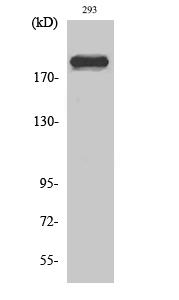
Western Blot analysis of 293 cells using Western Dio-1 Polyclonal Antibody diluted at 1:2000. Antibody. synthesized
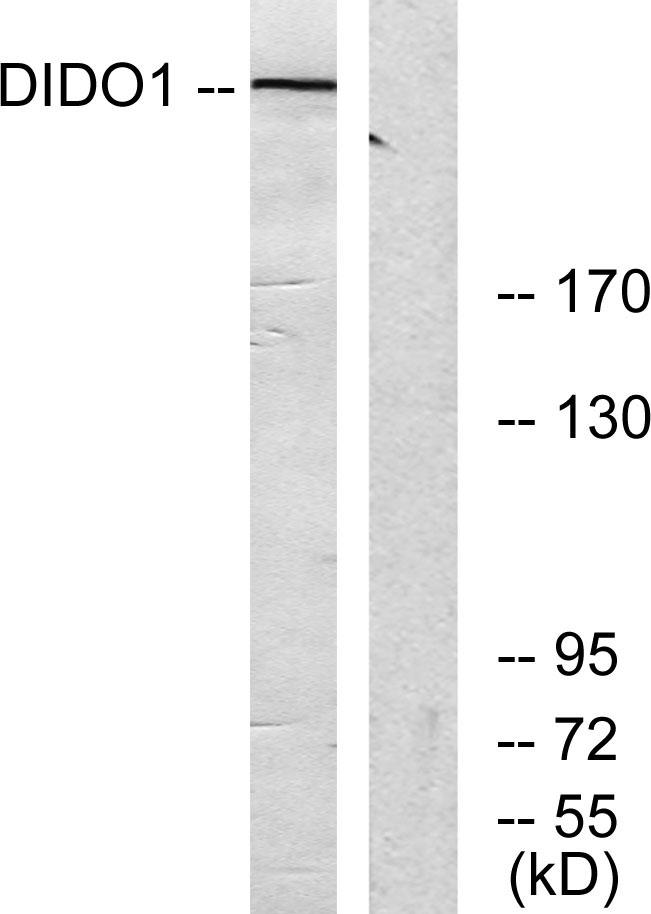
blot analysis of lysates from 293 cells, using DIDO1 The lane on the right is blocked with the peptide.
Conjugated Antibody
This product is also available conjugated. Format: E20-713851-Conjugate. Price: $485 / Size: 100μl.
E20-713851-FITC$485 / 100μlE20-713851-Biotin$485 / 100μlE20-713851-HRP$485 / 100μlE20-713851-AP$485 / 100μlE20-713851-AF350$485 / 100μlE20-713851-AF405M$485 / 100μlE20-713851-AF488$485 / 100μlE20-713851-AF514$485 / 100μlE20-713851-AF532$485 / 100μlE20-713851-AF555$485 / 100μlE20-713851-AF568$485 / 100μlE20-713851-AF405S$485 / 100μlE20-713851-AF405L$485 / 100μlE20-713851-AF546$485 / 100μlE20-713851-AF594$485 / 100μlE20-713851-AF610$485 / 100μlE20-713851-AF635$485 / 100μlE20-713851-AF647$485 / 100μlE20-713851-AF680$485 / 100μlE20-713851-AF700$485 / 100μlE20-713851-AF750$485 / 100μlE20-713851-AF790$485 / 100μlE20-713851-APC$485 / 100μlE20-713851-PE$485 / 100μlE20-713851-Cy3$485 / 100μlE20-713851-Cy5$485 / 100μlE20-713851-Cy5.5$485 / 100μlE20-713851-Cy7$485 / 100μlE20-713851-PE-Cy5$485 / 100μl
Contact order@enogene.com to order conjugated formats. Magnetic Beads (1-30μm) conjugation is also available.


Categories by research area
Categories by product type
- Antibodies
- Primary Antibodies
- Tag antibodies
- Internal control antibodies
- Pathological (Immunohistochemistry, IHC) antibodies
- Cell Signal Transduction Research Antibodies
- Secondary Antibody
- Antibody Sampler Kits
- ELISA Kits
- Recombinant Proteins
- Fluorescence Reagents
- Signal Inhibitors and Activators
- Transfection Reagent
- Cell biology kits
- Overexpression Cell Lines
- Cell Lysates
- Purification Resins
- 2019-nCoV & Monkeypox