World supplier of antibodies, antigens and kits since 2007

Other Products
D-GPCR Polyclonal Antibody
Human;Mouse;Rat
WB;IF/ICC;ELISA
Polyclonal, Rabbit,IgG
Price on request
Quantity
Ship worldwide. Contact order@enogene.com for ordering and bulk pricing or contact your local distributor.
Gene NameOR51E1
Product Information
Protein NameOlfactory receptor 51E1
Human Gene Id143503
Human Swiss Prot NoQ8TCB6
SpecificityD-GPCR Polyclonal Antibody detects endogenous levels of D-GPCR protein.
FormulationLiquid in PBS containing 50% glycerol, 0.5% BSA and 0.02% sodium azide.
Concentration1 mg/ml
Storage Stability-20°C/1 year
Other NameOR51E1; GPR164; OR51E1P; OR52A3P; POGR; PSGR2; Olfactory receptor 51E1; D-GPCR; G-protein coupled receptor 164; Olfactory receptor 52A3; Prostate-overexpressed G protein-coupled receptor; Prostate-specific G protein-coupled receptor 2
Molecular Weight35271Da
Observed Band(KD)35
Functionfunction:Odorant receptor .,similarity:Belongs to the G-protein coupled receptor 1 family.,tissue specificity:Highly expressed in prostate. Very low levels may be detected in some other tissues, such as placenta, skeletal muscle, heart, ovary and testis. Up-regulated in prostate cancers.,
Subcellular LocationCell membrane ; Multi-pass membrane protein .
ExpressionHighly expressed in prostate. Very low levels may be detected in some other tissues, such as placenta, skeletal muscle, heart, ovary and testis. Up-regulated in prostate cancers.
ImmunogenThe antiserum was produced against synthesized peptide derived from human OR51E1. AA range:241-290
DilutionWestern Blot: 1/500 - 1/2000. Immunofluorescence: 1/200 - 1/1000. ELISA: 1/20000. Not yet tested in other applications.
PurificationThe antibody was affinity-purified from rabbit antiserum by affinity-chromatography using epitope-specific immunogen.
BackgroundOlfactory receptors interact with odorant molecules in the nose, to initiate a neuronal response that triggers the perception of a smell. The olfactory receptor proteins are members of a large family of G-protein-coupled receptors (GPCR) arising from single coding-exon genes. Olfactory receptors share a 7-transmembrane domain structure with many neurotransmitter and hormone receptors and are responsible for the recognition and G protein-mediated transduction of odorant signals. The olfactory receptor gene family is the largest in the genome. The nomenclature assigned to the olfactory receptor genes and proteins for this organism is independent of other organisms. [provided by RefSeq, Jul 2008],
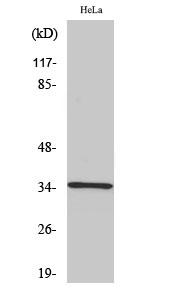
Western Blot analysis of Hela cells using Antibody. D-GPCR Polyclonal Antibody. peptide.
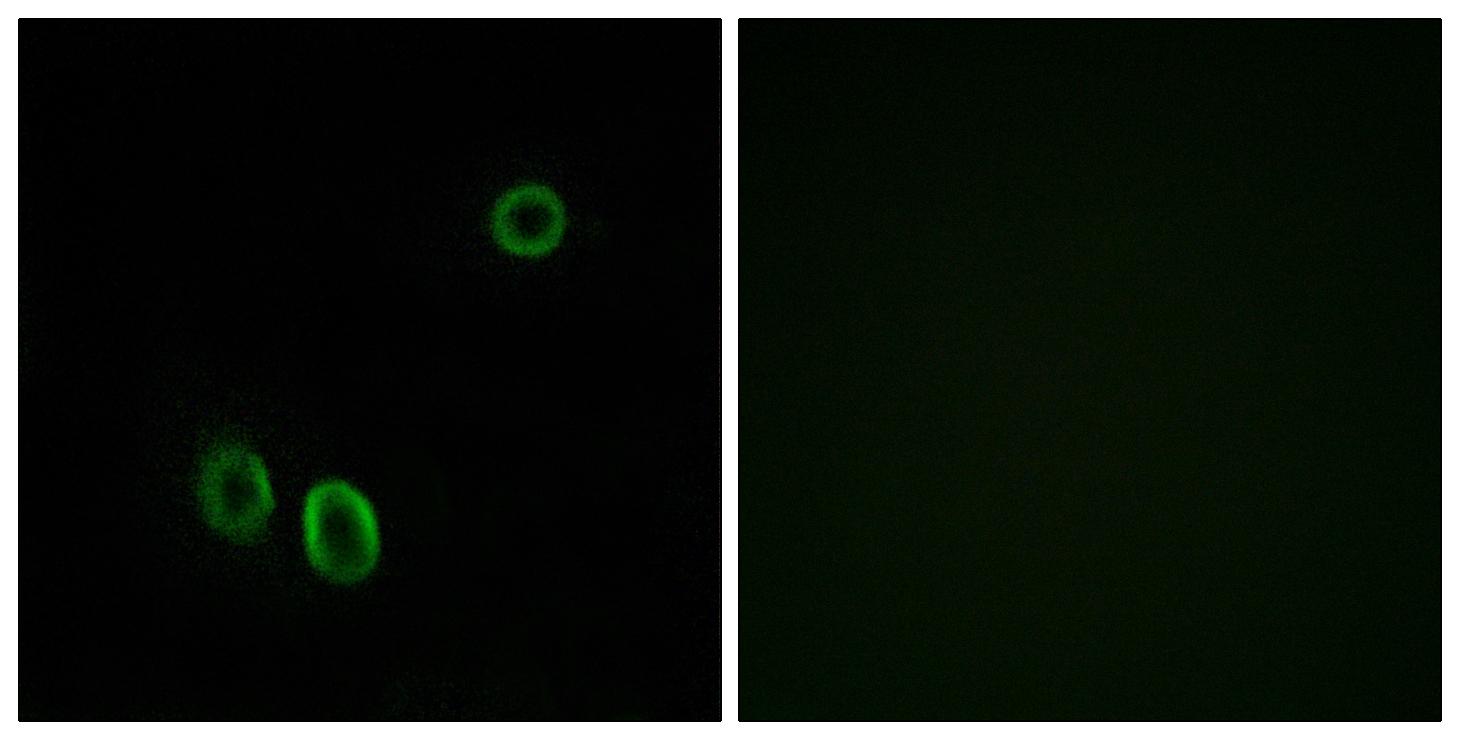
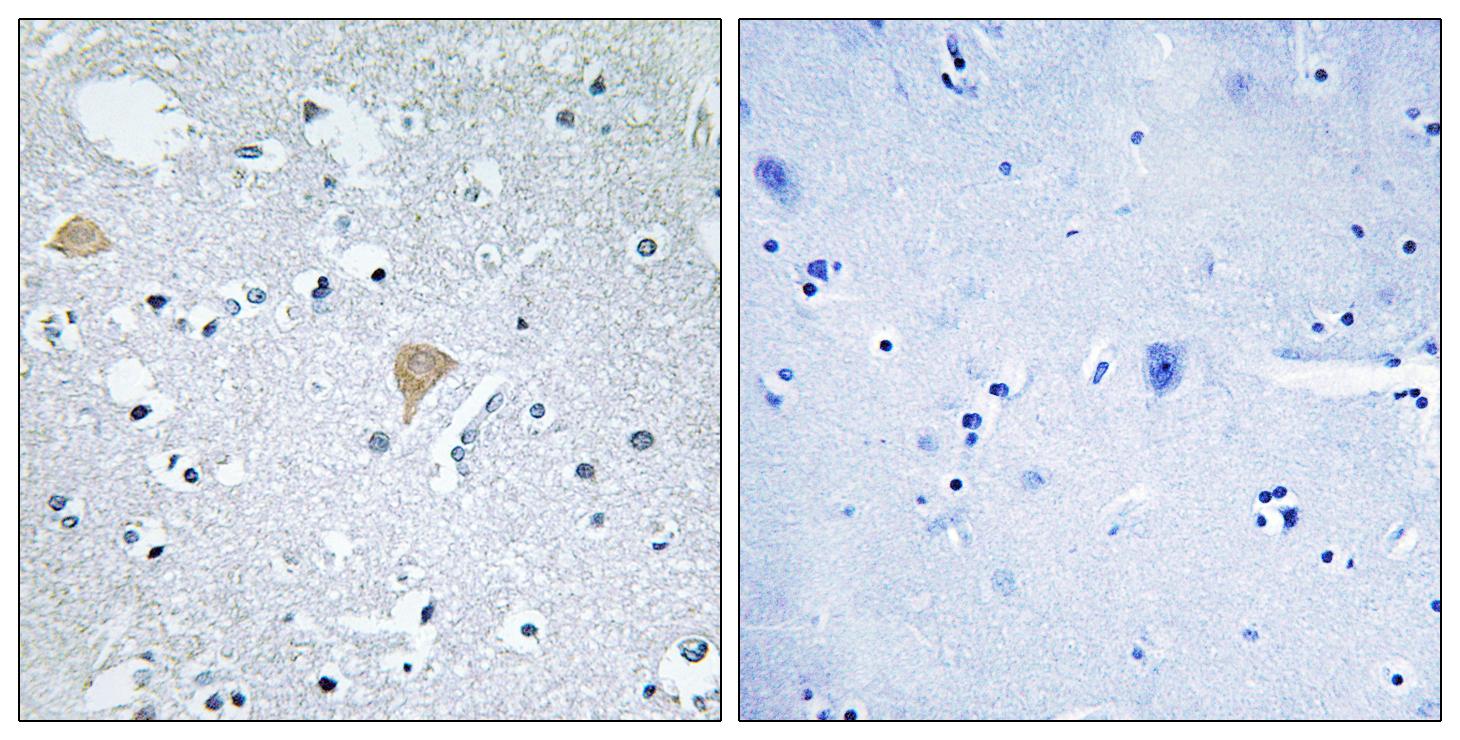
Immunofluorescence analysis of A549 cells, using OR51E1 The picture on the right is blocked with the synthesized
Conjugated Antibody
This product is also available conjugated. Format: E20-713840-Conjugate. Price: $485 / Size: 100μl.
E20-713840-FITC$485 / 100μlE20-713840-Biotin$485 / 100μlE20-713840-HRP$485 / 100μlE20-713840-AP$485 / 100μlE20-713840-AF350$485 / 100μlE20-713840-AF405M$485 / 100μlE20-713840-AF488$485 / 100μlE20-713840-AF514$485 / 100μlE20-713840-AF532$485 / 100μlE20-713840-AF555$485 / 100μlE20-713840-AF568$485 / 100μlE20-713840-AF405S$485 / 100μlE20-713840-AF405L$485 / 100μlE20-713840-AF546$485 / 100μlE20-713840-AF594$485 / 100μlE20-713840-AF610$485 / 100μlE20-713840-AF635$485 / 100μlE20-713840-AF647$485 / 100μlE20-713840-AF680$485 / 100μlE20-713840-AF700$485 / 100μlE20-713840-AF750$485 / 100μlE20-713840-AF790$485 / 100μlE20-713840-APC$485 / 100μlE20-713840-PE$485 / 100μlE20-713840-Cy3$485 / 100μlE20-713840-Cy5$485 / 100μlE20-713840-Cy5.5$485 / 100μlE20-713840-Cy7$485 / 100μlE20-713840-PE-Cy5$485 / 100μl
Contact order@enogene.com to order conjugated formats. Magnetic Beads (1-30μm) conjugation is also available.


Categories by research area
Categories by product type
- Antibodies
- Primary Antibodies
- Tag antibodies
- Internal control antibodies
- Pathological (Immunohistochemistry, IHC) antibodies
- Cell Signal Transduction Research Antibodies
- Secondary Antibody
- Antibody Sampler Kits
- ELISA Kits
- Recombinant Proteins
- Fluorescence Reagents
- Signal Inhibitors and Activators
- Transfection Reagent
- Cell biology kits
- Overexpression Cell Lines
- Cell Lysates
- Purification Resins
- 2019-nCoV & Monkeypox