
You are here: EnoGene Home > Products > Cell Signal Transduction Research Antibodies > DNA-PKCS (phospho Thr2647) Polyclonal Antibody
DNA-PKCS (phospho Thr2647) Polyclonal Antibody
Datasheet
Catalog Number:
E20-61145Amount:
100ulPrice:
225$Purification:
The antibody was affinity-purified from rabbit antiserum by affinity-chromatography using epitope-specific immunogen.Immunogen:
The antiserum was produced against synthesized peptide derived from human DNA-PK around the phosphorylation site of Thr2647. AA range:2613-2662Source:
Polyclonal, RabbitGene Name:
PRKDCDilution:
WB 1:500-2000 ,Immunohistochemistry: 1/100 - 1/300. Immunofluorescence: 1/200 - 1/1000. ELISA: 1/10000. Not yet tested in other applications.
- Enzyme-Linked Immunosorbent Assay (Phospho-ELISA) for Immunogen Phosphopeptide (Phospho-left) and Non-Phosphopeptide (Phospho-right), using DNA-PK (Phospho-Thr2647) Antibody
Background:
protein kinase, DNA-activated, catalytic polypeptide(PRKDC) Homo sapiens This gene encodes the catalytic subunit of the DNA-dependent protein kinase (DNA-PK). It functions with the Ku70/Ku80 heterodimer protein in DNA double strand break repair and recombination. The protein encoded is a member of the PI3/PI4-kinase family.[provided by RefSeq, Jul 2010],Protein Name:
DNA-dependent protein kinase catalytic subunitHuman Gene Id:
5591Human Swiss Prot No:
P78527Specificity:
Phospho-DNA-PKCS (T2647) Polyclonal Antibody detects endogenous levels of DNA-PKCS protein only when phosphorylated at T2647.Formulation:
Liquid in PBS containing 50% glycerol, 0.5% BSA and 0.02% sodium azide.Concentration:
1 mg/mlStorage Stability:
-20°C/1 yearOther Name:
PRKDC; HYRC; HYRC1; DNA-dependent protein kinase catalytic subunit; DNA-PK catalytic subunit; DNA-PKcs; DNPK1; p460MolecularWeight(Da):
469089Function:
catalytic activity:ATP + a protein = ADP + a phosphoprotein.,enzyme regulation:Inhibited by wortmannin. Activity of the enzyme seems to be attenuated by autophosphorylation.,function:Serine/threonine-protein kinase that acts as a molecular sensor for DNA damage. Involved in DNA nonhomologous end joining (NHEJ) required for double-strand break (DSB) repair and V(D)J recombination. Must be bound to DNA to express its catalytic properties. Promotes processing of hairpin DNA structures in V(D)J recombination by activation of the hairpin endonuclease artemis (DCLRE1C). The assembly of the DNA-PK complex at DNA ends is also required for the NHEJ ligation step. Required to protect and align broken ends of DNA. May also act as a scaffold protein to aid the localization of DNA repair proteins to the site of damage. Found at the ends of chromosomes, suggesting a further role in the maintenance ofSubcellular Location:
nuclear chromosome, telomeric region,nucleoplasm,transcription factor complex,nucleolus,cytosol,DNA-dependent protein kinase-DNA ligase 4 complex,membrane,extracellular matrix,nonhomologous end joining complex,Expression:
Brain,Cervix carcinoma,Epithelium,Fetal lung,Placen
- Immunofluorescence analysis of HUVEC cells treated with serum 20% 30', using DNA-PK (Phospho-Thr2647) Antibody. The picture on the right is blocked with the phospho peptide.

Related Products
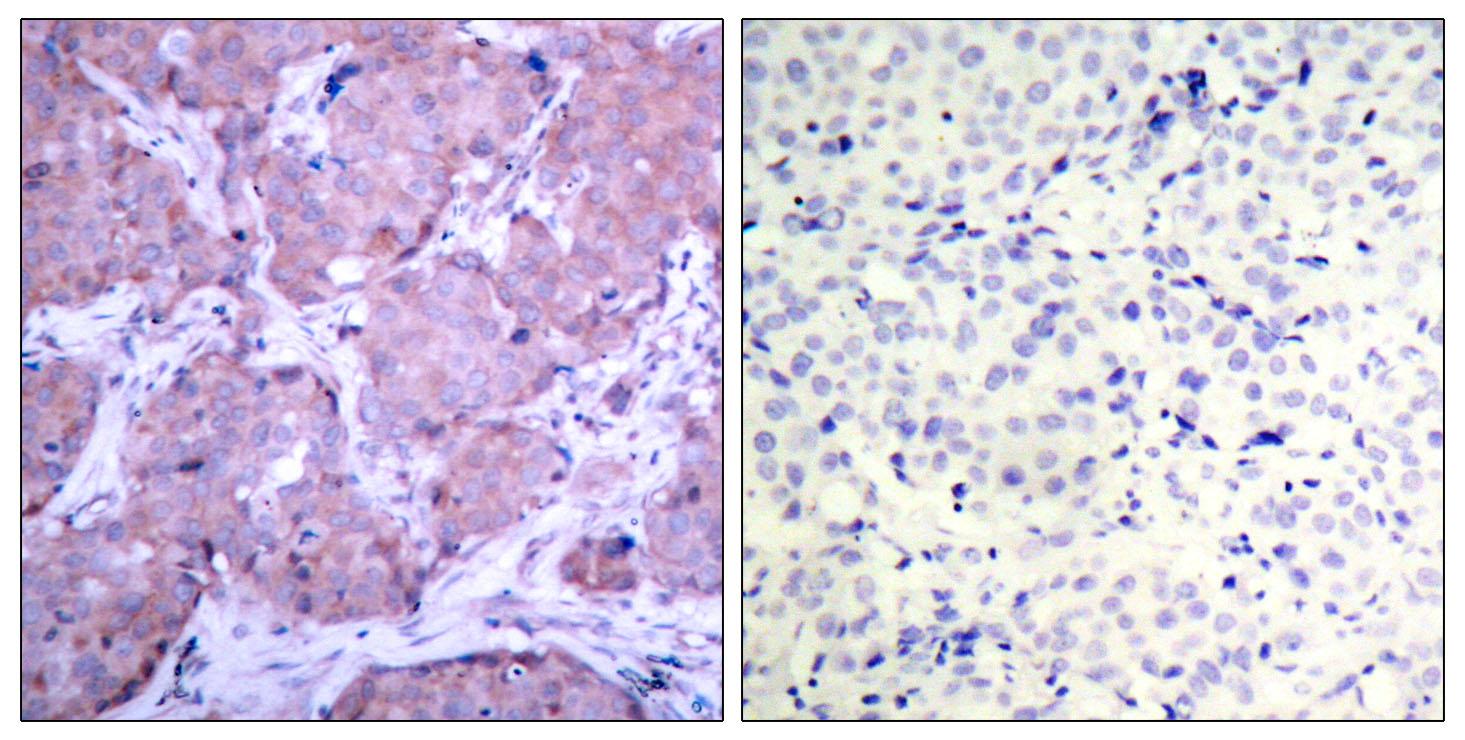
- PTEN (Phospho-Ser380) Antibody Datasheet
Catalog Number:
E011009-1Amount:
50μg/50μlReactivity:
Human, Mouse, RatApplications:
IHC: 1:50~1:100Swiss-Prot No.:
P60484Price:
145$
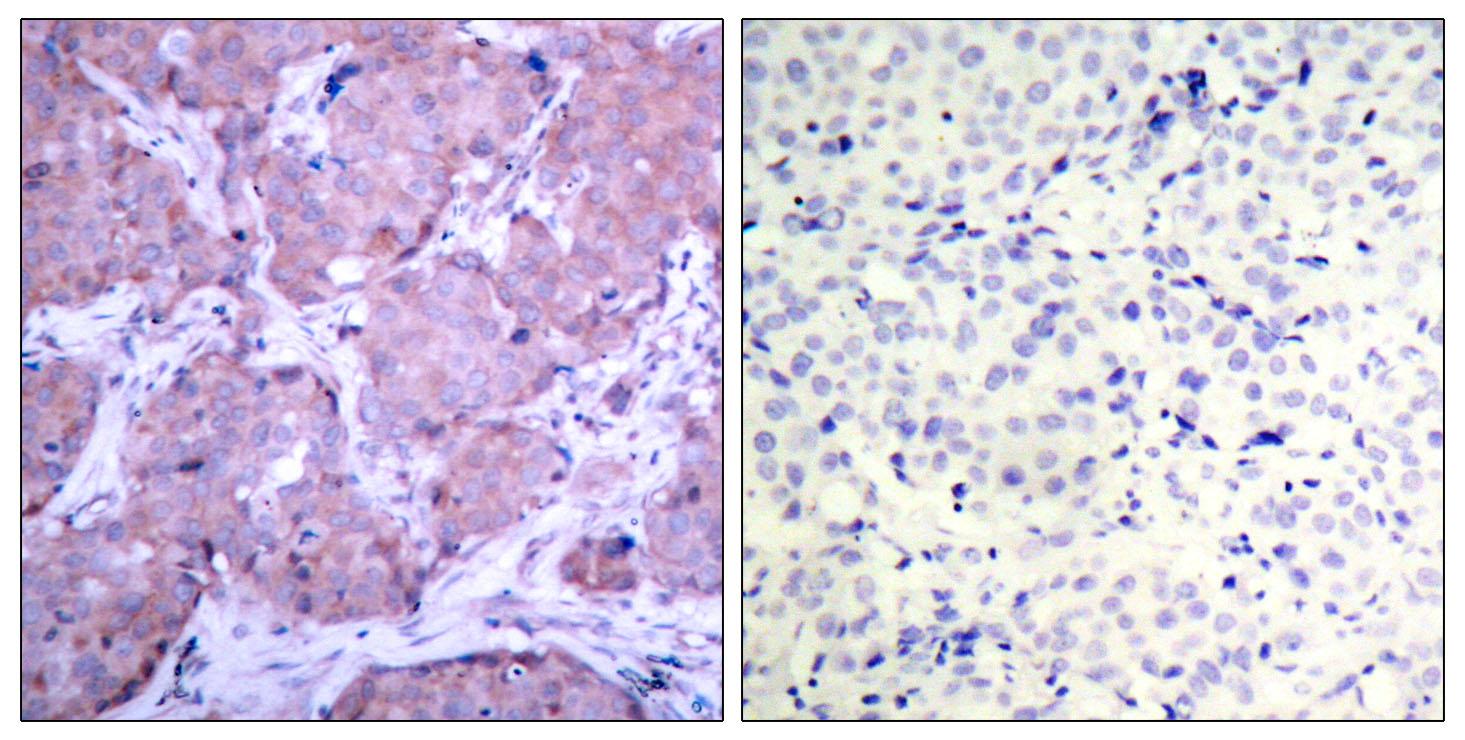
- PTEN (Phospho-Ser380) Antibody Datasheet
Catalog Number:
E011009-2Amount:
100μg/100μlReactivity:
Human, Mouse, RatApplications:
IHC: 1:50~1:100Swiss-Prot No.:
P60484Price:
225$
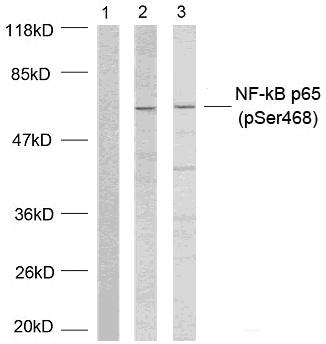
- NFκB-p65 (Phospho-Ser468) Antibody Datasheet
Catalog Number:
E011013-1Amount:
50μg/50μlReactivity:
Human, Mouse, RatApplications:
WB: 1:500~1:1000 IF:1:100~1:200Swiss-Prot No.:
Q04206Price:
145$
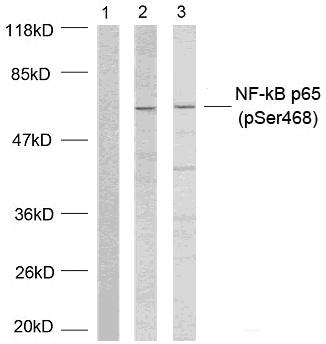
- NFκB-p65 (Phospho-Ser468) Antibody Datasheet
Catalog Number:
E011013-2Amount:
100μg/100μlReactivity:
Human, Mouse, RatApplications:
WB: 1:500~1:1000 IF:1:100~1:200Swiss-Prot No.:
Q04206Price:
225$

- Rel (Phospho-Ser503) Antibody Datasheet
Catalog Number:
E011020-1Amount:
50μg/50μlReactivity:
HumanApplications:
IF:1:100~1:200Swiss-Prot No.:
Q04864Price:
145$

Catalog Number
- Amount:100ul
- Price:225$

Contact us
Categories by research area
Categories by product type
- Antibodies
- Tag antibodies
- Internal control antibodies
- Pathological (Immunohistochemistry, IHC) antibodies
- Cell Signal Transduction Research Antibodies
- Secondary Antibody
- Antibody Sampler Kits
- Recombinant Proteins
- Fluorescence Reagents
- Signal Inhibitors and Activators
- Transfection Reagent
- Cell biology kits