
You are here: EnoGene Home > Products > Cell Signal Transduction Research Antibodies > PKC θ (phospho Thr538) Polyclonal Antibody
PKC θ (phospho Thr538) Polyclonal Antibody
Datasheet
Catalog Number:
E20-60705Amount:
100ulPrice:
225$Purification:
The antibody was affinity-purified from rabbit antiserum by affinity-chromatography using epitope-specific immunogen.Immunogen:
The antiserum was produced against synthesized peptide derived from human PKC thet around the phosphorylation site of Thr538. AA range:504-553Source:
Polyclonal, RabbitGene Name:
PRKCQDilution:
Western Blot: 1/500 - 1/2000. Immunohistochemistry: 1/100 - 1/300. ELISA: 1/5000. Not yet tested in other applications.
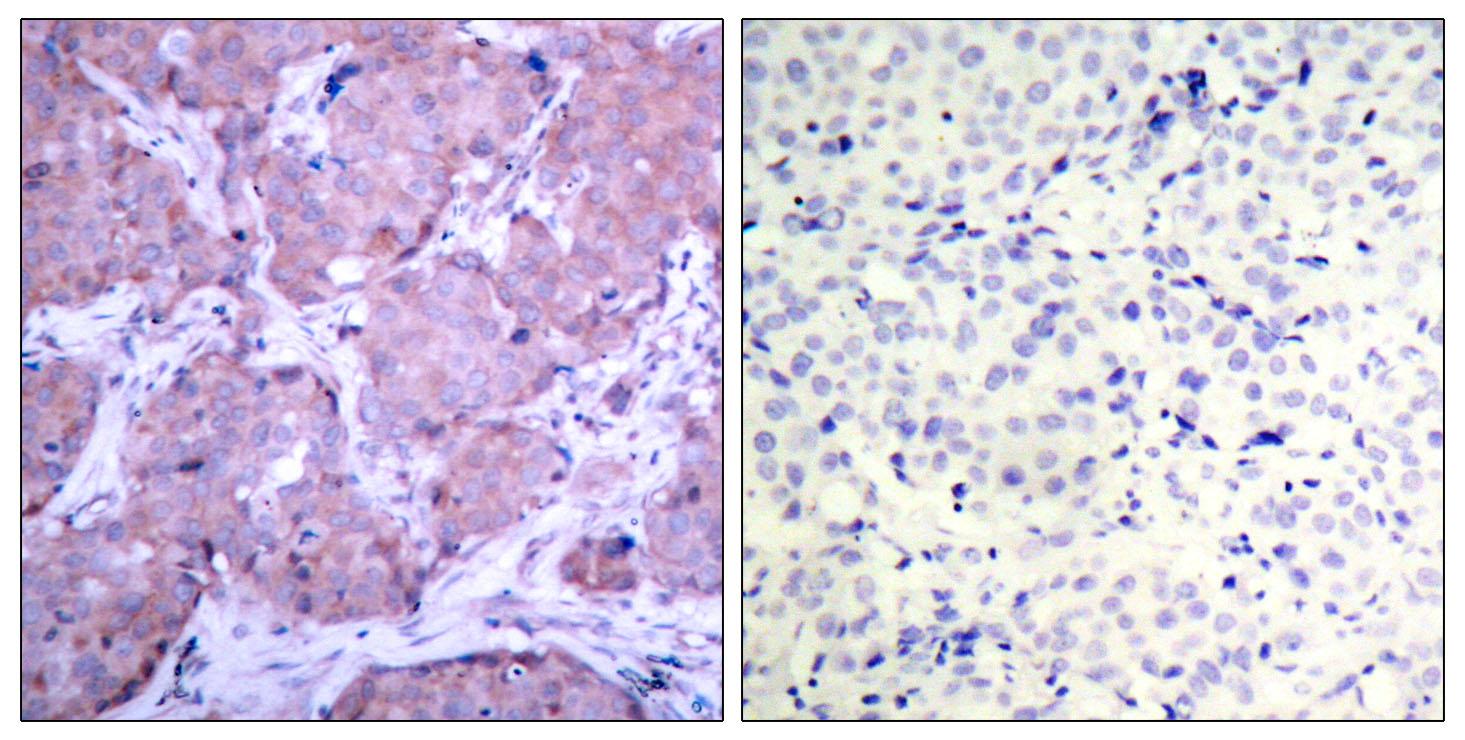
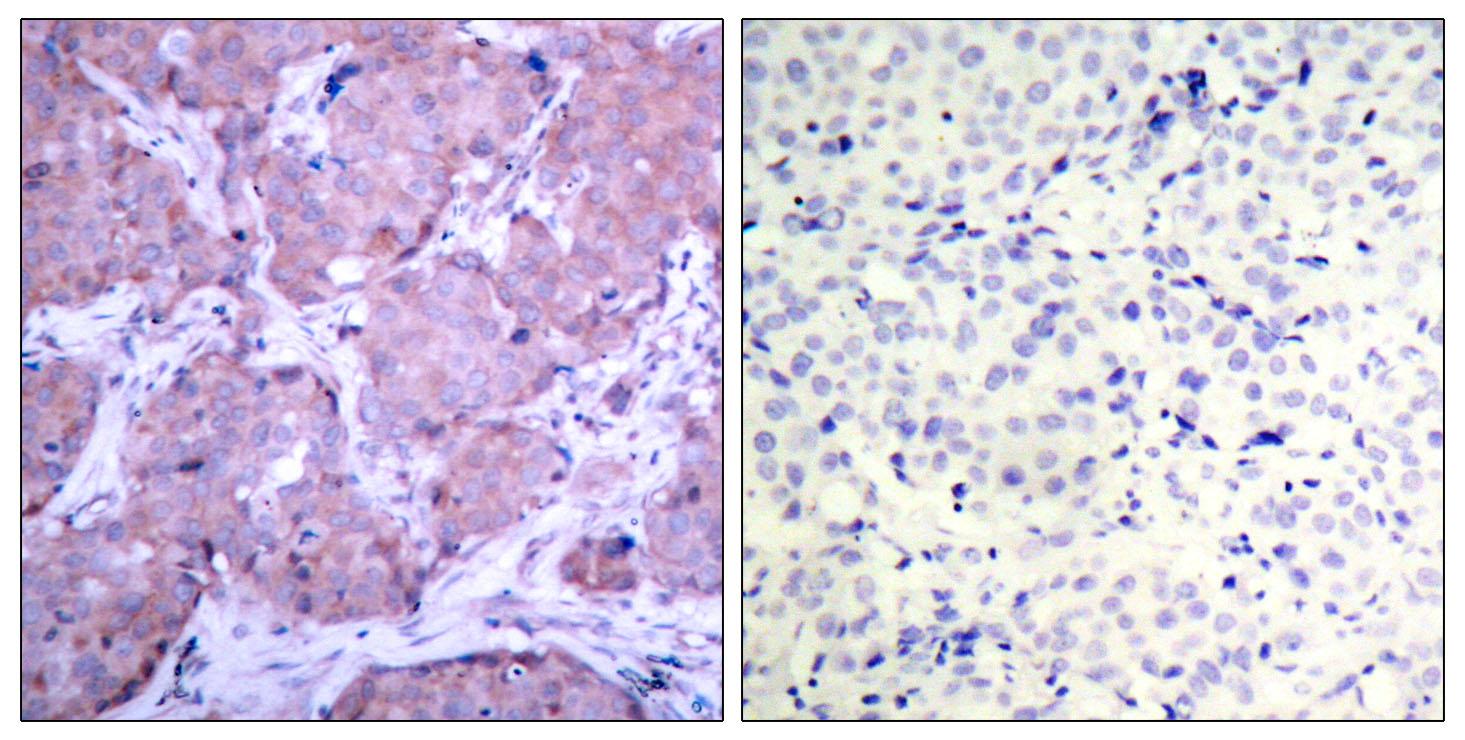
- Immunohistochemical analysis of paraffin-embedded Human brain. Antibody was diluted at 1:100(4° overnight). High-pressure and temperature Tris-EDTA,pH8.0 was used for antigen retrieval. Negetive contrl (right) obtaned from antibody was pre-absorbed by immunogen peptide.
Background:
protein kinase C theta(PRKCQ) Homo sapiens Protein kinase C (PKC) is a family of serine- and threonine-specific protein kinases that can be activated by calcium and the second messenger diacylglycerol. PKC family members phosphorylate a wide variety of protein targets and are known to be involved in diverse cellular signaling pathways. PKC family members also serve as major receptors for phorbol esters, a class of tumor promoters. Each member of the PKC family has a specific expression profile and is believed to play a distinct role. The protein encoded by this gene is one of the PKC family members. It is a calcium-independent and phospholipid-dependent protein kinase. This kinase is important for T-cell activation. It is required for the activation of the transcription factors NF-kappaB and AP-1, and may link the T cell receptor (TCR) signaling complex to the activation of the transcription factors. [provided by RefSeq, Jul 2008],Protein Name:
Protein kinase C theta typeHuman Gene Id:
5588Human Swiss Prot No:
Q04759Specificity:
Phospho-PKC θ (T538) Polyclonal Antibody detects endogenous levels of PKC θ protein only when phosphorylated at T538.Formulation:
Liquid in PBS containing 50% glycerol, 0.5% BSA and 0.02% sodium azide.Concentration:
1 mg/mlStorage Stability:
-20°C/1 yearOther Name:
PRKCQ; PRKCT; Protein kinase C theta type; nPKC-thetaMolecularWeight(Da):
81865Observed Band(KD):
81Function:
catalytic activity:ATP + a protein = ADP + a phosphoprotein.,cofactor:Magnesium.,domain:The C1 domain, containing the phorbol ester/DAG-type region 1 (C1A) and 2 (C1B), is the diacylglycerol sensor and the C2 domain is a non-calcium binding domain.,enzyme regulation:Three specific sites; Thr-538 (activation loop of the kinase domain), Ser-676 (turn motif) and Ser-695 (hydrophobic region), need to be phosphorylated for its full activation.,function:PKC is activated by diacylglycerol which in turn phosphorylates a range of cellular proteins. PKC also serves as the receptor for phorbol esters, a class of tumor promoters.,function:This is a calcium-independent, phospholipid-dependent, serine- and threonine-specific enzyme. Essential for T-cell receptor (TCR)-mediated T-cell activation, but is dispensable during TCR-dependent thymocyte development. Links the TCR signaling complex to the activSubcellular Location:
iimmunological synapse,intracellular,cytosol,plasma membrane,Expression:
Blood,Brain,
- Immunohistochemistry analysis of paraffin-embedded human brain, using PKC thet (Phospho-Thr538) Antibody. The picture on the right is blocked with the phospho peptide.

Related Products
- PTEN (Phospho-Ser380) Antibody Datasheet
Catalog Number:
E011009-1Amount:
50μg/50μlReactivity:
Human, Mouse, RatApplications:
IHC: 1:50~1:100Swiss-Prot No.:
P60484Price:
145$
- PTEN (Phospho-Ser380) Antibody Datasheet
Catalog Number:
E011009-2Amount:
100μg/100μlReactivity:
Human, Mouse, RatApplications:
IHC: 1:50~1:100Swiss-Prot No.:
P60484Price:
225$
- NFκB-p65 (Phospho-Ser468) Antibody Datasheet
Catalog Number:
E011013-1Amount:
50μg/50μlReactivity:
Human, Mouse, RatApplications:
WB: 1:500~1:1000 IF:1:100~1:200Swiss-Prot No.:
Q04206Price:
145$
- NFκB-p65 (Phospho-Ser468) Antibody Datasheet
Catalog Number:
E011013-2Amount:
100μg/100μlReactivity:
Human, Mouse, RatApplications:
WB: 1:500~1:1000 IF:1:100~1:200Swiss-Prot No.:
Q04206Price:
225$

- Rel (Phospho-Ser503) Antibody Datasheet
Catalog Number:
E011020-1Amount:
50μg/50μlReactivity:
HumanApplications:
IF:1:100~1:200Swiss-Prot No.:
Q04864Price:
145$

Catalog Number
- Amount:100ul
- Price:225$

Contact us
Categories by research area
Categories by product type
- Antibodies
- Tag antibodies
- Internal control antibodies
- Pathological (Immunohistochemistry, IHC) antibodies
- Cell Signal Transduction Research Antibodies
- Secondary Antibody
- Antibody Sampler Kits
- Recombinant Proteins
- Fluorescence Reagents
- Signal Inhibitors and Activators
- Transfection Reagent
- Cell biology kits