World supplier of antibodies, antigens and kits since 2007

Other Products
GCN5 Polyclonal Antibody
:Human;Mouse
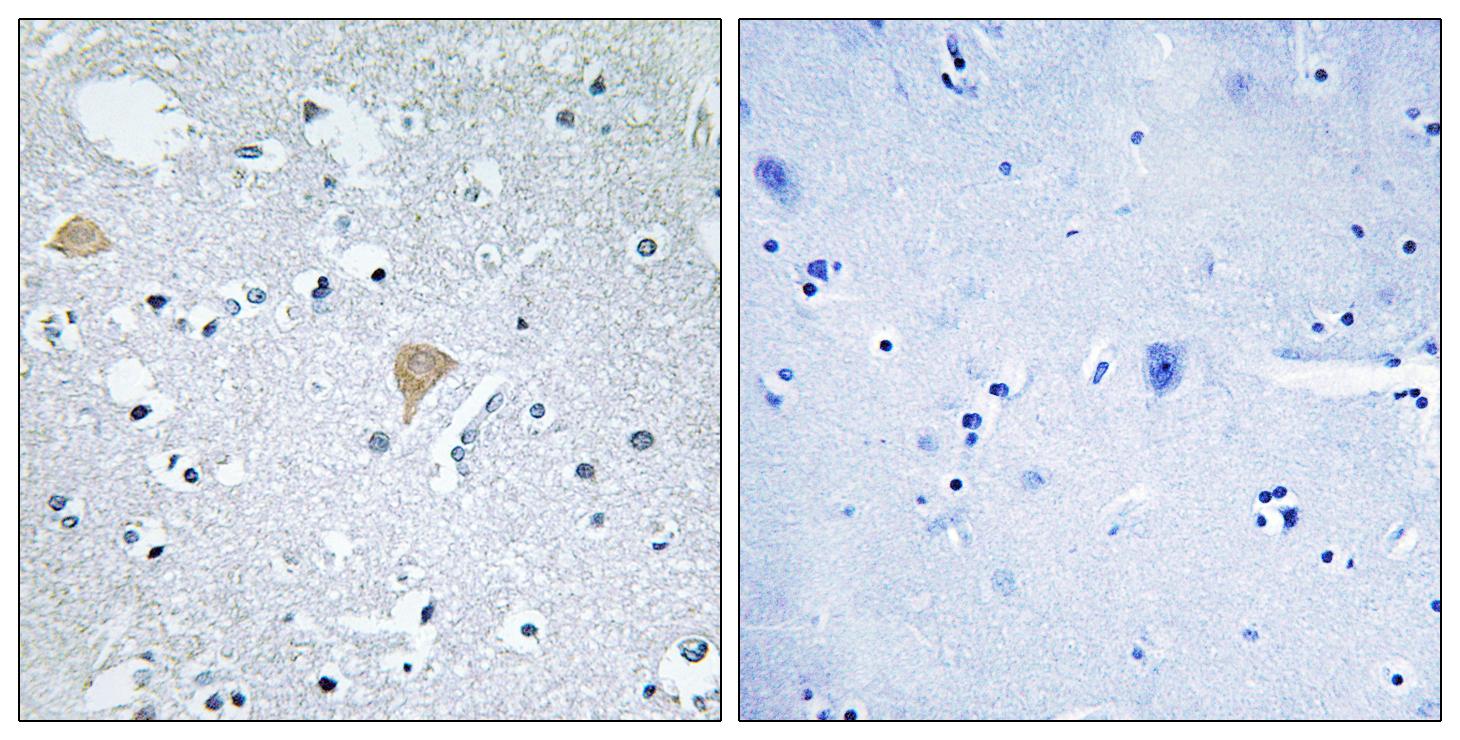
:WB;IHC-p;IF(paraffin section);ELISA
Polyclonal, Rabbit,IgG
Price on request
Quantity
Ship worldwide. Contact order@enogene.com for ordering and bulk pricing or contact your local distributor.
Gene NameKAT2A
Product Information
Protein NameHistone acetyltransferase KAT2A
Human Gene Id2648
Human Swiss Prot NoQ92830
Mouse Gene Id14534
Mouse Swiss Prot NoQ9JHD2
SpecificityGCN5 Polyclonal Antibody detects endogenous levels of GCN5 protein.
FormulationLiquid in PBS containing 50% glycerol, 0.5% BSA and 0.02% sodium azide.
Concentration1 mg/ml
Storage Stability-20°C/1 year
Other NameKAT2A; GCN5; GCN5L2; HGCN5; Histone acetyltransferase KAT2A; General control of amino acid synthesis protein 5-like 2; Histone acetyltransferase GCN5; HsGCN5; Lysine acetyltransferase 2A; STAF97
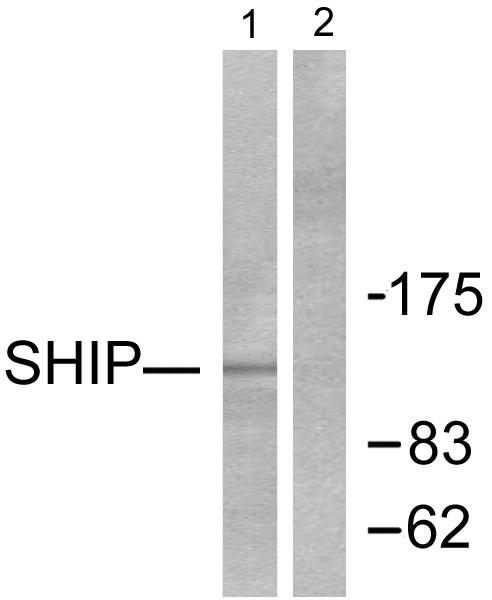
Molecular Weight93836DaObserved Band:100KD
Functionsomitogenesis, regionalization, chromatin organization, chromatin remodeling, transcription, transcription, DNA-dependent, regulation of transcription, DNA-dependent, regulation of transcription from RNA polymerase II promoter,transcription from RNA polymerase II promoter, protein amino acid acetylation, pattern specification process,embryonic development ending in birth or egg hatching, anterior/posterior pattern formation, chromatin modification,covalent chromatin modification, histone modification, histone acetylation, histone deubiquitination, protein deubiquitination, RNA biosynthetic process, segmentation, chordate embryonic development, protein amino acid acylation, histone H3 acetylation, regulation of transcription, regulation of RNA metabolic process, chromosome organization, protein modification by small protein removal, protein modification by small protein conjugation or rem
Subcellular LocationNucleus . Chromosome . Cytoplasm, cytoskeleton, microtubule organizing center, centrosome . Mainly localizes to the nucleus (PubMed:27796307). Also localizes to centrosomes in late G1 and around the G1/S transition, coinciding with the onset of centriole formation (PubMed:27796307). .
ExpressionExpressed in all tissues tested.
ImmunogenThe antiserum was produced against synthesized peptide derived from human GCN5L2. AA range:691-740
DilutionWestern Blot: 1/500 - 1/2000. Immunohistochemistry: 1/100 - 1/300. ELISA: 1/20000. Not yet tested in other applications.
PurificationThe antibody was affinity-purified from rabbit antiserum by affinity-chromatography using epitope-specific immunogen.
BackgroundKAT2A, or GCN5, is a histone acetyltransferase (HAT) that functions primarily as a transcriptional activator. It also functions as a repressor of NF-kappa-B (see MIM 164011) by promoting ubiquitination of the NF-kappa-B subunit RELA (MIM 164014) in a HAT-independent manner (Mao et al., 2009 [PubMed 19339690]).[supplied by OMIM, Sep 2009],
Conjugated Antibody
This product is also available conjugated. Format: :E20-71875-Conjugate. Price: $485 / Size: 100μl.
:E20-71875-FITC$485 / 100μl:E20-71875-Biotin$485 / 100μl:E20-71875-HRP$485 / 100μl:E20-71875-AP$485 / 100μl:E20-71875-AF350$485 / 100μl:E20-71875-AF405M$485 / 100μl:E20-71875-AF488$485 / 100μl:E20-71875-AF514$485 / 100μl:E20-71875-AF532$485 / 100μl:E20-71875-AF555$485 / 100μl:E20-71875-AF568$485 / 100μl:E20-71875-AF405S$485 / 100μl:E20-71875-AF405L$485 / 100μl:E20-71875-AF546$485 / 100μl:E20-71875-AF594$485 / 100μl:E20-71875-AF610$485 / 100μl:E20-71875-AF635$485 / 100μl:E20-71875-AF647$485 / 100μl:E20-71875-AF680$485 / 100μl:E20-71875-AF700$485 / 100μl:E20-71875-AF750$485 / 100μl:E20-71875-AF790$485 / 100μl:E20-71875-APC$485 / 100μl:E20-71875-PE$485 / 100μl:E20-71875-Cy3$485 / 100μl:E20-71875-Cy5$485 / 100μl:E20-71875-Cy5.5$485 / 100μl:E20-71875-Cy7$485 / 100μl:E20-71875-PE-Cy5$485 / 100μl
Contact order@enogene.com to order conjugated formats. Magnetic Beads (1-30μm) conjugation is also available.


Categories by research area
Categories by product type
- Antibodies
- Primary Antibodies
- Tag antibodies
- Internal control antibodies
- Pathological (Immunohistochemistry, IHC) antibodies
- Cell Signal Transduction Research Antibodies
- Secondary Antibody
- Antibody Sampler Kits
- ELISA Kits
- Recombinant Proteins
- Fluorescence Reagents
- Signal Inhibitors and Activators
- Transfection Reagent
- Cell biology kits
- Overexpression Cell Lines
- Cell Lysates
- Purification Resins
- 2019-nCoV & Monkeypox