
AW-1 Rabbit Polyclonal Antibody
Datasheet
-
Catalog Number:
E28PT0425Amount:
100ulPrice:
255$Altername:
ZNF174; ZSCAN8; Zinc finger protein 174; AW-1; Zinc finger and SCAN domain-containing protein 8Gene Name:
ZNF174Protein Name:
Zinc finger protein 174Applications:
WB,IHC,IF,ELISAReactivity:
Human,Rat,MouseConcentration:
1 mg/mlFormulation:
Liquid in PBS containing 50% glycerol, 0.5% BSA and 0.02% New type preservative N.Human Gene Id:
7727Swiss-Prot No.:
Q15697Immunogen:
The antiserum was produced against synthesized peptide derived from human ZNF174. AA range:201-250Specificity:
AW-1 Polyclonal Antibody detects endogenous levels of AW-1 protein.Recommended Dilutions:
WB 1:500 - 1:2000. IHC 1:100 - 1:300. IF 1:200 - 1:1000. ELISA: 1:10000. Not yet tested in other applications.Predicted Molecular Weight:
46kDForm of Antibody:
LiquidStorage/Stability:
Shipped at 4°C. Upon delivery aliquot and store at -20°C for one year. Avoid freeze/thaw cycles.Source:
Polyclonal, Rabbit,IgGBackground:
function:Transcriptional repressor.,similarity:Belongs to the krueppel C2H2-type zinc-finger protein family.,similarity:Contains 1 SCAN box domain.,similarity:Contains 3 C2H2-type zinc fingers.,subunit:Homodimer.,tissue specificity:Expressed in a variety of organs, but most strongly in adult testis and ovary followed by small intestine, colon, prostate, thymus, spleen, pancreas, skeletal muscle, heart, brain and kidney. Also expressed in umbilical vein endothelial cells, foreskin fibroblast and HEPG2 cells.,Tissue Expression:
Expressed in a variety of organs, but most strongly in adult testis and ovary followed by small intestine, colon, prostate, thymus, spleen, pancreas, skeletal muscle, heart, brain and kidney. Also expressed in umbilical vein endothelial cells, foreskin fibroblast and Hep-G2 cells.Cellular localization:
Nucleus.Function:
function:Transcriptional repressor.,similarity:Belongs to the krueppel C2H2-type zinc-finger protein family.,similarity:Contains 1 SCAN box domain.,similarity:Contains 3 C2H2-type zinc fingers.,subunit:Homodimer.,tissue specificity:Expressed in a variety of organs, but most strongly in adult testis and ovary followed by small intestine, colon, prostate, thymus, spleen, pancreas, skeletal muscle, heart, brain and kidney. Also expressed in umbilical vein endothelial cells, foreskin fibroblast and HEPG2 cells.,Purification:
The antibody was affinity-purified from rabbit antiserum by affinity-chromatography using epitope-specific immunogen.-
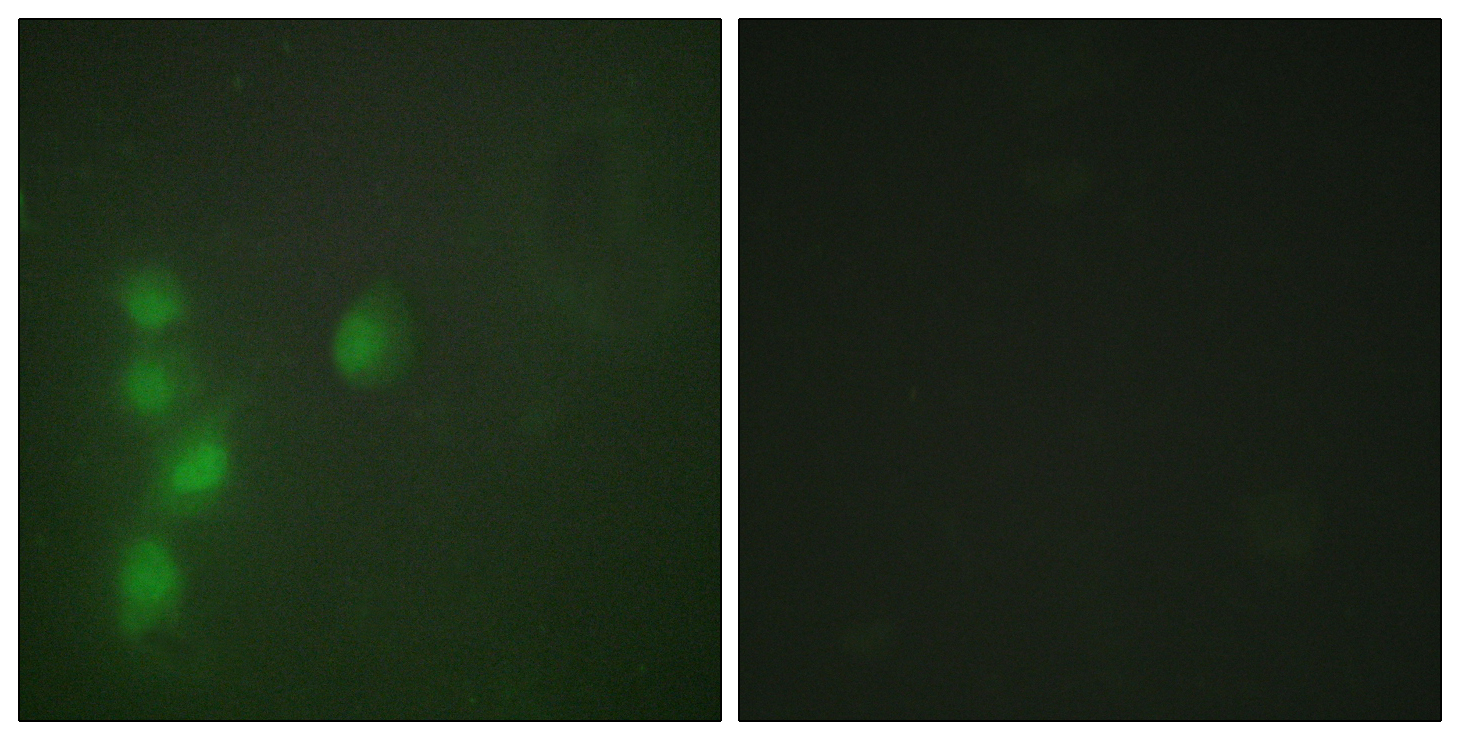
- Immunofluorescence analysis of HUVEC cells, using ZNF174 Antibody. The picture on the right is blocked with the synthesized peptide.

Related Products
Catalog Number
- Amount:100ul
- Price:255.00$

Contact us
Categories by research area
Categories by product type
- Antibodies
- Tag antibodies
- Internal control antibodies
- Pathological (Immunohistochemistry, IHC) antibodies
- Cell Signal Transduction Research Antibodies
- Secondary Antibody
- Antibody Sampler Kits
- Recombinant Proteins
- Fluorescence Reagents
- Signal Inhibitors and Activators
- Transfection Reagent
- Cell biology kits
Technical Support
- Westem Immunblotting Protocol(Primary Ab Incubation InBSA)
- Immunohistochemistry Protocol(Paraffin)
- Immunofluorescence Protocols
Connect Us
- Skype: enogene
- Email: order@enogene.com