
UBE2I (19W6) Rabbit Monoclonal Antibody
Datasheet
-
Catalog Number:
E28M4544Amount:
100ulCite ID#:
EN5542011Price:
295$Applications:
WB,IHC,ICC/IF,FC,IPReactivity:
Human,Mouse,RatType:
Rabbit Monoclonal AntibodyStorage/Stability:
Shipped at 4°C. Upon delivery aliquot and store at -20°C for one year. Avoid freeze/thaw cycles.Altername:
C358B7.1; P18; UBC9; UBE2I; SUMO1 protein ligase;Gene Name:
UBE2IProtein Name:
UBC9, UBCE9Formulation:
Supplied in 50mM Tris-Glycine(pH 7.4), 0.15M NaCl, 40%Glycerol, 0.01% New type preservative N and 0.05% BSA.Human Gene Id:
7329Swiss-Prot No.:
P63279Immunogen:
A synthetic peptide of human UBE2I/UBC9Recommended Dilutions:
WB: 1:1000 IHC: 1:50 ICC/IF: 1:50 FC: 1:20 IP: 1:20Molecular Weight:
18kDaPredicted Molecular Weight:
18kDaForm of Antibody:
LiquidIsotype:
Rabbit IgGTissue Expression:
Expressed in heart, skeletal muscle, pancreas, kidney, liver, lung, placenta and brain. Also expressed in testis and thymus.Cellular localization:
Nucleus. Cytoplasm Note=Mainly nuclear (By similarity). In spermatocytes, localizes in synaptonemal complexes (PubMed:8610150). Recruited by BCL11A into the nuclear body (By similarity). {ECO:0000250|UniProtKB:P63280, ECO:0000269|PubMed:8610150}Description:
The process of SUMO-1 conjugation is similar to that seen with ubiquitin and other forms of post-translational protein modification. Like ubiquitin, SUMO-1 is conjugated to its target protein by the coordinated action of ubiquitin conjugation enzymes E1, E2 and E3. Ubc9 (or ube2M) is a highly conserved, 158 amino acid protein that acts as a SUMO-1 conjugating enzyme. Ubc9 binds to target proteins through their SUMO-1-CS (consensus sequence) domains and interacts with SUMO via the structurally conserved amino-terminal domain.Function:
Accepts the ubiquitin-like proteins SUMO1, SUMO2, SUMO3, SUMO4 and SUMO1P1/SUMO5 from the UBLE1A-UBLE1B E1 complex and catalyzes their covalent attachment to other proteins with the help of an E3 ligase such as RANBP2, CBX4 and ZNF451. Can catalyze the formation of poly-SUMO chains. Necessary for sumoylation of FOXL2 and KAT5. Essential for nuclear architecture and chromosome segregation. Sumoylates p53/TP53 at 'Lys-386'. Mediates sumoylation of ERCC6 which is essential for its transcription-coupled nucleotide excision repair activity (PubMed:26620705).-
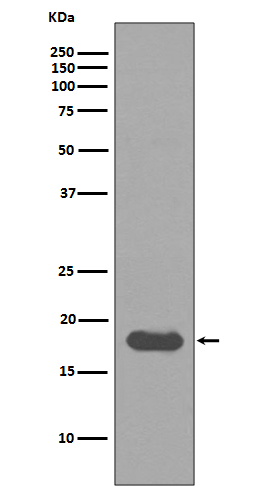
- Western blot analysis of UBE2I expression in HeLa cell lysate.

Related Products
Catalog Number
- Amount:100ul
- Price:295.00$

Contact us
Categories by research area
Categories by product type
- Antibodies
- Tag antibodies
- Internal control antibodies
- Pathological (Immunohistochemistry, IHC) antibodies
- Cell Signal Transduction Research Antibodies
- Secondary Antibody
- Antibody Sampler Kits
- Recombinant Proteins
- Fluorescence Reagents
- Signal Inhibitors and Activators
- Transfection Reagent
- Cell biology kits
Technical Support
- Westem Immunblotting Protocol(Primary Ab Incubation InBSA)
- Immunohistochemistry Protocol(Paraffin)
- Immunofluorescence Protocols
Connect Us
- Skype: enogene
- Email: order@enogene.com