World supplier of antibodies, antigens and kits since 2007

Primary Antibodies
APC Polyclonal Antibody
Polyclonal, Rabbit
$225/ 100ul
QuantityTotal: $225
Ship worldwide. Contact order@enogene.com for ordering and bulk pricing or contact your local distributor.
Gene NameAPC
Product Information
Protein NameAdenomatous polyposis coli protein
Human Gene Id324
Human Swiss Prot NoP25054
Mouse Swiss Prot NoQ61315
SpecificityAPC Polyclonal Antibody detects endogenous levels of APC protein.
FormulationLiquid in PBS containing 50% glycerol, 0.5% BSA and 0.02% sodium azide.
Concentration1 mg/ml
Storage Stability-20°C/1 year
Other NameAPC; DP2.5; Adenomatous polyposis coli protein; Protein APC; Deleted in polyposis 2.5
Molecular Weight(Da):311646
Functiondisease:APC mutations have led to some interesting observations. (1) the great majority of the mutations found to date would result in truncation of the APC product. (2) almost all the mutations have occurred within the first half of the coding sequence, and somatic mutations in colorectal tumors are further clustered in a particular region, called MCR (mutation cluster region). (3) most identified point mutations in the APC gene are transitions from cytosine to other nucleotides. (4) the location of germline mutations tends to correlate with the number of colorectal polyps in FAP patients. Inactivation of both alleles of the APC gene seems to be required as an early event to develop most adenomas and carcinomas in the colon and rectum as well as some of those in the stomach.,disease:Defects in APC are a cause of familial adenomatous polyposis (FAP) [MIM:175100]; which includes also Gard
Subcellular Locationkinetochore,nucleus,nucleoplasm,cytoplasm,centrosome,cytosol,microtubule,cytoplasmic microtubule,plasma membrane,adherens junction,cell-cell adherens junction,bicellular tight junction,lateral plasma m
ExpressionBrain,Epithelium,Fetal brain,Peripheral blood,Peripheral blood lymp
ImmunogenThe antiserum was produced against synthesized peptide derived from human APC. AA range:2020-2069
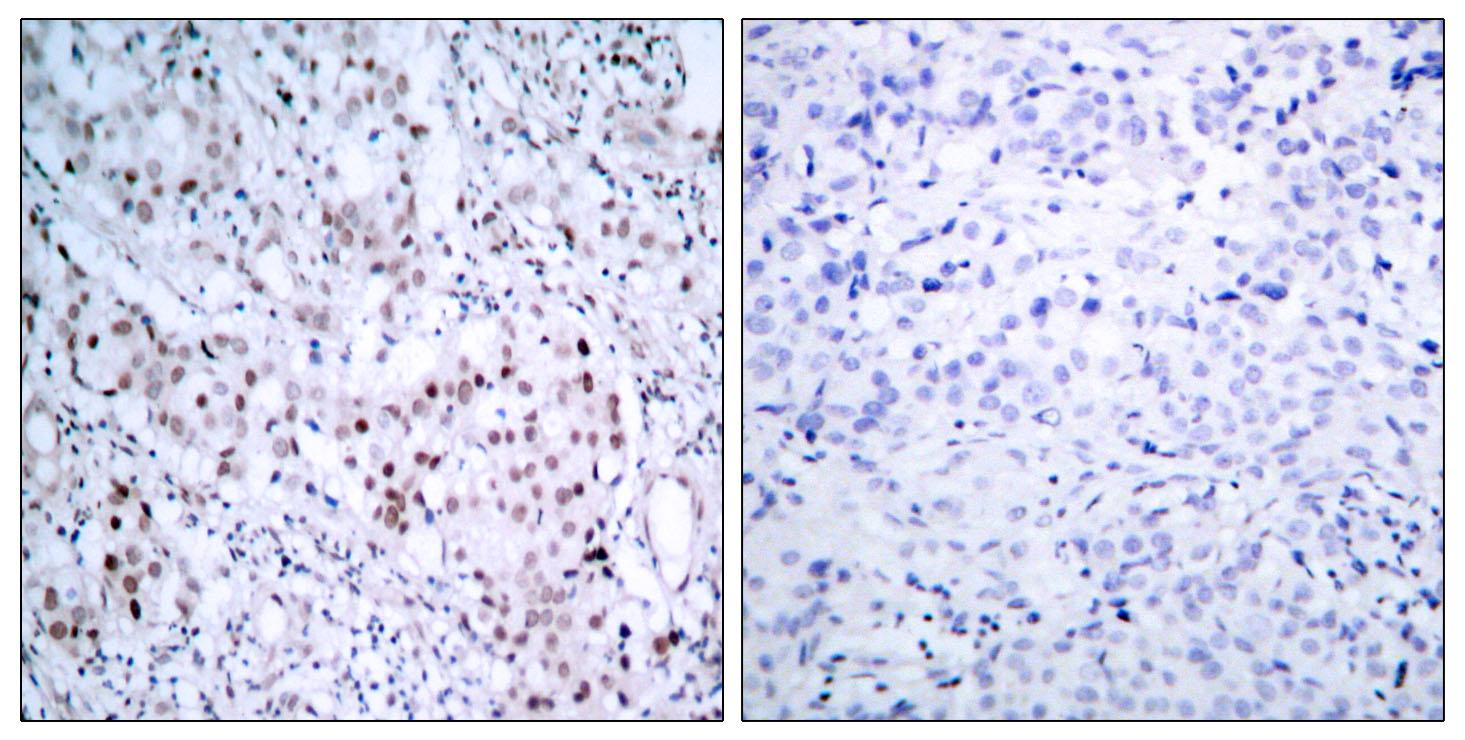
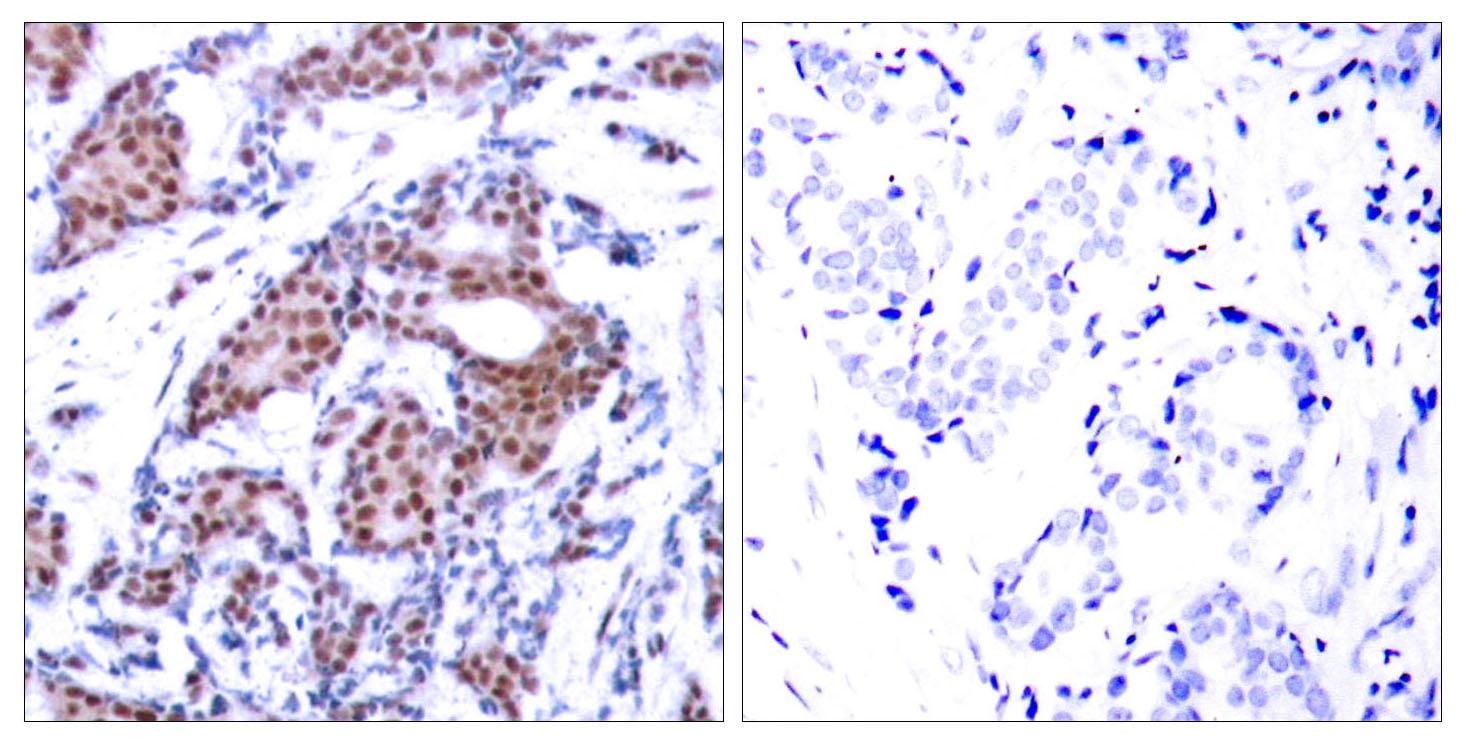
DilutionImmunohistochemistry: 1/100 - 1/300. ELISA: 1/5000. Not yet tested in other applications.
PurificationThe antibody was affinity-purified from rabbit antiserum by affinity-chromatography using epitope-specific immunogen.
BackgroundAPC, WNT signaling pathway regulator(APC) Homo sapiens This gene encodes a tumor suppressor protein that acts as an antagonist of the Wnt signaling pathway. It is also involved in other processes including cell migration and adhesion, transcriptional activation, and apoptosis. Defects in this gene cause familial adenomatous polyposis (FAP), an autosomal dominant pre-malignant disease that usually progresses to malignancy. Disease-associated mutations tend to be clustered in a small region designated the mutation cluster region (MCR) and result in a truncated protein product. [provided by RefSeq, Jul 2008],
Price225$
Conjugated Antibody
This product is also available conjugated. Format: E20-70257-Conjugate. Price: $485 / Size: 100μl.
E20-70257-FITC$485 / 100μlE20-70257-Biotin$485 / 100μlE20-70257-HRP$485 / 100μlE20-70257-AP$485 / 100μlE20-70257-AF350$485 / 100μlE20-70257-AF405M$485 / 100μlE20-70257-AF488$485 / 100μlE20-70257-AF514$485 / 100μlE20-70257-AF532$485 / 100μlE20-70257-AF555$485 / 100μlE20-70257-AF568$485 / 100μlE20-70257-AF405S$485 / 100μlE20-70257-AF405L$485 / 100μlE20-70257-AF546$485 / 100μlE20-70257-AF594$485 / 100μlE20-70257-AF610$485 / 100μlE20-70257-AF635$485 / 100μlE20-70257-AF647$485 / 100μlE20-70257-AF680$485 / 100μlE20-70257-AF700$485 / 100μlE20-70257-AF750$485 / 100μlE20-70257-AF790$485 / 100μlE20-70257-APC$485 / 100μlE20-70257-PE$485 / 100μlE20-70257-Cy3$485 / 100μlE20-70257-Cy5$485 / 100μlE20-70257-Cy5.5$485 / 100μlE20-70257-Cy7$485 / 100μlE20-70257-PE-Cy5$485 / 100μl
Contact order@enogene.com to order conjugated formats. Magnetic Beads (1-30μm) conjugation is also available.


Categories by research area
Categories by product type
- Antibodies
- Primary Antibodies
- Tag antibodies
- Internal control antibodies
- Pathological (Immunohistochemistry, IHC) antibodies
- Cell Signal Transduction Research Antibodies
- Secondary Antibody
- Antibody Sampler Kits
- ELISA Kits
- Recombinant Proteins
- Fluorescence Reagents
- Signal Inhibitors and Activators
- Transfection Reagent
- Cell biology kits
- Overexpression Cell Lines
- Cell Lysates
- Purification Resins
- 2019-nCoV & Monkeypox